
Nature - Part 2
50 reports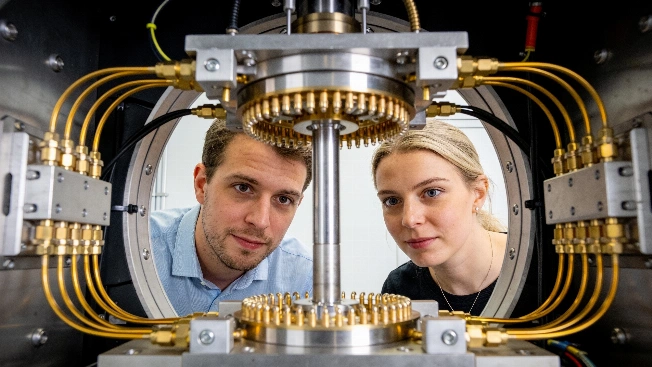
D-Wave Tests High-Fidelity Two-Qubit Gate for Dual-Rail Qubits
D-Wave Quantum Inc. has experimentally demonstrated a fast, high-fidelity two-qubit entangling gate for superconducting dual-rail cavity qubits, addressing basic error sources and hardware overhead in quantum error correction architectures
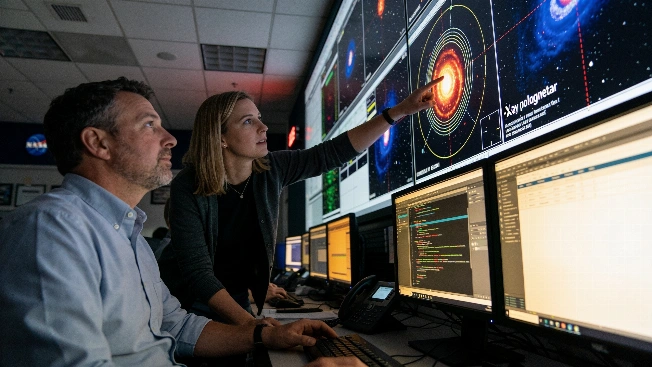
NASA's IXPE Detects Signs of Quantum Vacuum Effect Near Magnetar
NASA's IXPE telescope has measured X-ray polarization from a magnetar, providing evidence consistent with a quantum electrodynamics effect predicted nearly a century ago but never directly observed in space.

Europa Clipper May Miss Ocean Water Rising Through Europa's Ice
Computer simulations suggest that turbulent water rising through Europa's ice would freeze its pathways shut, making shallow surface pools poor indicators of the moon's buried ocean.
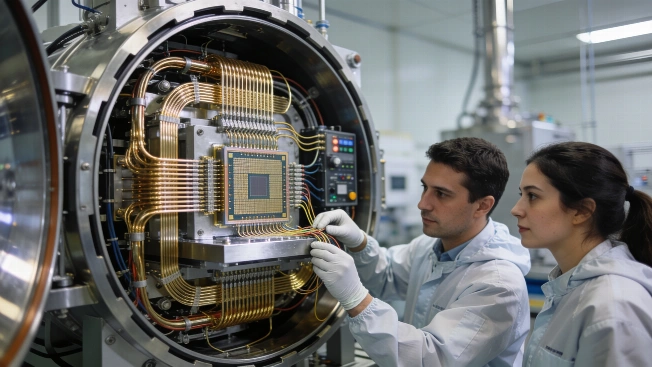
Silicon Spin QPU Runs Autonomously with Cryogenic Control Chip
HRL Laboratories has demonstrated an 18-qubit silicon spin quantum processor operating with a cryogenic CMOS controller, eliminating real-time room-temperature control and addressing basic wiring and thermal bottlenecks in quantum hardware

MAVEN Data Reveals Earth-Like Aurora Mechanism on Mars
NASA's MAVEN orbiter has found evidence that localized auroras on Mars are powered by a process similar to Earth's Dungey cycle, offering new understanding into Martian atmospheric loss and magnetic-field interactions.
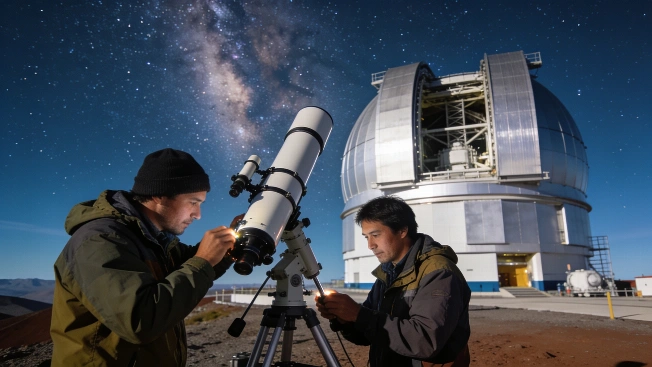
Possible Exomoon Candidate Challenges Definitions in Distant Star System
Astronomers using the Very Large Telescope have detected a moon-like object orbiting a brown dwarf in the CD-35 2722 system, prompting questions about how to classify such bodies beyond our solar system.
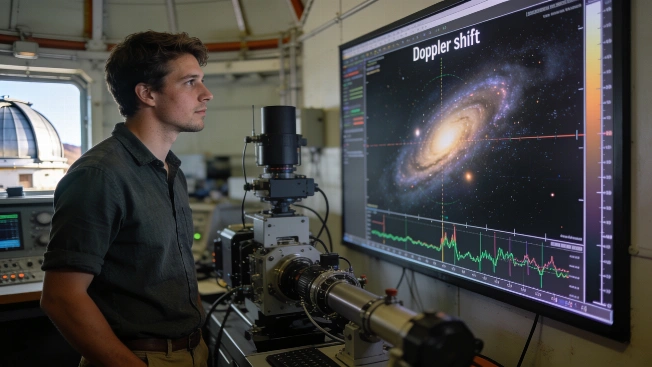
Giant Exosatellite Discovery Redefines Boundaries of Planetary Systems
Astronomers have identified a Jupiter-sized exosatellite candidate orbiting a brown dwarf, which itself orbits the star CD-35 2722. Detected using high-resolution spectroscopy, the candidate challenges current definitions of moons and planets.

How Bell's Theorem Emerged from an Unusual Physics Journal
John Bell's 1964 theorem on quantum nonlocality was first published in a short-lived journal with an unconventional editorial model. The story of this publication highlights the challenges of peer review, editorial selection, and scientific recognition in quantum physics
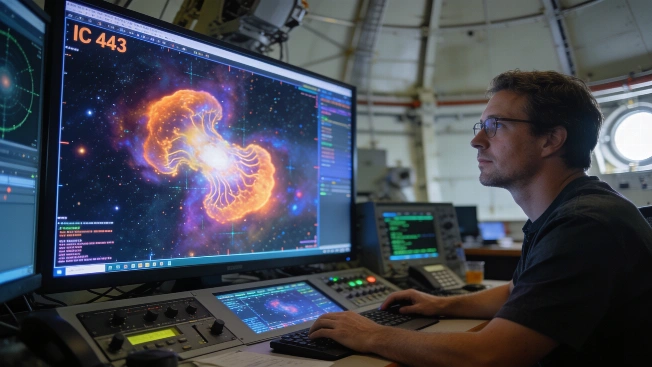
Possible Twin Supernova Remnants Identified in the Jellyfish Nebula
Astronomers analyzing data from NASA's Fermi Gamma-ray Space Telescope and other observatories have found evidence suggesting that both stars in a binary system exploded as supernovae, leaving overlapping remnants in the IC 443 region.
Detection of Four-Carbon Sugar Molecule in Interstellar Space
Researchers have identified the sugar molecule erythrulose in a molecular cloud near the Milky Way's center using radio telescopes, providing new evidence that complex organic compounds can form in interstellar environments under extreme conditions

Medical AI Models Face Higher Patient Privacy Risks Than Expected
A new peer-reviewed study finds that diagnostic medical AI models can expose sensitive patient information at rates far above previous estimates, raising concerns about privacy protections and the need for stronger technical safeguards in clinical machine learning.
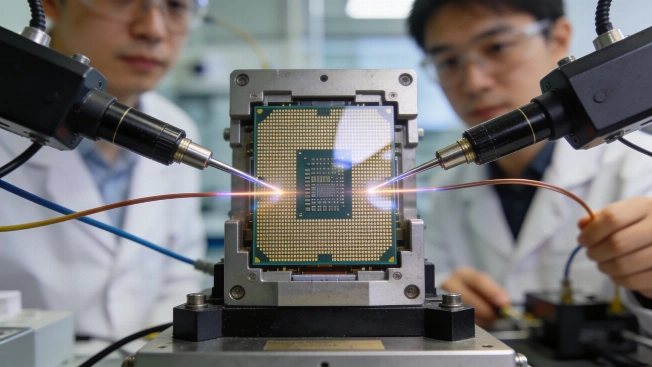
UCLA Team Integrates Terahertz Generation and Detection on One Chip
A UCLA research group has demonstrated a semiconductor chip that combines terahertz signal generation and detection, using quantum-well photodiodes and standard fabrication methods, potentially enabling scalable terahertz systems for communications and sensing

Extreme Solar Storms May Exceed Previous Impact Estimates
A new analysis of solar wind data suggests that the most powerful solar storms could cause greater geomagnetic disturbances on Earth than previously calculated, with implications for satellites and power grids

Gravitational Wave Data Reveals Black Hole Event Horizon Properties
Researchers have extracted direct physical parameters from a black hole’s event horizon using an unusually strong gravitational wave signal, providing experimental access to a region previously studied only through theory.
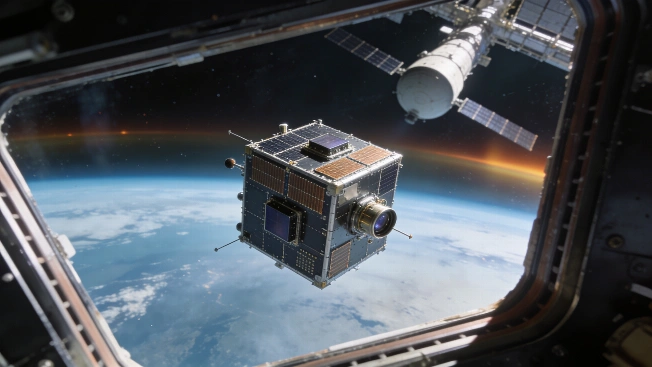
Satellite Neutron Detection Proposed for Nuclear Treaty Verification
A new analysis suggests that satellites equipped with neutron detectors could remotely identify nuclear materials in orbit, offering a potential method to verify compliance with the Outer Space Treaty and address emerging security concerns
Part 2 of 2