
Very Large Telescope
11 reportsResearch connected with Very Large Telescope is followed through data pipelines, together with instrument configuration and observing campaigns. Judgments about instrument configuration are tied to raw and calibrated measurements and technical performance records rather than prominence or repetition; confidence is limited by the fact that weather, detector limits, and target selection can shape the available record.
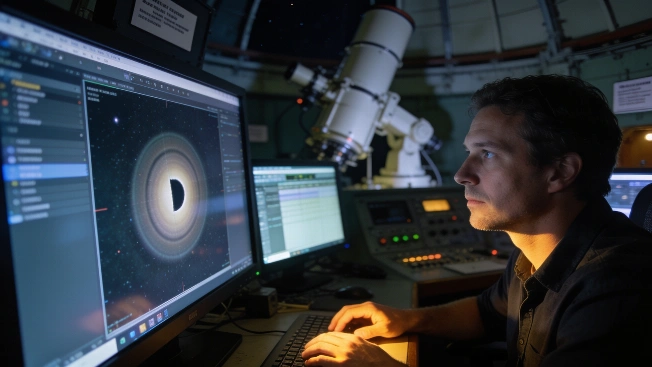
Youngest exoplanet yet found emerges from archival telescope data
Astronomers have identified Elias 2-24 b, the youngest known exoplanet, using direct imaging techniques and archival data from the Keck Observatory. The planet is less than a million years old and still sits within its birth disk.
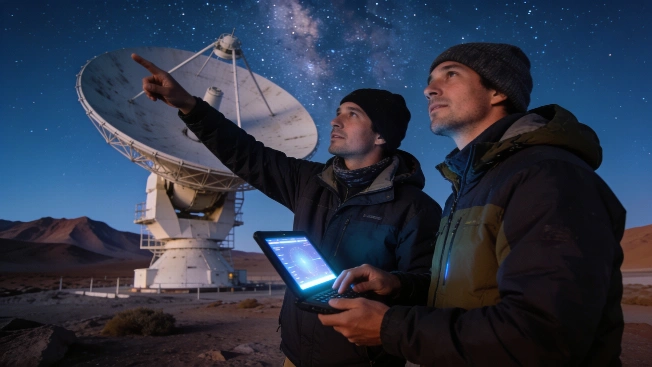
ALMA reveals chaotic birth of massive binary stars in real time
Astronomers using ALMA have reconstructed the formation of a massive binary star system just 5,300 light-years away, finding evidence that the two stars joined forces only decades ago rather than forming together

Webb Telescope Reveals Early Galaxies Are Richer in Small Stars
Astronomers using the James Webb Space Telescope have detected a higher proportion of faint, low-mass stars in ancient galaxies, suggesting these early systems are more massive than previously estimated
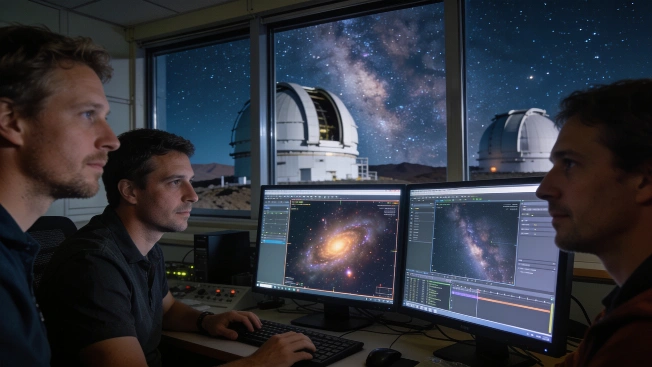
Fastest Known Star Orbits Milky Way's Black Hole in Under 9 Years
Astronomers using the Very Large Telescope Interferometer have identified S301, a star orbiting Sagittarius A* at record speed, offering a new opportunity to test general relativity near the Milky Way's supermassive black hole
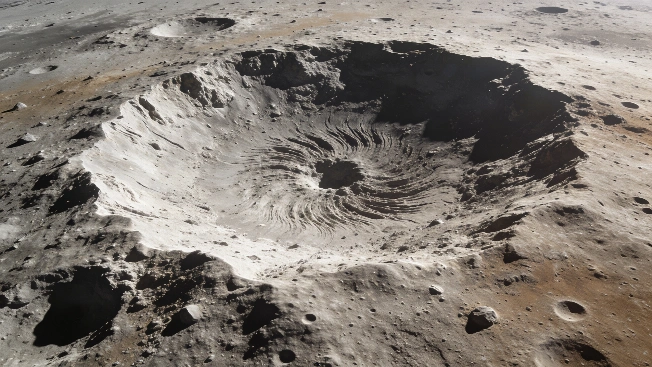
SpaceX Rocket Impact on Moon Raises Safety Questions for Lunar Missions
A SpaceX Falcon 9 upper stage collided with the lunar surface near Einstein Crater, prompting new scrutiny of debris risks as lunar exploration and infrastructure expand
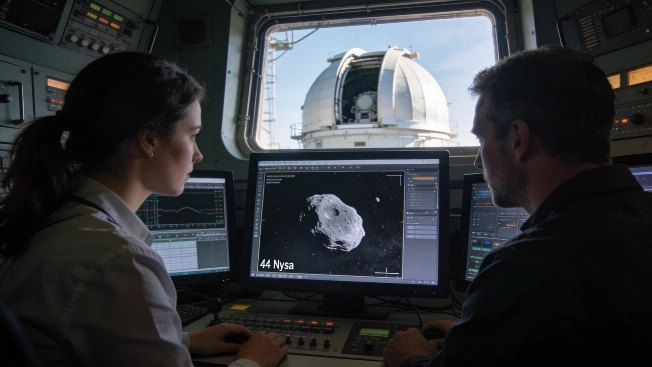
Triple-Lobed Asteroid 44 Nysa Imaged With Orbiting Moon in Asteroid Belt
Astronomers have resolved asteroid 44 Nysa as the first known triple-lobed body in the main belt, using adaptive optics on major ground-based telescopes. The object also hosts a small moon, raising new questions about asteroid formation and evolution.
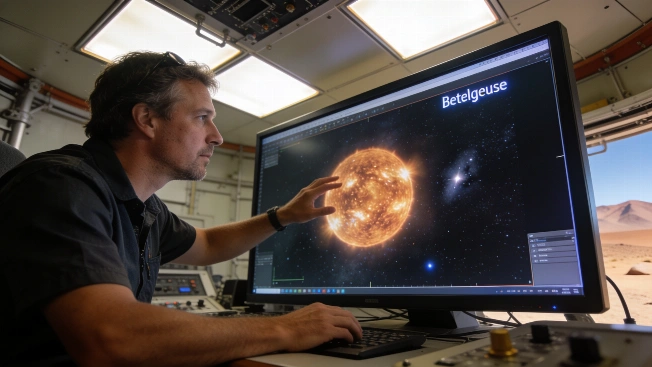
VLT Reveals Strongest Evidence Yet for Betelgeuse's Companion Star
Astronomers using the Very Large Telescope have obtained the clearest direct image to date of a faint companion star near Betelgeuse, advancing a century-long search for evidence that the red supergiant is part of a binary system

Hubble Reveals High-Speed Gas Bullets from Rare Helium Nova in Milky Way
Astronomers using Hubble and other observatories have observed V445 Puppis, the Milky Way's only known helium nova, ejecting dense gas clumps at speeds up to 32 million kilometers per hour
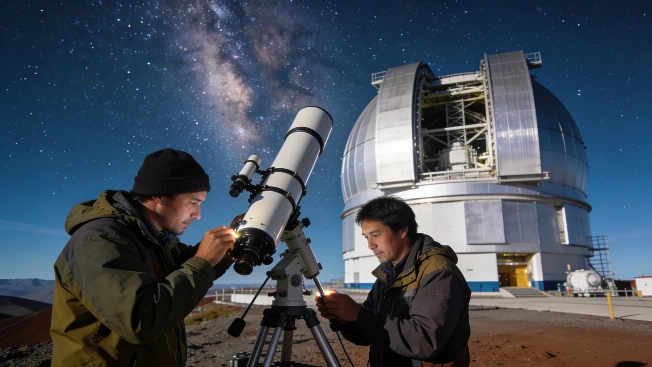
Possible Exomoon Candidate Challenges Definitions in Distant Star System
Astronomers using the Very Large Telescope have detected a moon-like object orbiting a brown dwarf in the CD-35 2722 system, raising questions about how to classify such bodies beyond our solar system
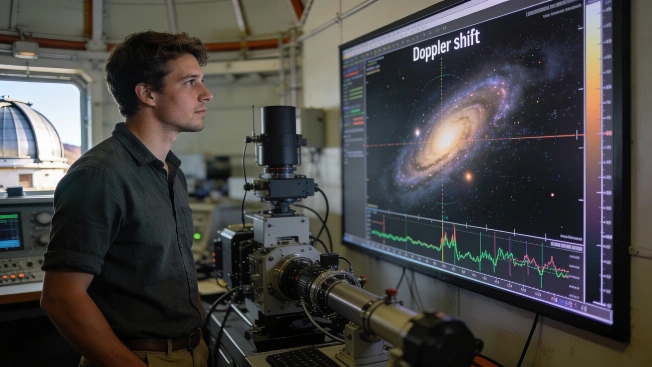
Giant Exosatellite Discovery Redefines Boundaries of Planetary Systems
Astronomers have identified a Jupiter-sized exosatellite orbiting a brown dwarf, itself in orbit around the star CD-35 2722. The finding, made using high-resolution spectroscopy, challenges current definitions of moons and planets.
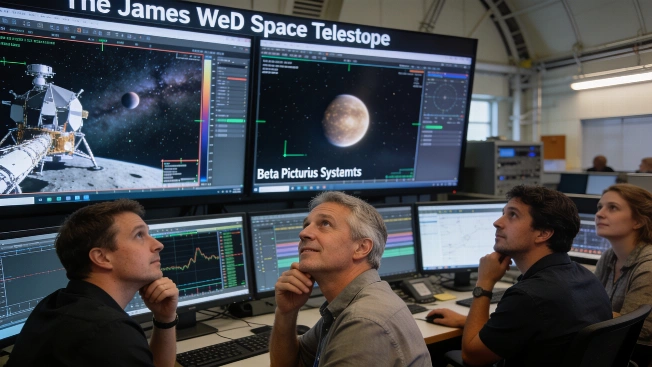
Webb Telescope Detects Hidden Giant Planet in Beta Pictoris System
Astronomers have identified a third giant exoplanet in the Beta Pictoris system using the James Webb Space Telescope's spectroscopic capabilities, revealing a world previously concealed by the system's bright debris disk