
Mars - Part 2
50 reports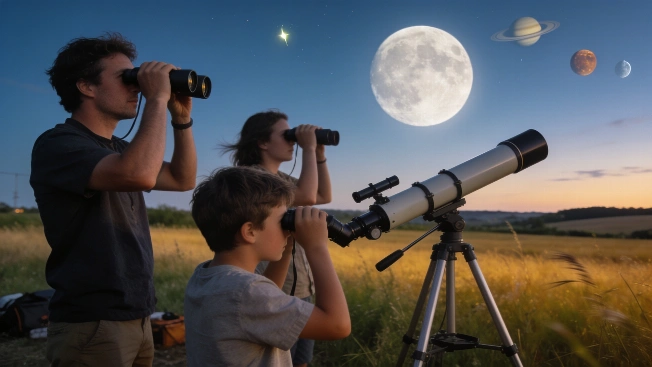
July's Buck Moon Aligns with Venus, Saturn, Mars, and Mercury
The full Buck Moon rises on July 29 alongside Venus, Saturn, Mars, and Mercury. As twilight fades, observers can watch the planetary parade with the naked eye or optical instruments.
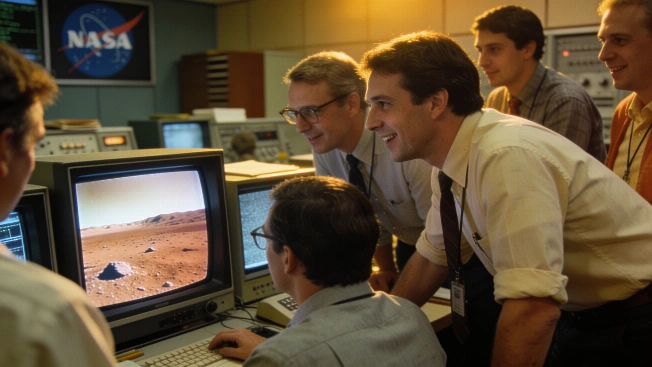
Viking 1's First Mars Surface Image Revisited on 50th Anniversary
NASA has released the original images captured by Viking 1 after its 1976 Mars landing, offering a detailed look at the Red Planet's surface and the mission's scientific legacy.
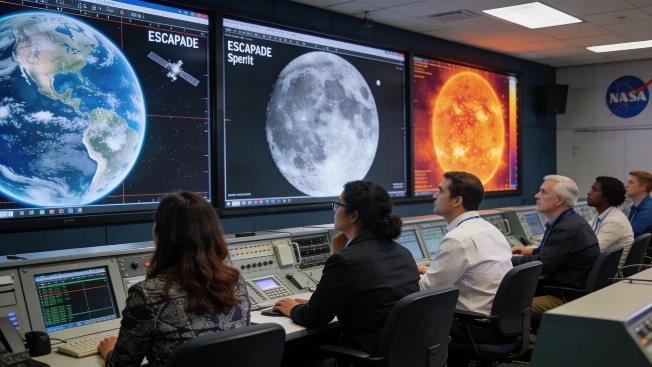
NASA's ESCAPADE Spacecraft Captures Earth and Moon in Dual Light
NASA's ESCAPADE mission has imaged Earth and the Moon in visible and thermal infrared light, offering a rare chance to calibrate its cameras as the spacecraft prepare for their journey to Mars.
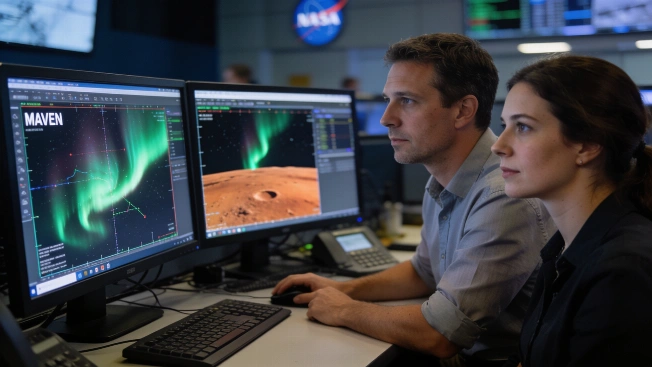
MAVEN Data Reveals Earth-Like Aurora Mechanism on Mars
NASA's MAVEN orbiter has found evidence that localized auroras on Mars are powered by a process similar to Earth's Dungey cycle, offering new understanding into Martian atmospheric loss and magnetic-field interactions.
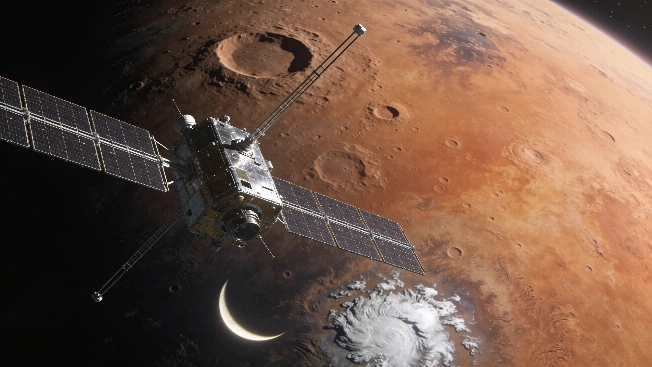
NASA's Psyche Spacecraft Uses Mars Flyby to Refine Asteroid Trajectory
NASA's Psyche probe has completed a close flyby of Mars, capturing a time-lapse sequence and using the planet's gravity to adjust its course toward the metal-rich asteroid Psyche, its target for arrival in 2029.
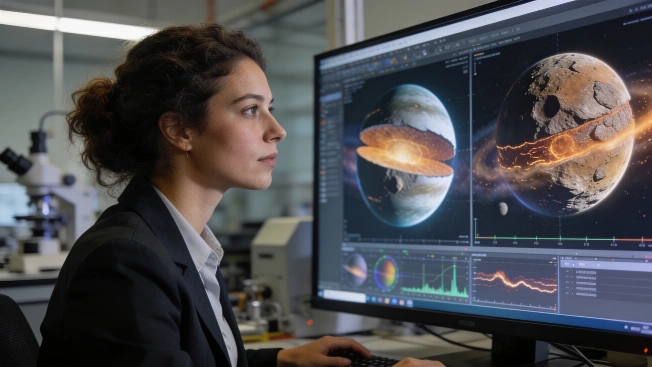
Exoplanets Smaller Than Mars May Lose Atmospheres Too Quickly for Life
A new planetary modeling study suggests rocky exoplanets must be at least 80% of Earth's width to retain atmospheres for billions of years, narrowing the search for potentially habitable worlds around sun-like stars.
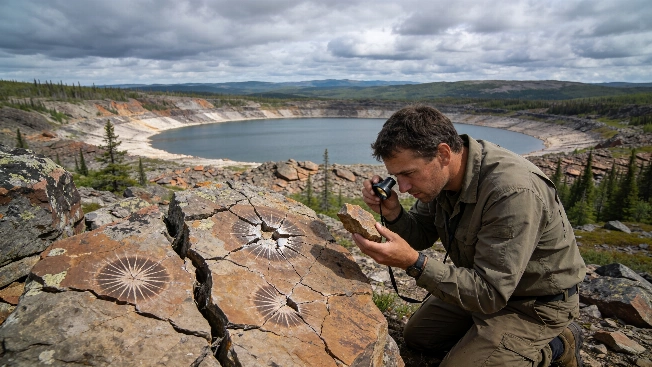
Possible Ancient Impact Crater Identified in Northern Quebec
A large circular structure in Quebec's Côte-Nord region, first spotted on Google Maps, may be a 390-million-year-old impact crater. Fieldwork and rock analysis are underway to confirm its extraterrestrial origin.
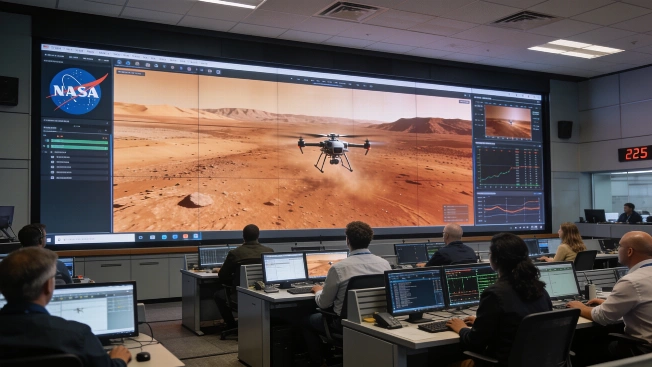
NASA Eyes Mars Skies 50 Years After Viking 1's Landmark Landing
NASA's Viking 1 lander touched down on Mars in 1976, opening a new era of planetary exploration. Now, five decades later, the agency is preparing to extend its reach above the Martian surface with aerial missions.
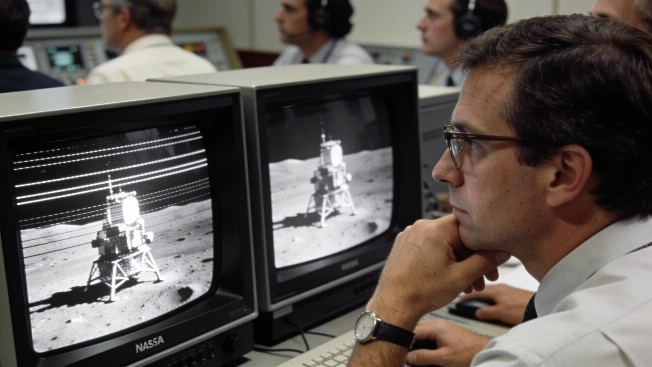
Viking 1's First Mars Surface Image Changed Planetary Exploration
NASA's Viking 1 lander transmitted the first direct image from the Martian surface in July 1976, revealing the planet's rocky terrain and marking a milestone in robotic planetary science
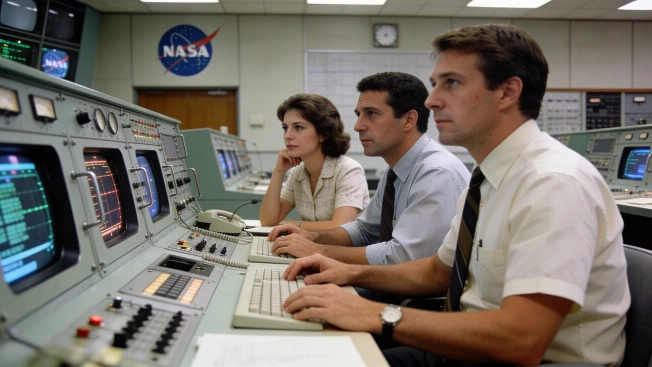
How NASA Langley Engineered the First Mars Landings
Fifty years after Viking 1 and 2 touched down on Mars, the engineering and mission design led by NASA's Langley Research Center remain central to how planetary landings are planned and executed across the solar system.
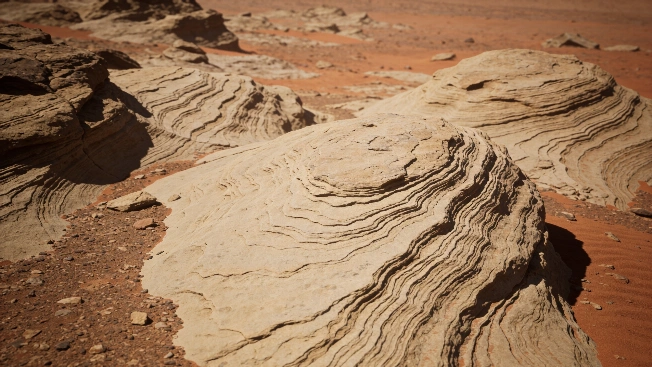
Curiosity Rover Reveals Ancient Sandstorm Evidence on Mars
NASA's Curiosity rover has imaged Martian rocks shaped by a powerful ancient sandstorm, offering new understanding into the Red Planet's dynamic past and the processes that once shaped its surface.
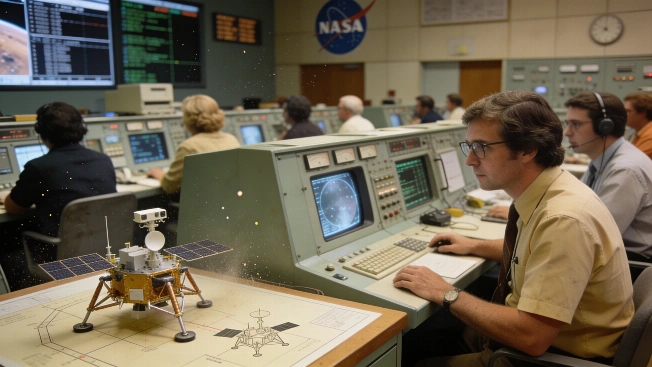
Viking 1's Mars Life Experiments: What the Evidence Still Can't Prove
Fifty years after NASA's Viking 1 lander touched down on Mars, scientists remain divided over whether its life-detection experiments found evidence of Martian biology or were confounded by non-biological chemistry and instrument limitations.

AI Struggles With Unknowns in Search for Extraterrestrial Life
A Michigan State University study using digital life simulations reveals that artificial intelligence can misclassify unfamiliar molecular patterns as signs of life, raising concerns for future missions seeking biosignatures beyond Earth
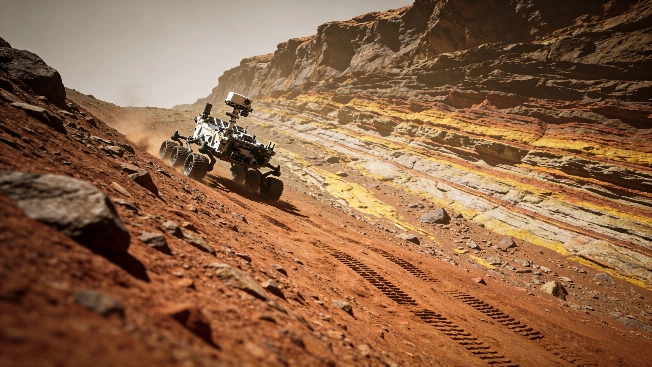
Perseverance Rover Images Ancient Martian Bedrock at Jezero Crater Rim
NASA's Perseverance rover has captured a detailed view of the Jezero Crater rim on Mars, revealing a thick sequence of ancient rocks. Recorded by the Mastcam-Z instrument, the scene offers new evidence about the planet's impact history and surface evolution.
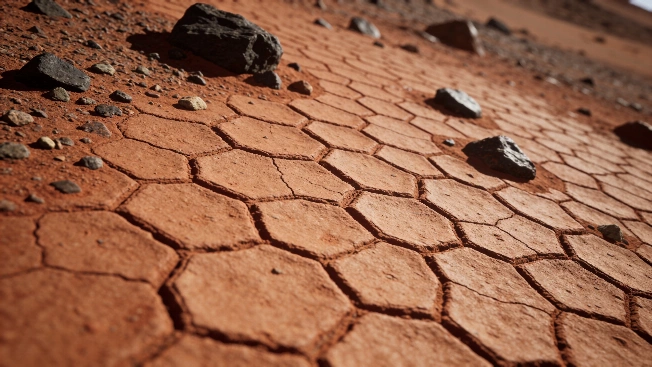
Curiosity Rover Images Unusual Honeycomb Patterns on Martian Surface
NASA's Curiosity rover has captured detailed images of a honeycomb-like texture on Mars, revealing polygonal surface patterns and scattered dark rocks. Scientists are investigating the origin of these features using in situ rover observations and orbital data
Part 2 of 2