
Archaeological Discoveries - Part 9
293 reports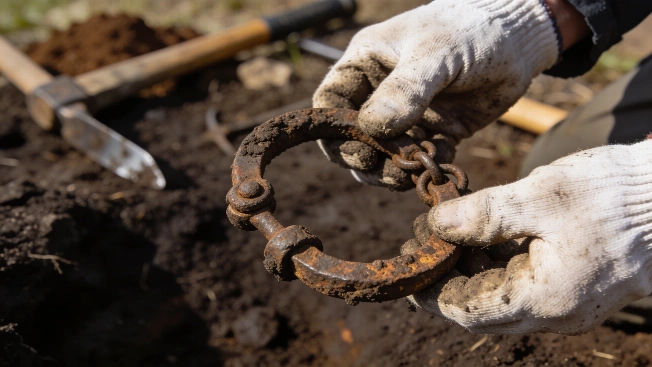
Iron Shackles at Allonnes Reveal Evidence of Celtic Slavery
Archaeologists have identified five pairs of iron restraints at a third-century BCE settlement in France's Loire Valley, providing rare direct evidence for the use of shackles and the possible presence of enslaved people in pre-Roman Gaul
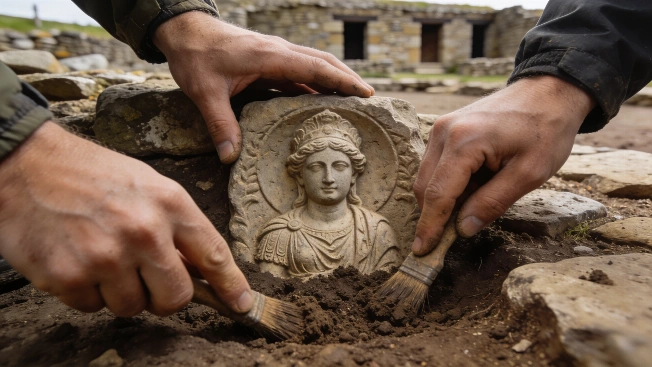
Roman Protective Deity Relief Found Beneath Vindolanda Barracks
Archaeologists at Vindolanda, a Roman fort near Hadrian's Wall, have uncovered a carved stone relief depicting a protective deity. The artifact was found beneath a fourth-century barracks floor, offering insight into ritual practices at the site.
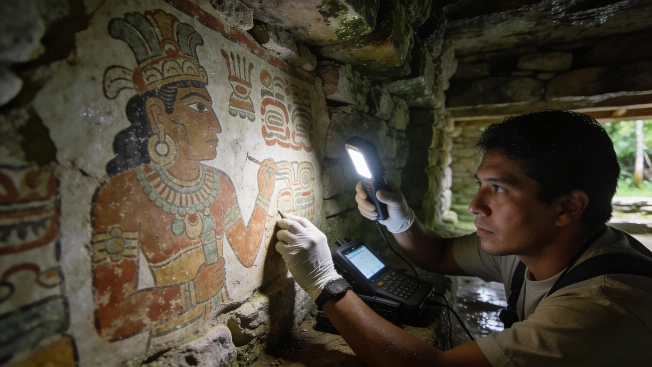
Early Maya Mural at Calakmul Depicts Mythical Hero Juun Ajaw
A mural from Structure II at Calakmul, Mexico, has been identified as one of the earliest known depictions of the Maya figure Juun Ajaw. Researchers used digital reconstruction to analyze the mural's iconography and its architectural context
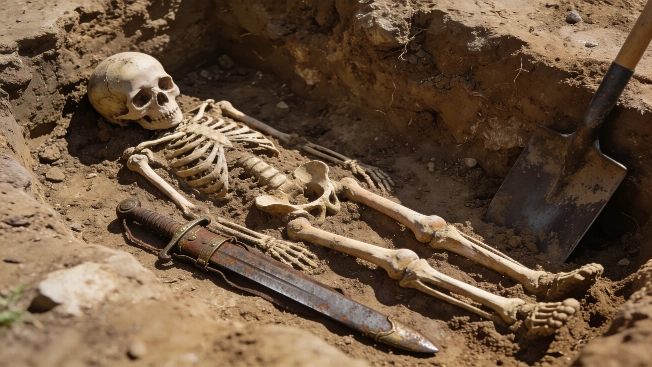
Iron Age Child Burial With Sword Sheds Light on Gaulish Practices
Archaeologists have uncovered a 2,400-year-old iron sword placed beside a child's remains at the Bois Médor site in central France, offering new evidence about burial customs and social roles in Iron Age Gaul
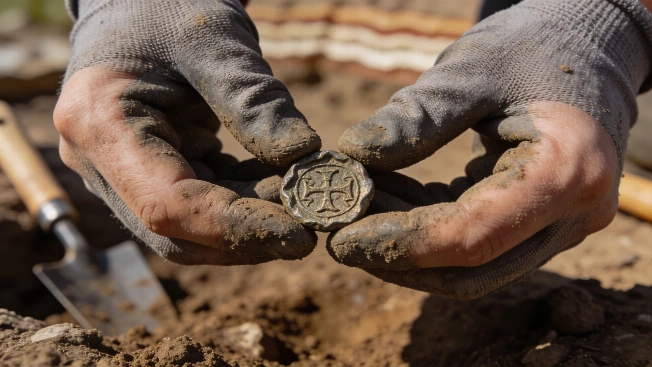
Medieval Lead Seals in Vladimir Linked to Princess Maria Vsevolzha
Archaeologists in Vladimir have uncovered rare lead seals from a medieval neighborhood, offering new evidence of Princess Maria Vsevolzha’s administrative role in pre-Mongol Rus'. The finds shed light on elite women’s authority in the 12th and 13th centuries.
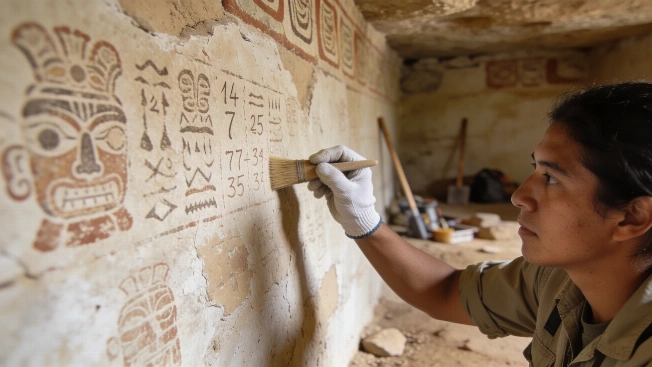
Eighth-Century Maya Astronomer's Name Found at San Bartolo-Xultun
Researchers have identified a Maya mathematician and astronomer in wall inscriptions at the San Bartolo-Xultun site in Guatemala, offering new details about scientific work in the region during the eighth century CE.
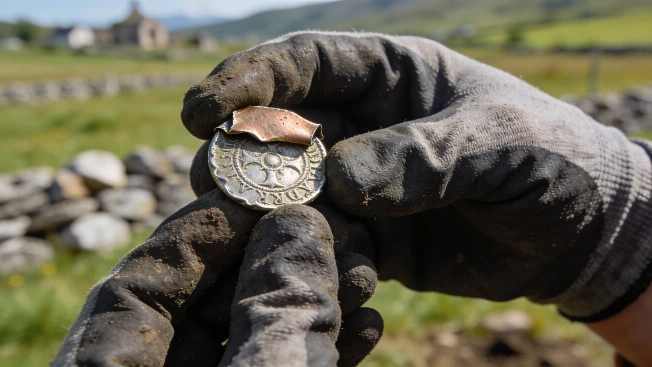
Rare 12th-Century Coin Linked to Magnus Barefoot Found in Norway
Archaeologists have identified a silver coin discovered near Utstein Monastery in southwest Norway as a rare issue from the reign of Magnus Barefoot, using numismatic analysis and X-ray imaging to reveal unique design features and possible reuse as jewelry
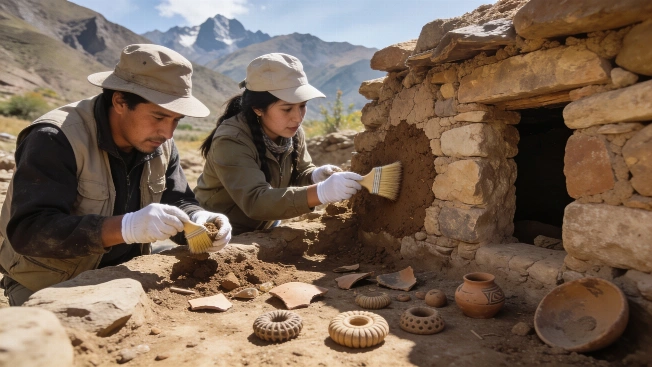
Excavation Reveals Urban Planning at Pre-Inca Huaylas Settlement in Peru
Archaeologists have uncovered a pre-Inca Huaylas settlement in Peru's Cordillera Negra, revealing evidence of urban planning, specialized craft production, and later Inca occupation through pottery, architecture, and workshop remains
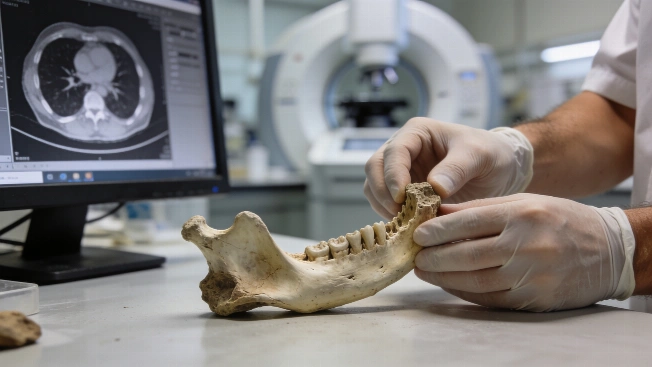
Ancient Jaw Injury in Qafzeh 25 Sheds Light on Early Human Violence
A new micro-CT study of the Qafzeh 25 remains from Israel reveals a partially healed jaw injury, offering rare evidence for trauma and possible interpersonal violence among early Homo sapiens in the Late Pleistocene
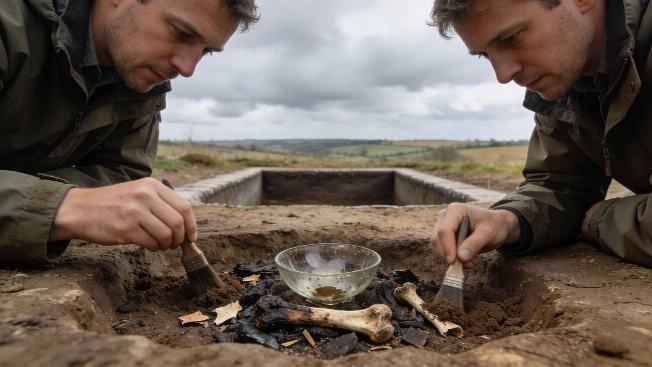
Iron Age Cemetery in England Reveals Early Roman Connections
Archaeologists have excavated a first-century CE cemetery in eastern England containing over 100 cremation burials, including high-status graves with imported Roman artifacts, offering new evidence for pre-conquest links between Britain and the Roman Empire
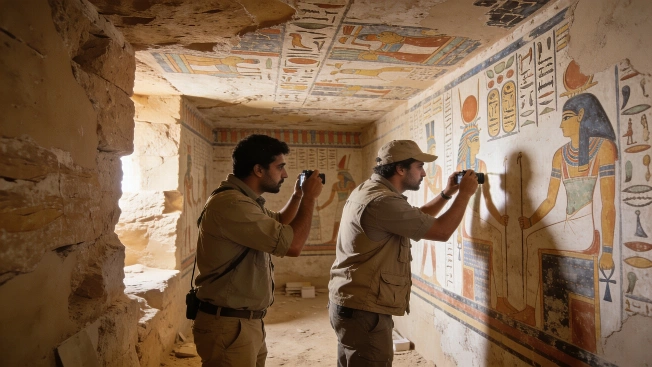
New Kingdom Tomb With Painted Walls Found at Sheikh Abd el-Qurna
Archaeologists excavating at Sheikh Abd el-Qurna on Luxor's west bank have identified a previously undocumented New Kingdom tomb, featuring painted wall scenes and inscriptions naming the owner as Paser. The find adds to the understanding of elite burial practices in Thebes.
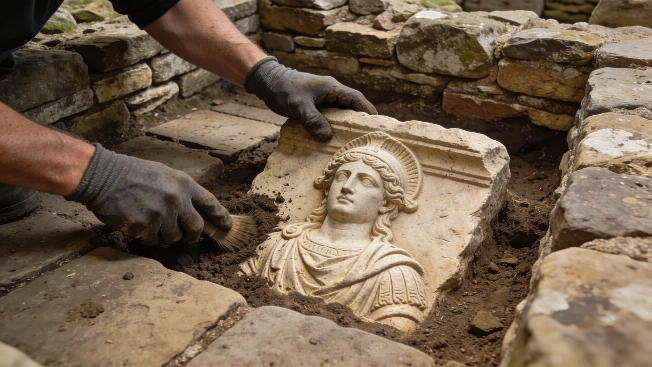
Roman Guardian Spirit Relief Found at Vindolanda Barracks
Archaeologists at Vindolanda in northern England have uncovered a rare carved sandstone relief depicting a Roman Genius, preserved beneath a fourth-century barrack floor and offering new evidence about religious practices at the site.
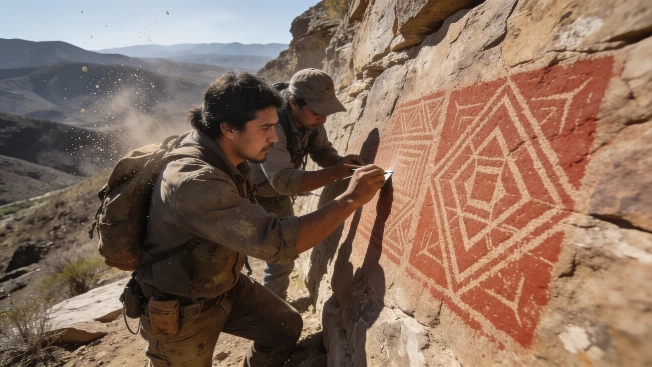
New Rock Art Sites Reveal Ancient Ritual Traditions in Zacatecas
Archaeologists have documented eight previously unknown rock art sites in the Valdecañas range of basic Mexico, using systematic surveys to investigate the ceremonial field and artistic traditions of hunter-gatherer groups who lived there 600 to 1,200 years ago.
Part 9 of 9