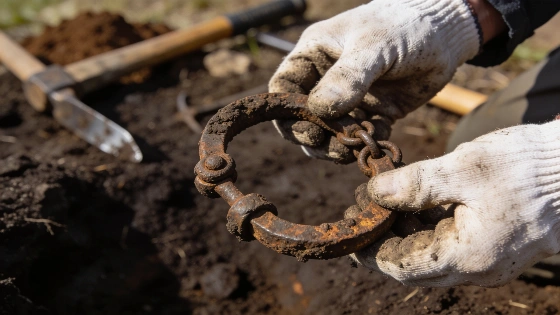
Archaeologists have identified five pairs of iron restraints at a third-century BCE settlement in France's Loire Valley, providing rare direct evidence for the use of shackles and the possible presence of enslaved people in pre-Roman Gaul
Archaeological excavations at the site of Allonnes in the Loire Valley, France, have uncovered five pairs of iron shackles dating to the third century BCE. The discovery, announced by the French National Institute for Preventive Archaeological Research (INRAP), offers rare material evidence for the use of physical restraints in a Celtic settlement prior to Roman conquest. The site, which includes a religious complex and evidence of specialist metalworking, provides new insight into the organization of labor and social hierarchy in Late Iron Age Gaul.
Material Evidence
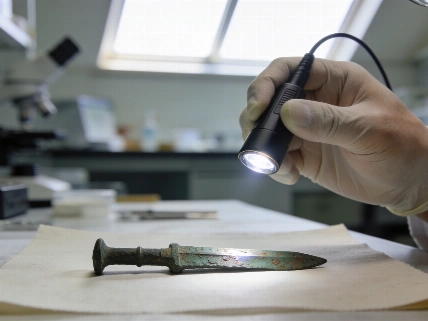
The iron restraints were recovered during a two-year excavation campaign that began in 2019. Archaeologists identified a double-wrist shackle, an ankle restraint, and three additional fragments of metal restraints. The wrist shackle, with an internal diameter of 6 centimeters, is small enough to suggest it may have been used on a woman or child. The ankle restraint weighs over 1 kilogram, indicating the significant physical burden imposed on those who wore it. Such finds are extremely rare for this period and region, as iron typically corrodes and shackles are seldom preserved or recovered in archaeological contexts.
In addition to the restraints, the excavation yielded a large assemblage of high-quality metal objects, including swords, spearheads, keys, and horse harness fittings. The presence of multiple types of metalworking debris and finished goods points to the activity of blacksmiths, coppersmiths, bronze workers, and sheet-metal specialists operating from small workshops within the settlement. The combination of restraints and weapons suggests a community with pronounced social stratification, where some individuals may have been held in captivity or forced labor.
Context and Interpretation
The Allonnes settlement was established in the third century BCE, a period known as the Late Iron Age (approximately 450-50 BCE). The site's location at the intersection of several major ancient roads likely facilitated trade and movement of goods and people. According to INRAP, the identification of shackles in this context supports the interpretation that Allonnes may have functioned as a hub for the trade or exploitation of enslaved individuals. Historical sources indicate that Celtic societies, including the Gauls, enslaved prisoners of war, convicts, and debtors, who could then be bought, sold, or forced to work in agriculture and other sectors. However, direct archaeological evidence for slavery in pre-Roman Gaul is limited, as the Celts left few written records and physical restraints are rarely preserved.
The religious complex at Allonnes included a sanctuary where offerings such as clothing, rings, and amulets were deposited. Many of these objects had been deliberately deformed or mutilated, a practice interpreted as transforming personal possessions into gifts for the gods. The site also yielded hundreds of coins spanning more than five centuries, with about a third showing signs of deliberate filing, shearing, or chiseling-modifications likely intended to remove their commercial value and dedicate them to ritual use.
Numerical and Analytical Details
In total, five pairs of iron shackles were recovered, comprising a double-wrist restraint, an ankle restraint, and three additional fragments. The wrist shackle's internal diameter measured 6 centimeters, while the ankle restraint weighed over 1 kilogram. The coin assemblage included hundreds of specimens, with mint dates ranging across more than 500 years. Approximately one-third of the coins exhibited evidence of deliberate mutilation. The site's metal assemblage also included numerous weapons and tools, reflecting the presence of specialist artisans and the economic significance of metalworking at Allonnes.
Limitations and Uncertainties
While the discovery of iron shackles at Allonnes provides rare direct evidence for the use of restraints in a Celtic context, several limitations remain. The precise circumstances under which the restraints were used-whether for the transport, punishment, or long-term confinement of enslaved individuals-cannot be established from the available evidence. The absence of associated human remains or clear mortuary contexts linked to the shackles limits the ability to reconstruct the identities or experiences of those subjected to restraint. Furthermore, the rarity of such finds may reflect both the limited preservation of iron and the selective recovery of artifacts during past excavations. The interpretation of Allonnes as a center for slave trading remains plausible but cannot be confirmed without additional evidence.
Understanding the archaeological significance of shackles requires attention to both preservation and context. Iron objects are prone to corrosion, and restraints are often removed or repurposed before deposition, making their survival in the archaeological record exceptional. The identification of shackles in a controlled excavation, with secure stratigraphic association and detailed documentation, strengthens the case for their use in restraining people. However, the absence of direct association with human remains or clear evidence of captivity means that interpretations must remain cautious. The Allonnes finds contribute to a growing but still limited body of evidence for social inequality and forced labor in Iron Age Europe.