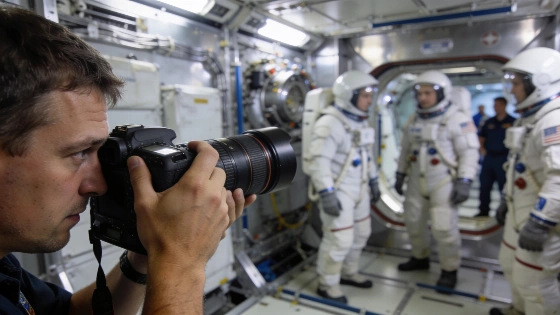
NASA's Johnson Space Center photography team has recorded decades of astronaut training, mission operations, and engineering tests, providing a visual record of human spaceflight and the people behind major missions using a range of imaging techniques
NASA's Johnson Space Center in Houston has served as a focal point for human spaceflight operations for more than half a century. The center's dedicated team of photographers has played a crucial role in documenting astronaut training, engineering development, and mission control activities, creating a visual archive that supports both technical analysis and public engagement. Their work spans the era of the Space Shuttle, the International Space Station, and the Artemis program, capturing not only the hardware and procedures but also the teams and individuals shaping each mission.
Imaging the Human Spaceflight Program
The Johnson Space Center's Imagery Acquisition Group is responsible for recording a wide range of activities, from astronaut simulations and spacecraft testing to milestone events and crew returns. The team's assignments require technical versatility, as they must adapt to challenging lighting, confined spaces, and rapidly changing operational environments. Their images are used for engineering review, mission documentation, and public communication, providing a record that supports both immediate mission needs and long-term historical analysis.
Photographers such as Robert Markowitz, Bill Stafford, James Blair, Helen Arase Vargas, Luna Posadas Nava, and David DeHoyos have each contributed to this visual record. Markowitz, for example, has documented the evolution of NASA's human spaceflight program for over thirty years, including the Space Shuttle era, the continuous occupation of the International Space Station, and the Artemis II mission. Stafford's approach emphasizes technical problem-solving and composition, while Blair brings a background in photojournalism to assignments ranging from astronaut geology training in Iceland to spacecraft recovery operations.
Technical Challenges and Methods
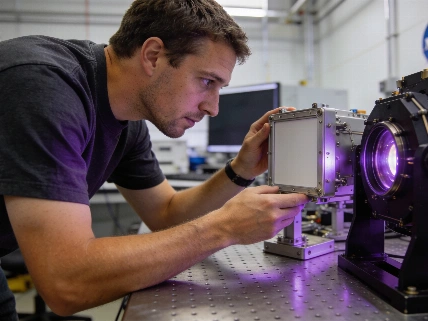
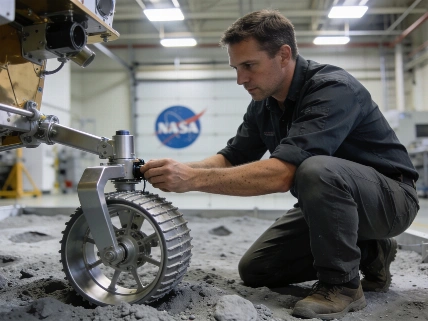
Capturing operational moments at Johnson often requires specialized equipment and careful planning. Photographers must work within strict safety protocols, especially during hazardous operations or in cleanroom environments. Assignments may involve photographing astronauts in full pressure suits, documenting hardware inside thermal vacuum chambers, or recording group portraits of large mission teams. The team uses a combination of digital cameras, specialized lenses, and lighting equipment to adapt to each scenario, ensuring that images meet both technical and archival standards.
For example, during the Artemis II lunar flyby in April 2026, the team documented flight control operations, crew training, and the return of astronauts to Ellington Field. These images serve not only as a public record but also as a resource for mission debriefs and engineering analysis. The volume and diversity of assignments require photographers to be adaptable, often moving between portrait sessions, field training exercises, and live mission events within a single day.
Documenting Teams and Milestones
The photographers' work extends beyond technical documentation to include the people and teams behind each mission. Group portraits, candid moments during training, and images of milestone celebrations help convey the collaborative nature of human spaceflight. For instance, Helen Arase Vargas has focused on capturing the return of Artemis II crew members and the activities of astronaut candidate classes, while Luna Posadas Nava has documented the Science Evaluation Room during real-time lunar science operations, highlighting the contributions of women in mission science.
David DeHoyos, who joined Johnson's photo lab in 1991, emphasizes the importance of preserving moments that may gain significance over time. His images of astronaut training, hardware testing, and crew events contribute to a historical archive that supports both technical review and public outreach. The team's collective efforts ensure that the visual history of NASA's human spaceflight program is both comprehensive and accessible.
Visual Records and Public Engagement
The imagery produced at Johnson is used in a variety of contexts, from engineering analysis to public communication. High-resolution photographs support technical documentation, while selected images are released to the public to illustrate mission progress and highlight the human element of space exploration. The team's work is also referenced in broader coverage of NASA's activities, such as the addition of new engineers to the Artemis launch team, as seen in recent reporting on Artemis program personnel.
As NASA prepares for future missions to the Moon and beyond, the role of documentary photography remains central to both mission operations and public understanding. The Johnson team's images provide a detailed, evidence-based record of the processes, challenges, and achievements that define human spaceflight.
In the context of space missions, documentary photography serves multiple scientific and operational purposes. Images are used to verify procedures, analyze equipment performance, and support mission debriefs. High-quality visual records also aid in anomaly investigation and engineering review, while selected photographs help communicate complex technical activities to a wider audience. The process requires careful calibration, attention to lighting and perspective, and an understanding of both the technical and narrative needs of each assignment.