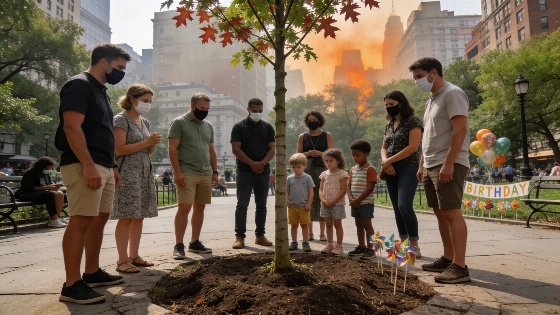
A young American sweet gum tree in Madison Square Park was grown from a seed that orbited the Moon aboard NASA's Artemis I mission, highlighting the intersection of space exploration and urban ecology
In the heart of New York City, a slender American sweet gum tree now stands in Madison Square Park, its origins tracing back not just to a nursery but to a journey around the Moon. This sapling, recently unveiled by the Madison Square Park Conservancy, was grown from a seed that traveled 1.3 million miles aboard NASA's Artemis I mission in 2022, connecting the city's landscape to the ongoing story of lunar exploration.
Seeds Sent Beyond Earth
The Artemis I mission, an uncrewed test flight for NASA's next-generation lunar program, carried approximately 1,000 seeds from five tree species-including Douglas fir, Loblolly pine, Sequoia, London plane, and American sweet gum-on a trajectory that looped around the Moon before returning to Earth. The seeds were later distributed to institutions across the United States as part of a public engagement effort to link spaceflight with terrestrial science and education. Madison Square Park's tree is one of several hundred "moon trees" now planted nationwide, each representing a living record of the Artemis program's early phase.
The selection of the American sweet gum for Manhattan was deliberate. While the species' native range is typically south of New York City, it is well-adapted to wet, temperate conditions and may become increasingly suited to the region as the climate warms. The Conservancy applied for a seedling in 2023 and received it in 2025, nurturing the tree for a year before its public introduction.
Legacy of Lunar Seeds
The concept of moon trees dates back to the Apollo era. In 1971, astronaut Stuart Roosa, a former smokejumper, carried about 500 seeds aboard Apollo 14. After their return, these seeds were germinated and distributed to parks and arboreta worldwide, establishing a tradition of linking space missions with botanical science. At the recent unveiling in Madison Square Park, a seed from one of these original Apollo-era trees was present, symbolically connecting the Artemis generation to its predecessor.
The event, held on July 16, featured a garden with celestial themes, children's artwork, poetry, and hands-on activities such as foam rocket launches. However, attendance was reduced due to poor air quality caused by wildfire smoke drifting south from Canada, a reminder of the environmental changes affecting urban life and tree selection.
Scientific and Environmental Context
The Artemis I mission's seed experiment is not a scientific study in the conventional sense, but it does offer a unique opportunity to observe whether exposure to deep space radiation and microgravity has any detectable effect on plant development. To date, there is no evidence that the lunar journey has altered the growth or health of the trees compared to Earth-bound controls, but the project continues to attract interest from educators and researchers monitoring the saplings' progress.
NASA's distribution of moon tree seedlings is also intended to build public interest in the Artemis program's future crewed missions, which aim to return astronauts to the lunar surface by 2028. The symbolic value of these trees lies in their dual role as both scientific curiosities and living reminders of humanity's expanding reach beyond Earth.
Numbers and Mission Details
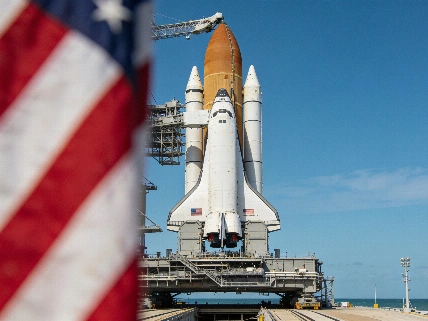
Artemis I launched in November 2022, sending the Orion spacecraft on a 25.5-day mission that covered approximately 2.1 million kilometers (1.3 million miles) in total. The seeds spent the entire mission inside the spacecraft, experiencing the same radiation and microgravity environment as future human crews will face. After splashdown, the seeds were returned to NASA for distribution. The Madison Square Park moon tree was planted in 2025 and publicly unveiled in July 2026, joining a network of similar plantings across the United States.
While the American sweet gum in Manhattan is still a young sapling, its presence is a visible marker of the intersection between planetary science, public engagement, and the changing urban environment. The tree's adaptation to New York's climate will be monitored in the years ahead, offering a small but tangible link between lunar exploration and life on Earth.
To understand the significance of the moon tree project, it is helpful to consider the role of biological experiments in space missions. While most space science focuses on physical measurements-such as imaging, spectroscopy, or particle detection-biological payloads like seeds or microorganisms are used to test the effects of spaceflight conditions on living systems. These experiments help researchers assess the risks and challenges of long-duration missions, including radiation exposure and altered gravity, which are critical for planning future human exploration beyond low Earth orbit.