A $37 million federal quantum-chemistry program requires applicants to partner with hardware providers. Neutral-atom developer QuEra Computing was selected for co-design work on projects with LBNL and LLNL, alongside Phasecraft.
The solicitation made a direct partnership with a quantum hardware provider a condition of applying, tying the program's research plans to access to quantum processors. That requirement defines QC3, the Department of Energy's Quantum Computing for Computational Chemistry initiative, run by ARPA-E. Announced in March 2026, the three-year program aims to connect algorithms with error correction and processor architecture for energy-related chemistry and materials research.
QC3 allocates $37 million across nine teams. QuEra Computing, a neutral-atom quantum-computer developer, provides external hardware for three projects led by Lawrence Berkeley National Laboratory (LBNL), Lawrence Livermore National Laboratory (LLNL) and Phasecraft. HPCwire reports that five of the nine lead performers operate their own quantum machines; QuEra supplies external hardware for three of the remaining four projects. The full $37 million is shared across the program, while the public announcement does not detail individual project allocations.
The partner requirement
The three projects involving QuEra tackle different energy challenges. LBNL's SuperKIQ project will investigate Krylov-based algorithms and error-correction methods to search for high-temperature superconducting materials. LLNL's MAGNETIQC project combines quantum and machine-learning methods to develop lighter, stronger magnets for applications such as electric motors and generators. Phasecraft's project focuses on modeling electrolysis to reduce hydrogen production's reliance on iridium, a critical material.
QuEra provides access to neutral-atom hardware and technical expertise, while working with the teams on algorithms and processor architecture. The projects span these layers, developing error correction and hardware design alongside computational methods for materials and chemical problems.
Making a hardware partnership a requirement is a program-design choice, not proof that a particular quantum chemistry calculation has been completed. It means applicants had to involve a quantum hardware provider directly. The requirement alone does not show that the resulting systems can calculate a molecule more accurately or efficiently than classical methods.
Co-design across layers
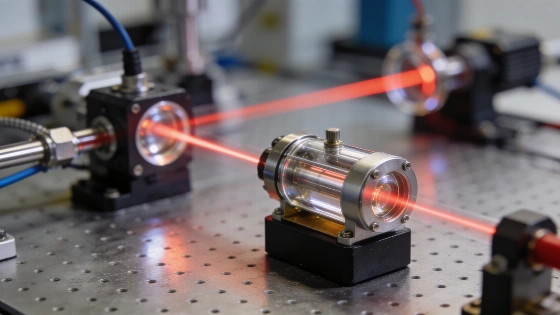
The program emphasizes co-design of algorithms, error correction and reconfigurable hardware architectures. These elements are connected: an algorithm's demands affect how a processor is arranged and controlled, while error-correction methods depend on the device's behavior and the errors it produces. QuEra's neutral-atom approach uses atoms controlled with optical tweezers. The company contributes hardware access and expertise to its three QC3 teams.
Quantum Zeitgeist describes a program goal of achieving a able to grow, hundredfold improvement over classical models, validated at approximately 100 logical qubits. It also reports energy-impact criteria for target applications: at least 1015 British thermal units of energy impact or emissions reductions equivalent to one gigatonne of CO2. These are program ambitions, not reported project results.
A separate diamond-spin test report described a three-qubit Grover search at 296.3 K. That report covers a specific hardware experiment; QC3 is a multi-year research program built around a partnership structure. They address different stages of quantum-computing development.
Research goals and outcomes
QC3 is in its project-launch phase, with teams pursuing research on superconductors, magnets and hydrogen production. The program brings quantum hardware providers together with national laboratories and other research performers to develop hardware alongside algorithms and error-control methods.
Quantum chemistry uses physical models to describe molecular electronic structure and predict properties such as energies. A quantum processor could represent aspects of such a system, but useful results require calculations controlled well enough to produce reliable measurements, with output checked against an appropriate classical method. Error correction is one part of that engineering challenge. Making it a research focus does not mean the challenge has been overcome.