
Ancient Egypt
18 reportsThe public record for Ancient Egypt is read through trade and exchange; political or religious institutions; and chronology and regional variation. The analysis begins with excavated contexts for chronology and regional variation, and uses inscriptions or archives to identify where the explanation succeeds or fails; interpretation remains cautious because surviving evidence is uneven and later narratives can oversimplify social diversity.
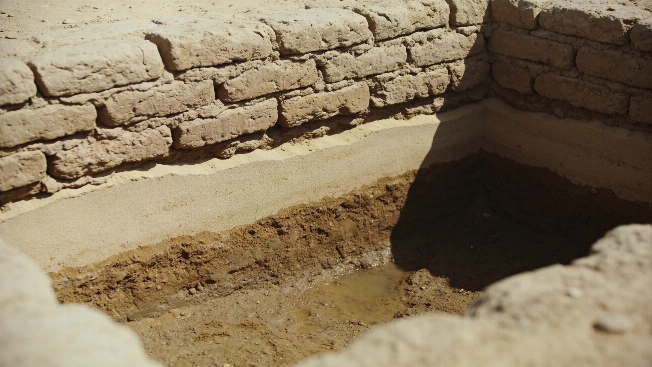
Buto's Saite Structure May Have Rested on Engineered Sand
Satellite radar and electrical resistivity surveys mapped a large buried anomaly beneath Kom C at Buto. A targeted excavation confirmed thick mudbrick walls while the building's function and the role of its sand base remain uncertain
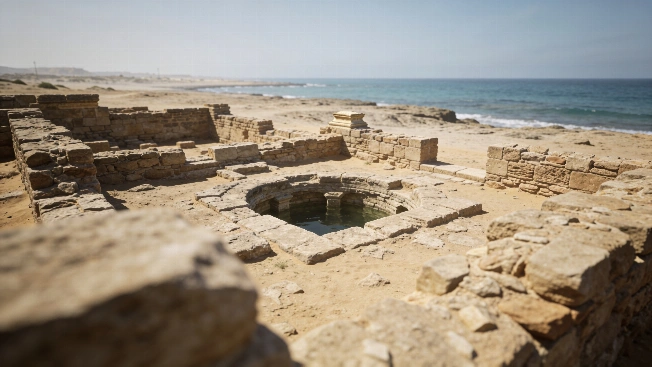
Satellite Survey Could Trace an Ancient Egyptian Trade Settlement
Researchers are comparing ground observations with satellite features across a roughly two-to-three-hectare site near Egypt's Mediterranean coast, testing how remote sensing can guide investigation where drones are prohibited
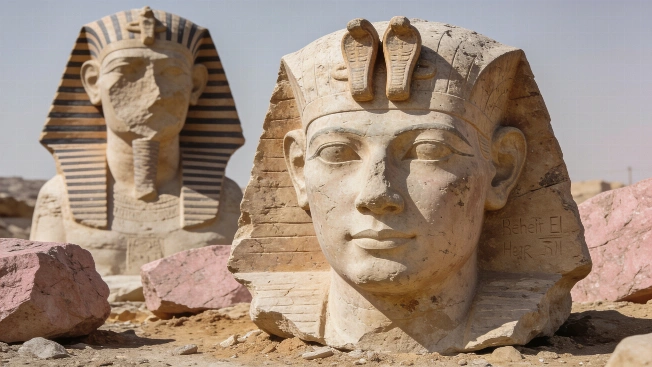
Colossal statue remains may depict Ramses II in Egypt
A carved head identified by inscription as Ramses II and a second monumental figure found at Behbeit El-Hagar are tentatively linked to the king. Their original setting and relationship to the site's later temple remain unestablished.
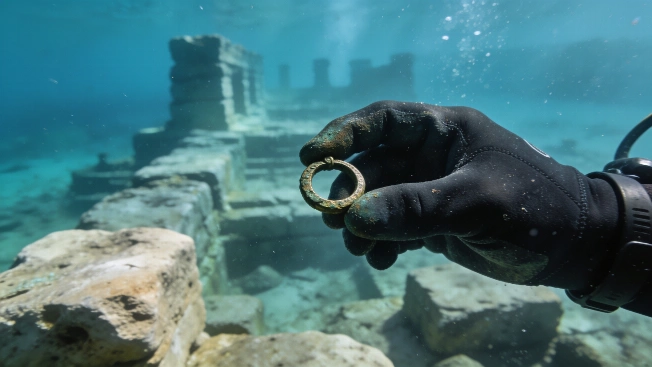
Bronze Seal Ring Reveals Alexandria Lighthouse in Portus Magnus
A bronze seal ring recovered from submerged Antirhodos bears an image of Alexandria's famous lighthouse. Its archaeological context may connect the royal quarter with the symbolic and administrative reach of the Pharos, although the object's date, owner and precise function remain unconfirmed.
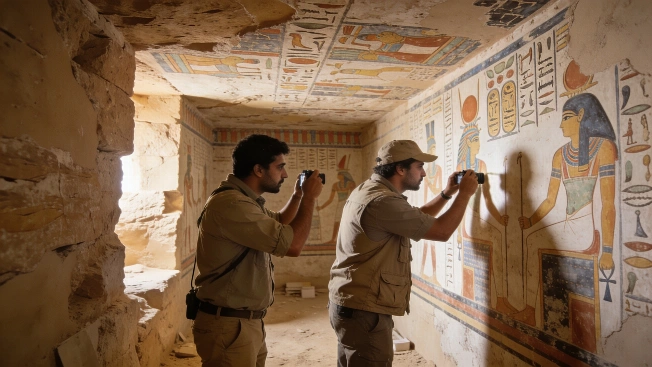
Roman Tomb in Egypt Reveals Rare Greek Funerary Poem
A Roman-era pyramid tomb at Bir al-Shaghala pairs Egyptian funerary imagery with a 19-line Greek poem; excavators also found a Constantine-era bronze coin, offering a rare view of cultural exchange in the Dakhla Oasis.
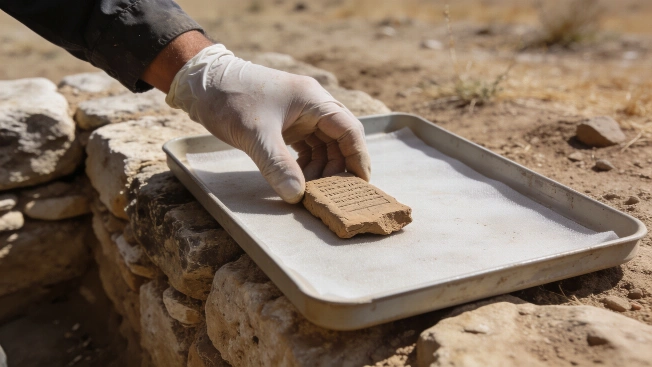
Hattusa Fragment Reconnects a Piece of the Kadesh Treaty
A newly identified cuneiform fragment from Hattusa belongs to the Hittite version of the Kadesh Peace Treaty and preserves clauses on fugitives who crossed between Egypt and Anatolia
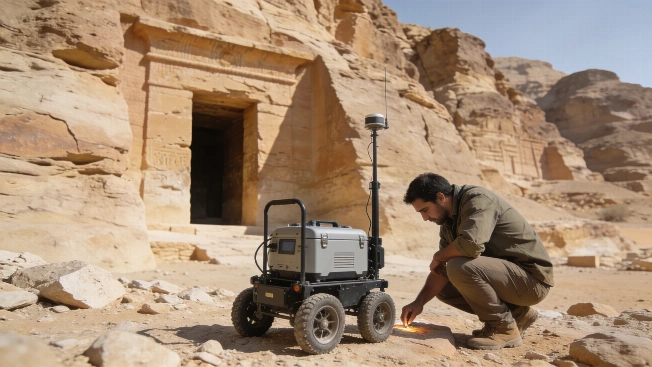
Radar Evidence Revives Search Beyond Tutankhamun's Tomb
More than 1,200 microgravity readings and ground-penetrating radar surveys have identified low-density anomalies beyond Tutankhamun's burial chamber. The findings are consistent with possible corridors and rooms, but neither the structures nor a connection to Nefertiti has been confirmed by excavation.
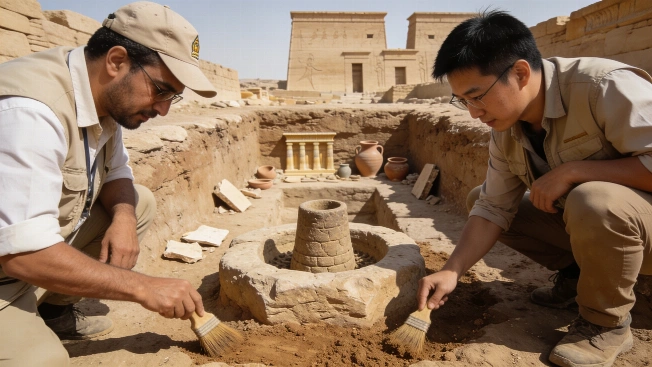
Ancient Memphis Excavation Reveals Residential Complex and Wine Press
Archaeologists working at Mit Rahina near the Temple of Sekhmet have uncovered a residential complex and a possible wine press, alongside artifacts spanning multiple periods that offer new evidence for daily life in ancient Memphis.
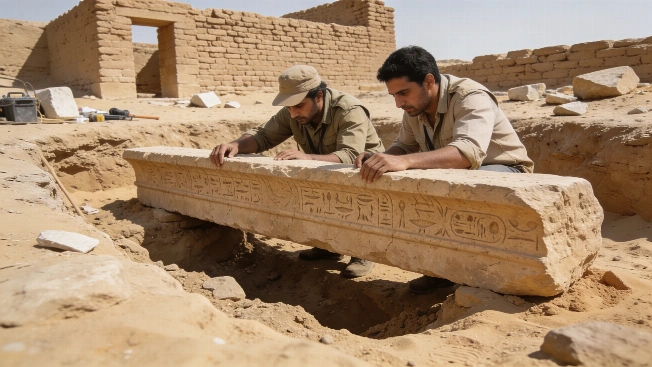
Ramesses II Inscription Hints at Location of Ancient Mesn in Sinai
Archaeologists at Tell Abu Saifi in northern Sinai have uncovered a sandstone lintel inscribed with the name of Ramesses II and a reference to Mesn, alongside temple remains reused during the Roman period, offering new clues to Egypt's eastern frontier settlements
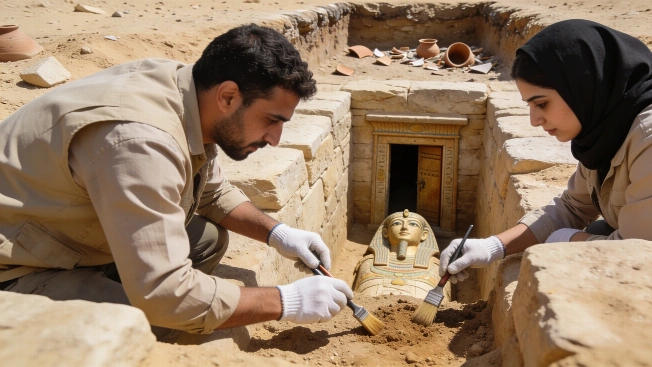
Old Kingdom Tomb and Burial Shafts Uncovered at Saqqara
Archaeologists excavating the Bubasteion necropolis at Saqqara have identified the tomb of Sakhnetio-Btah, a high-ranking Old Kingdom official, alongside a network of burial shafts containing human remains and funerary objects from multiple periods.
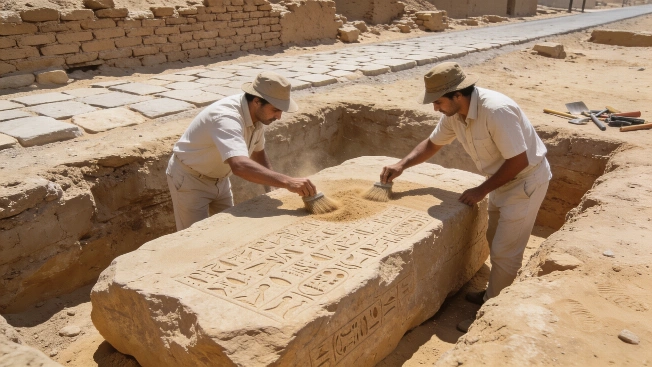
New Finds at Tel Abu Saify Suggest Link to Lost City of Msen
Archaeologists at Tel Abu Saify in Egypt have uncovered evidence in fortifications and roads, alongside inscriptions that may connect the site to the ancient city of Msen, offering new evidence for the route and function of the Horus Military Road.
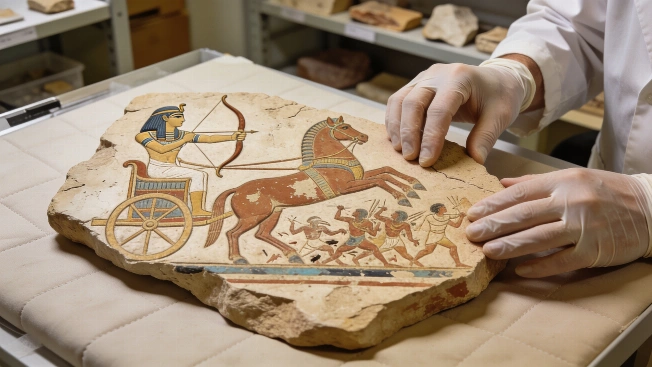
Ancient Egyptian Relief Fragment Shows Pharaoh Overcoming Foreign Foes
A painted sandstone relief from Luxor, created during the reign of Amenhotep II, depicts an Egyptian pharaoh defeating western Asian soldiers. Later reused in a temple foundation, the artifact offers understanding into royal iconography and material reuse.
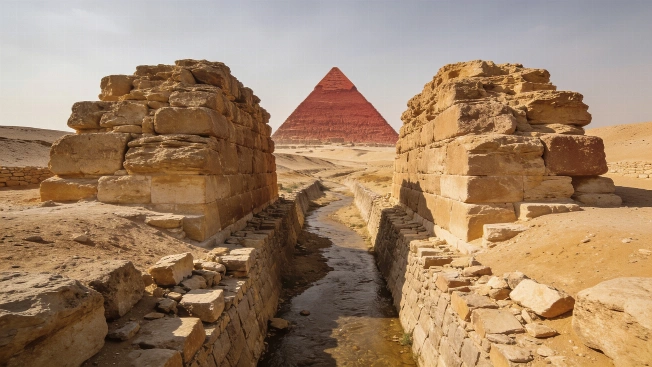
Ancient Dams Near Egypt's Red Pyramid May Reveal Water Management
A new study reinterprets two large stone structures near the Red Pyramid at Dahshur as ancient dams, not ramps. Using satellite imagery and hydrological modeling, researchers propose that the structures formed part of a sophisticated water-management system more than 4,500 years ago.
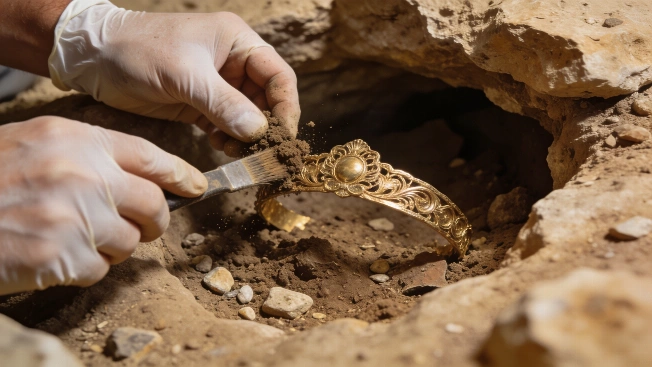
Cypriot Gold Ornaments Reveal Ancient Mediterranean Connections
Archaeologists have analyzed a cache of 3,400-year-old gold ornaments from chamber tombs at Hala Sultan Tekke, Cyprus, finding evidence of local craftsmanship shaped by Egyptian, Mycenaean, Minoan and Near Eastern traditions.
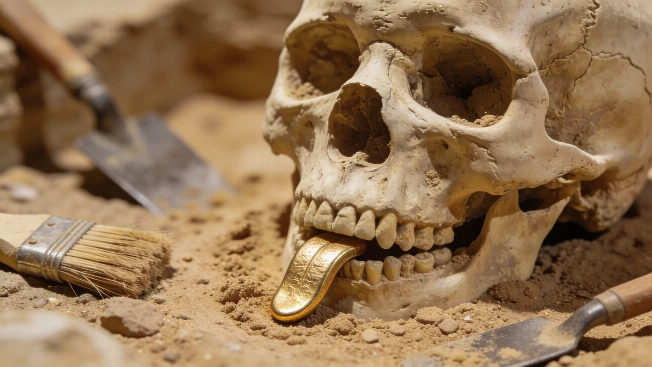
Gold Tongues in Egyptian Tombs and a New Monkey in Congo
Archaeologists have uncovered 18 tombs in Egypt containing gold tongue amulets, while researchers in the Congo rainforest have identified a new monkey species. These discoveries highlight both the complexity of ancient mortuary practices and the ongoing potential for finding new species.
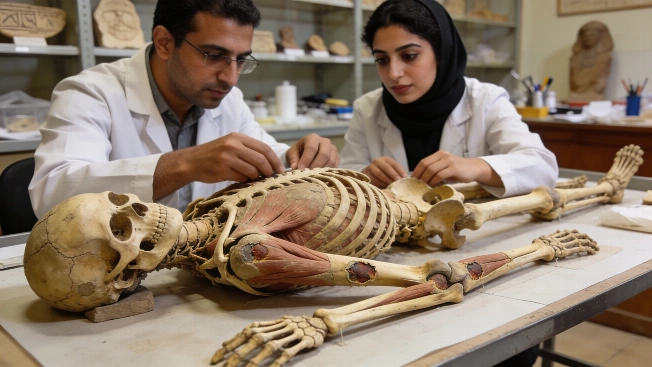
Ancient Egyptian Princesses Show Evidence of Skilled Archery
Bioarchaeological analysis of Middle Kingdom royal women from Dahshur reveals skeletal adaptations consistent with regular archery and hunting, challenging assumptions that weapons in their tombs were only symbolic
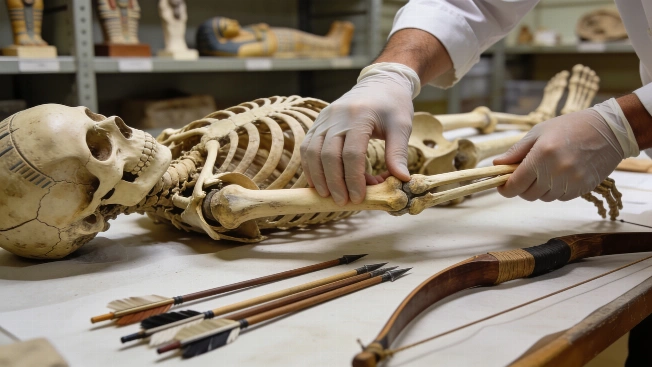
Muscle Marks on Egyptian Royal Women Suggest Weapon Use, Study Debated
Analysis of nearly 4,000-year-old skeletal remains from Egypt's Middle Kingdom reveals pronounced upper-body muscle attachments in several royal women. Researchers propose these changes may reflect archery or weapon training, but experts urge caution
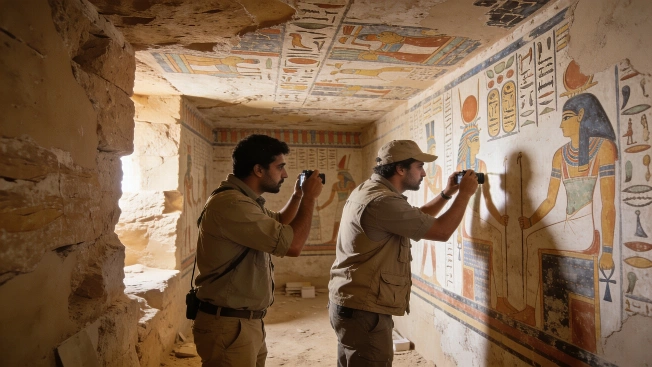
New Kingdom Tomb With Painted Walls Found at Sheikh Abd el-Qurna
Archaeologists excavating at Sheikh Abd el-Qurna on Luxor's west bank have identified a previously undocumented New Kingdom tomb, featuring painted wall scenes and inscriptions naming the owner as Paser. The find adds to the understanding of elite burial practices in Thebes.