
Biotechnology
9 reportsBiomanufacturing and biosafety are compared across new studies and reference records. The analysis asks what biosafety risks exist and what ethical issues arise, showing where benchmarks do not predict field performance or broader impact.

Living Cells Could Help Power Battery-Free Implants
A University of Massachusetts Amherst team built a flexible mesh that interweaves energy-harvesting ribbons with cardiac microtissue. The lab prototype points to a possible power source for implants but has not been shown powering a medical device
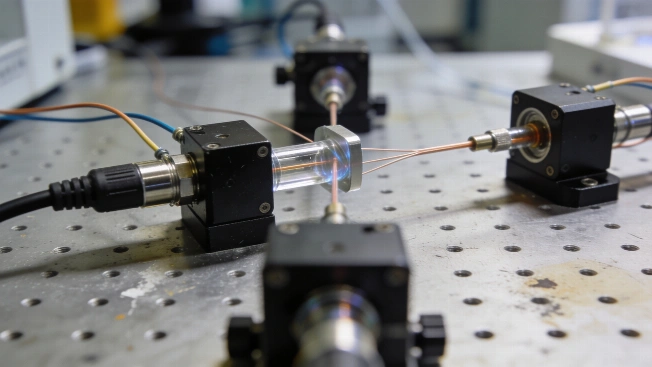
Quantum Computing Inc. Applies Dirac-3S to XPro Indication Search
INmune Bio and Quantum Computing Inc. will use QCi's room-temperature Dirac-3S system to search four completed XPro trials and biomedical databases for response patterns that may point to additional disease indications
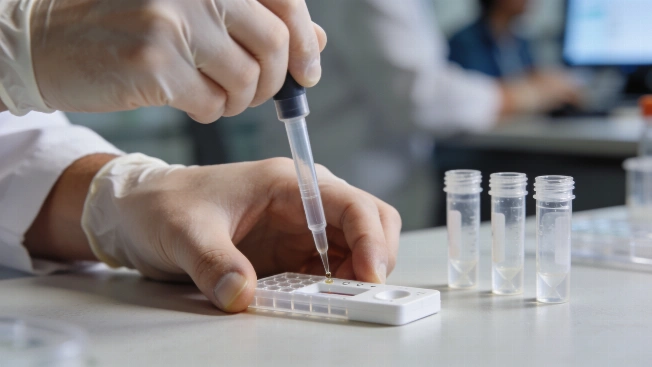
Claude designs 35,000 antibody candidates for allergy research
In a month-long collaboration with Divergence Labs Claude produced about 35,000 antibody designs. Early lab tests found candidates for binding IgE and detaching it from immune cells; researchers have yet to combine both functions in one molecule
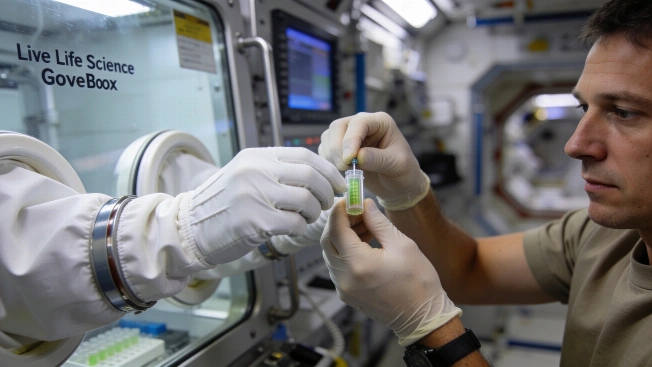
Jessica Watkins Prepares Cells for Cartilage Printing in Microgravity
On Oct. 9, 2026, Jessica Watkins prepared a cell-and-bioink mixture in Kibo's Life Science Glovebox for an investigation of cartilage bioprinting in microgravity; NASA's account describes the setup, not a tissue-quality result
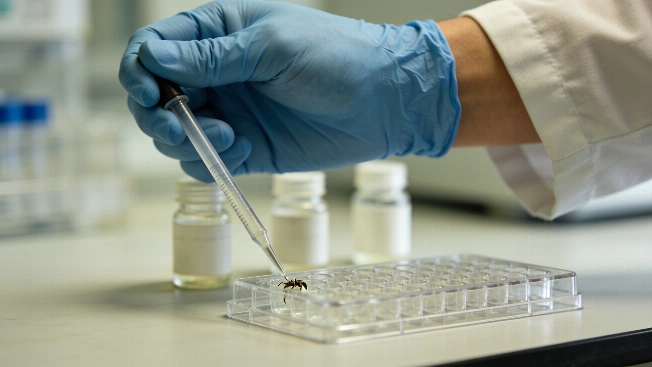
Claude-Designed Proteins Bind Scorpion Toxins in Lab Tests
Claude produced 318,484 candidate proteins in 64 hours; laboratory teams found 17 that met binding criteria for four scorpion neurotoxins. The tests show molecular attachment, not toxin neutralization or treatment efficacy
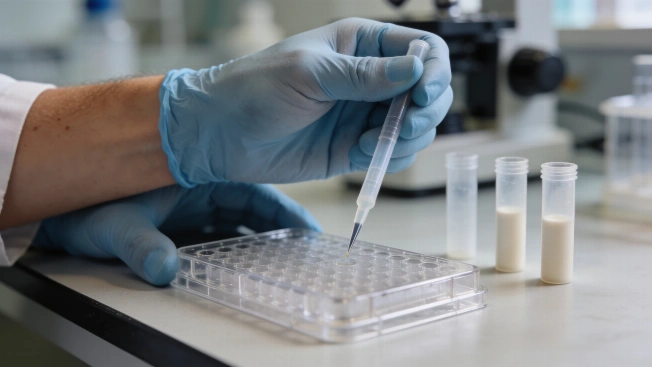
Google speeds protein prediction 8.6 times for cancer research
Google researchers narrowed structural calculations to the part of a target where a designed protein should attach. The method accelerated predictions 8.6 times in tests, while laboratory results remain far from evidence of a cancer treatment.
A $1.8 Billion Bet on Predictive Models of Living Cells
Federal agencies and major technology companies are assembling nearly $1.8 billion in funding and resources for open biological datasets designed to train models that predict cellular responses
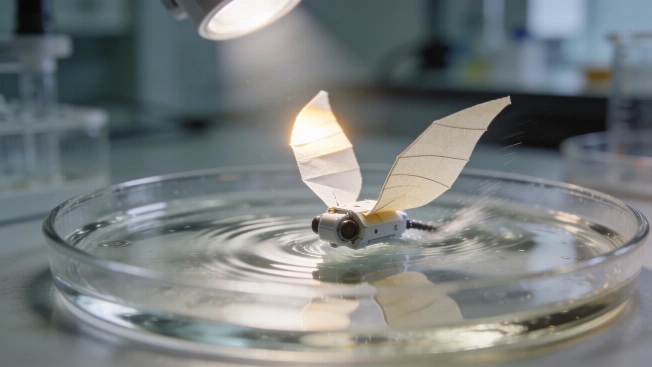
MIT Builds a Muscle-Powered Robot Thin Enough to Swim Mazes
MIT engineers have built a paper-thin biohybrid robot that swims through water using light-responsive muscle cells. Its maze test demonstrates controlled locomotion with minimal biological material, but not autonomous operation.
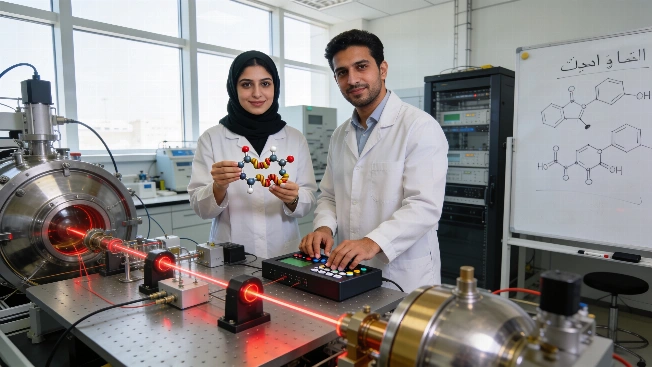
Neutral-Atom Quantum Processors Simulate Protein Gelation Structures
Pasqal and True Nexus have encoded protein gelation structures on neutral-atom quantum processors, aiming to model dynamic protein aggregation beyond the reach of classical simulation and inform the design of functional food proteins.