A University of Massachusetts Amherst team built a flexible mesh that interweaves energy-harvesting ribbons with cardiac microtissue. The lab prototype points to a possible power source for implants but has not been shown powering a medical device
When batteries in pacemakers and cardioverter-defibrillators run out, patients need surgery to replace them. The batteries last about five to 15 years on average, depending on default settings and how frequently the body uses the device. Health Canada's Scientific Advisory Committee on Medical Devices Used in the Cardiovascular System notes that reduced battery longevity can mean more generator replacements, greater exposure to infection and higher lead-extraction risk.
A distributed design
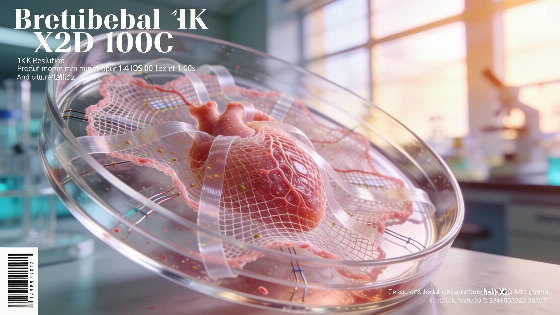
Engineers at the University of Massachusetts Amherst built a flexible mesh that integrates energy-harvesting electronics with human cells. The proof-of-concept platform is designed to move with tissue, distributing harvesting units through living tissue rather than concentrating energy storage in a single battery. It has not been shown powering an implanted medical device.
Principal investigator Jun Yao and first author Siqi Wang based the design on the idea that cells generate electrical and mechanical activity that could be coupled to piezoelectric devices. Their mesh distributes harvesting units across a network, unlike a battery's centralized power source. The first version, described in Science Advances, generated approximately ten times the power density of existing harvesting systems based on a centralized concept. A separate thin-film energy-conversion approach appears in this EPFL device report, which examined converting millimeter waves to light; the Amherst team instead targets energy from living tissue.
Building the mesh
The structure uses thin ribbons carrying piezoelectric harvesters on an ultrathin, ultraflexible polymer platform. Each ribbon is approximately 20-100 µm wide, smaller than a typical biological cell, while gaps in the rectangular lattice allow cells to attach and grow through the network.
Each harvester contains a thin film of lead zirconate titanate, or PZT, between two electrodes. The slender ribbons bend with the tissue, producing electrical output through the piezoelectric units. Polyimide forms the bottom dielectric layer; SU-8 supports electrode connections and serves as an upper insulating layer and final cap.
Proof of concept
The researchers seeded the mesh with human embryonic stem-cell-derived cardiomyocytes. The cells aggregated around the structure and formed a laminar cardiac microtissue, demonstrating integration between the living tissue and flexible electronic network. The team also described the mesh as a possible template for engineering cardiac tissue for transplantation research.
Tests indicated that stacking meshes could increase energy production. The reported tenfold power-density comparison is a laboratory result, while the prototype has not been demonstrated powering a pacemaker, defibrillator or other medical implant. The researchers also propose extending the framework beyond mechanical energy, potentially drawing on cellular energy processes associated with ATP.
Implantable pacemaker pulse generators are regulated as Class III medical devices in the U.S. Food and Drug Administration's classification system. The mesh remains an experimental research platform rather than an approved replacement for an implant battery. Its potential uses also include engineered cardiac tissue, distinct from supplying power to medical devices.