Pasqal and True Nexus have encoded protein gelation structures on neutral-atom quantum processors, aiming to model dynamic protein aggregation beyond the reach of classical simulation and inform the design of functional food proteins
For the first time, a neutral-atom quantum processor has been used to encode the molecular structures underlying protein gelation-a complex process that determines the texture and binding properties of food proteins. Pasqal and True Nexus, with support from Saudi Arabia's Ministry of Communications and Information Technology, claim to have mapped the quantum-chemical interactions responsible for protein aggregation directly onto a programmable array of neutral atoms. This approach targets a longstanding bottleneck in computational biology: the inability of classical algorithms to simulate the dynamic, strongly correlated behaviors that drive gelation and related phase transitions in proteins.
Quantum Hardware for Protein Modeling
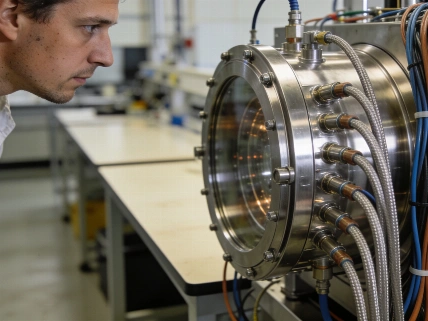
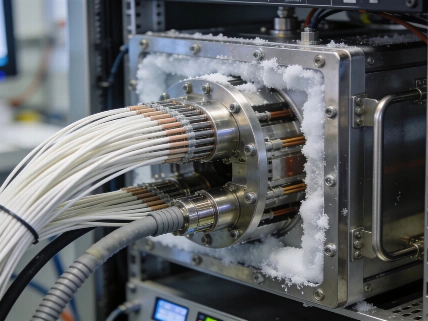
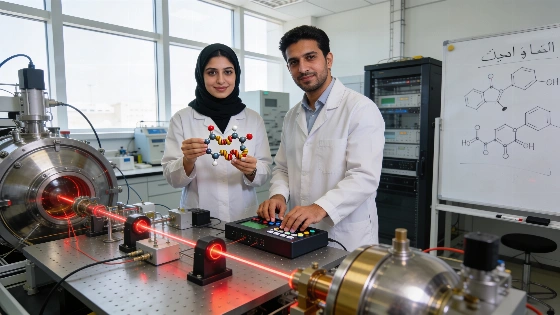
The technical advance centers on Pasqal's neutral-atom quantum processing units (QPUs), which use arrays of individually trapped atoms manipulated by laser fields to realize analog quantum simulations. Unlike digital quantum computers, which execute gate-based circuits, analog quantum simulators can natively represent the continuous-variable interactions and spatial configurations found in molecular systems. In this demonstration, the researchers mapped the structure-to-function relationships of proteins involved in gelation onto the QPU, aiming to predict how specific amino acid sequences and environmental conditions affect the formation of cross-linked gel networks.
While the companies have not disclosed the number of atoms or the specific protein systems modeled, the use of analog Hamiltonian simulation allows for the exploration of molecular configurations that are computationally intractable for classical mean-field solvers. The workflow integrates True Nexus's AI-driven protein design platform with Pasqal's hardware, forming a hybrid pipeline that bypasses the need for repeated benchtop trial-and-error in protein engineering. The stated goal is to enable rational design of plant-based, halal, and novel proteins that can replicate the functional properties of animal-derived gelatin, egg, and dairy proteins.
Simulation Versus Experiment
Classical bioinformatics tools can reliably predict static protein structures, but simulating dynamic behaviors such as gelation, foaming, or emulsification under realistic thermodynamic conditions remains out of reach for most classical methods. The challenge lies in capturing the many-body quantum effects and strong correlations that govern how proteins aggregate and transition from liquid to gel phases. By encoding these interactions onto a neutral-atom QPU, the team aims to generate predictive models that could inform experimental protein design and reduce reliance on empirical screening.
However, the announcement does not provide detailed benchmarking data, such as the size of the simulated system, the fidelity of the quantum mapping, or direct comparison with classical simulation results. Without these figures, it is not possible to assess the quantitative accuracy or practical utility of the approach. The demonstration remains a proof of principle, with further validation required to establish whether quantum simulation can deliver actionable insights for protein engineering at industrial scale.
Saudi Quantum DeepTech Ambitions
The project is positioned as a flagship demonstration for Saudi Arabia's Vision 2030 technology strategy, with the computational framework intended to support the proposed Saudi Quantum DeepTech Foundry. The initiative aims to expand quantum applications across life sciences, advanced materials, and environmental technologies, leveraging national investment to build a domestic quantum ecosystem. The involvement of Pasqal CCO Mark Armstrong and True Nexus CEO Dominik Grabinski signals a coordinated push to align quantum hardware development with sectoral priorities in food technology and biotechnology.
Saudi Arabia's investment in quantum infrastructure follows a global trend of integrating quantum processors into high-performance computing workflows, as seen in reported earlier efforts to connect trapped-ion quantum hardware to supercomputing platforms. The current demonstration, however, remains at the stage of technical feasibility rather than operational deployment, with no evidence yet of peer-reviewed validation or independent reproduction.
Technical and Commercial Caveats
Despite the promise of analog quantum simulation for modeling complex molecular systems, several engineering and scientific hurdles remain. Neutral-atom QPUs are still subject to noise, calibration drift, and limited system size, which constrain the accuracy and scalability of simulations. The absence of published error rates, coherence times, or benchmarking against classical methods makes it difficult to evaluate the claimed advantage. Furthermore, the translation of quantum-simulated protein structures into experimentally validated, functional food ingredients will require extensive cross-disciplinary work, including biochemical synthesis, material characterization, and regulatory assessment.
While the integration of AI-driven protein design with quantum hardware is a logical step toward more predictive molecular engineering, the field has yet to demonstrate a clear, reproducible quantum advantage for real-world biological problems. Until detailed technical data and independent validation are available, claims of practical impact should be treated with caution. The announcement reflects the growing ambition of national quantum programs to stake out leadership in applied quantum technologies, but the gap between laboratory demonstration and industrial utility remains substantial.
Quantum simulation refers to the use of controllable quantum systems-such as arrays of trapped atoms, ions, or superconducting circuits-to model the behavior of other quantum systems that are difficult or impossible to simulate classically. Analog quantum simulators, like those used in this work, directly encode the interactions of a target system into the physical couplings of the simulator, allowing researchers to study many-body effects, phase transitions, and emergent phenomena. However, analog simulators are limited by noise, calibration, and the challenge of verifying results in regimes where classical computation fails. Demonstrating practical quantum advantage in simulation requires not only hardware capable of representing large, strongly correlated systems, but also robust methods for validating and interpreting the output in the absence of classical benchmarks.