INmune Bio and Quantum Computing Inc. will use QCi's room-temperature Dirac-3S system to search four completed XPro trials and biomedical databases for response patterns that may point to additional disease indications
XPro is designed to neutralize soluble tumor necrosis factor (sTNF) while preserving transmembrane TNF signaling. That biological target will guide a project searching for disease pathways and patient-response patterns that may help prioritize additional indications for the investigational drug.
The Search Space
INmune Bio and Quantum Computing Inc. have entered a commercial collaboration to apply quantum optimization, artificial intelligence and conventional analytics to drug-indication discovery. The analysis will draw on patient-response patterns across four completed clinical trials, alongside clinical, preclinical and public biomedical datasets, to prioritize disease indications, patient populations and biomarkers for XPro(TM) (XPro1595, also called pegipanermin).
In its November 5, 2026 business update, INmune Bio said the work is an evaluation of possible rare-disease settings, not an announcement of a selected new indication. The company said it does not intend to commit corporate capital to a new XPro clinical program until Ebstrocel(TM) is approved or dedicated resources for XPro are secured.
The search is combinatorial: biological responses can depend on relationships among many variables, making it challenging to identify patterns that may correspond to a relevant disease pathway. The project aims to frame prioritization questions as optimization problems for analysis alongside conventional statistical and machine-learning approaches.
What Dirac-3S Does
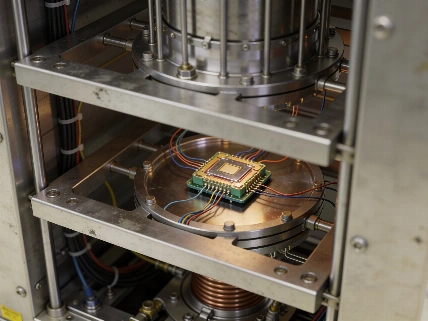
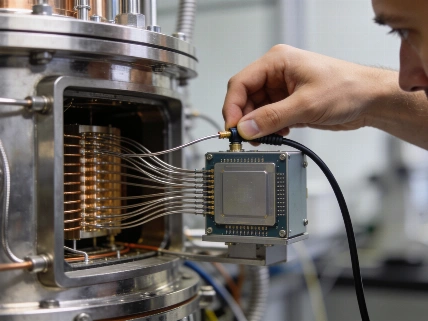
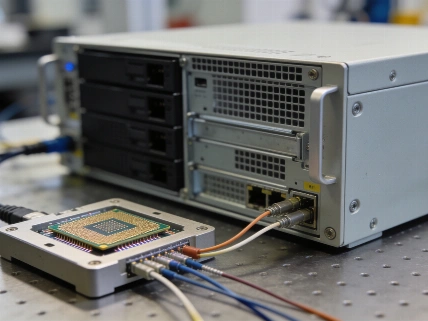
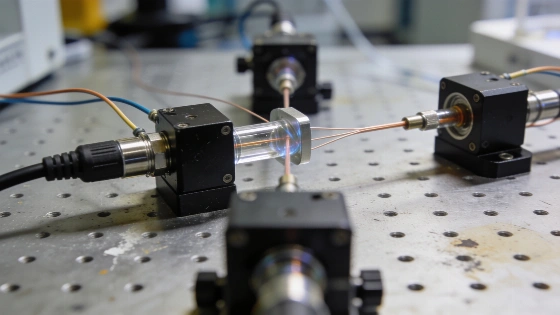
Quantum Computing Inc. describes its Dirac-3 family as entropy quantum computers based on the company's photonics technology. Dirac-3S is described as a room-temperature nanophotonic system that uses nonlinear optical interactions and does not require dilution refrigerators or other cryogenic support systems. QCi says the system is designed for constrained optimization problems involving continuous and discrete variables, with capacity for up to 9,980 variables. That figure describes a stated system capability, not the number of biological variables analyzed in the XPro project.
Those specifications describe the system's stated operating approach; they do not establish that it has found a new indication or outperformed classical methods. Science Report has covered another part of the quantum-hardware supply chain in its SiC wafer report; those substrates are distinct from the optimization platform used in this project.
Classical Benchmarks
The collaboration plans parallel comparisons with classical statistical and machine-learning baselines. The tests are intended to assess sampling efficiency and clustering quality, as well as reproducibility, solution quality and runtime relative to standard approaches.
Identifying a possible pattern in patient data is distinct from establishing that an optimizer can find it more effectively than conventional methods. The work remains exploratory: the companies have not announced a selected disease indication or a clinical result from the analysis.
Indication Targets
INmune Bio has identified rare pediatric diseases as a possible area of interest, including the potential for a qualifying indication to meet statutory requirements for the FDA Priority Review Voucher program. Eligibility and any voucher would depend on the applicable requirements and eventual approval; the collaboration itself does not confer a voucher or establish an approved indication.
XPro remains investigational and has not received marketing approval from the FDA, the UK Medicines and Healthcare products Regulatory Agency or another regulatory authority. INmune Bio's quarterly disclosure also states that XPro's Phase 2 Alzheimer's disease trial did not meet its primary endpoint. The company reported a subgroup with potential benefits and halted immediate development while seeking a partner; that subgroup observation does not establish efficacy.
INmune Bio's announcement describes the QCi analysis as a way to prioritize candidate indications and biomarkers. Any future XPro program would depend on the analytical results, regulatory feedback, financing and partnering, with the company's stated capital commitment tied to Ebstrocel approval or dedicated XPro resources.