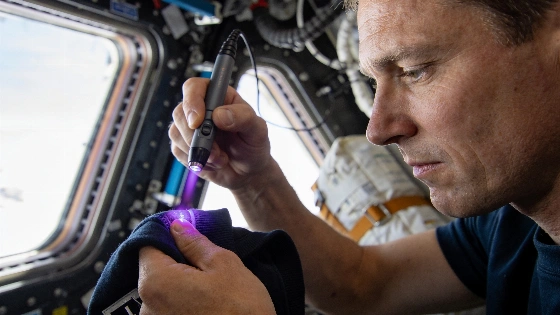
Researchers have developed a pen-sized plasma device to sterilize fabrics in space, offering a potential solution for cleaning astronaut clothing without water during extended missions beyond Earth orbit
Maintaining hygiene aboard crewed spacecraft presents a persistent challenge, especially as missions extend beyond low Earth orbit. With water supplies strictly limited, astronauts typically wear the same garments for days or weeks, then seal used clothing for return to Earth or disposal. This approach is manageable for short stays, but longer journeys-such as those planned for Mars-require new strategies to control microbial contamination and odor in confined environments.
Plasma-Based Sterilization Method
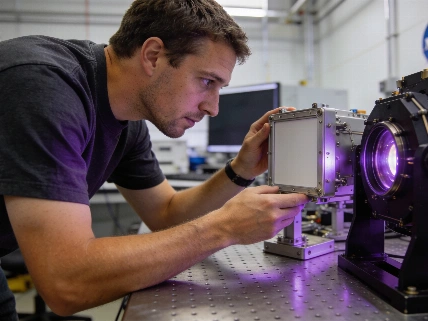
A research team collaborating with NASA's Marshall Space Flight Center has developed a prototype plasma device designed to sanitize textiles in space. The apparatus, roughly the size of a pen, generates a cold plasma-a partially ionized gas at near-room temperature-by applying an electric field to air and water vapor. When directed at fabric, the plasma produces reactive oxygen species, including ozone, which chemically disrupt bacterial cell membranes and reduces microbial load.
Unlike conventional disinfectants such as bleach or hydrogen peroxide, the plasma gun does not require astronauts to carry additional cleaning chemicals. Instead, it utilizes the spacecraft's existing atmosphere and humidity, minimizing mass and storage requirements. The device is intended to address microbial contamination on clothing, soft surfaces, and potentially even spacesuit exteriors before excursions onto planetary surfaces.
Experimental Results and Technical Limits
Initial laboratory tests of the prototype plasma gun demonstrated a reduction in bacterial spore colonies by over 75% on fabric samples. The device currently sanitizes an area of approximately one square centimeter per application, highlighting the need for further engineering to increase coverage and throughput. Researchers are developing larger, handheld versions to improve practicality for routine use aboard spacecraft.
While the plasma treatment effectively reduces microbial contamination, it does not remove visible stains or particulate debris. The process is not a substitute for conventional laundering, but it offers a targeted solution for microbial control when water-based washing is impractical. The team is also addressing the challenge of ozone management, as elevated concentrations can be hazardous in closed environments. Filtration systems are under development to mitigate this risk.
Space Hygiene and Mission Planning
Space agencies have long recognized the importance of hygiene for crew health and mission success. Recent efforts include testing specialized detergents on the International Space Station and developing low-water washing machines for orbital habitats. The plasma gun approach represents a complementary strategy focused on microbial sterilization rather than full cleaning.
As mission durations increase and resupply becomes less frequent, minimizing the mass and volume of consumables is a priority. The plasma device's reliance on in-situ resources aligns with broader trends in spacecraft systems engineering, where every kilogram saved can be allocated to critical life-support or scientific payloads. This principle has also influenced recent mission recoveries, such as China's rapid return to flight after a Long March 7A failure, which was covered in detail in our report on China's renewed launch activity.
Future Prospects and Remaining Questions
The plasma laundry gun remains at the prototype stage, with further development required before operational deployment. Key questions include the device's long-term reliability in microgravity, its effectiveness against a broader range of microorganisms, and the integration of ozone filtration into closed life-support systems. Additional testing aboard the International Space Station or lunar habitats may be necessary to validate performance under real mission conditions.
Alternative approaches to space hygiene continue to be explored, including chemical, mechanical, and biological methods. The plasma gun's main advantage lies in its ability to generate sterilizing agents from ambient air and water vapor, reducing logistical burdens. However, its current limitations in area coverage and stain removal mean it is likely to serve as one component in a broader suite of hygiene technologies for future exploration missions.
Plasma sterilization relies on the generation of reactive species-primarily ions, electrons, and neutral radicals-within a partially ionized gas. In the context of the laundry gun, a cold plasma is produced at atmospheric pressure and near-room temperature, making it suitable for use on sensitive materials and in confined environments. The reactive oxygen species generated by the plasma interact with microbial cell walls, leading to oxidative damage and cell death. Unlike thermal or chemical sterilization, plasma methods can be tuned to minimize material degradation while targeting a wide spectrum of microorganisms. Understanding the balance between sterilization efficacy, material compatibility, and environmental safety is central to advancing plasma-based technologies for spaceflight.