The Inouye Solar Telescope has produced the highest-resolution images yet of the Sun's surface, revealing dynamic plasma structures and confirming a long-suspected fluid instability in solar plasma
Researchers have obtained the sharpest direct images of the Sun's visible surface to date, using the U.S. National Science Foundation's Inouye Solar Telescope in Hawaii. The new observations provide a detailed look at the turbulent plasma flows that shape solar activity, offering evidence for a physical instability that had previously been theorized but not directly observed at this scale.
Imaging the Solar Photosphere
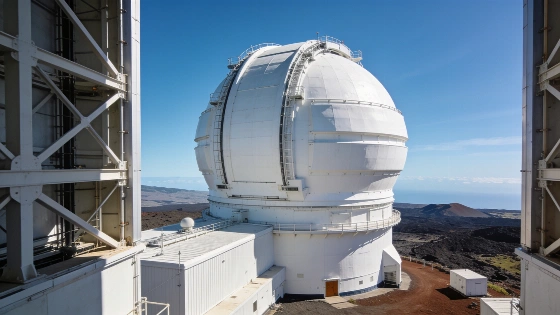
The Inouye Solar Telescope, with its 4-meter primary mirror, is currently the world's largest solar optical telescope. Its advanced adaptive optics and high-speed imaging systems allow it to resolve features on the Sun as small as 20 kilometers across-roughly the size of a small terrestrial city. During a recent observing campaign, the instrument captured a series of images and time-lapse sequences of the solar photosphere, the visible surface layer where light escapes into space.
These images reveal intricate patterns of bright and dark plasma, shaped by convection and magnetic fields. The data set includes swirling structures at the boundaries of magnetic regions, which had been predicted by fluid dynamics models but not previously seen with such clarity. The telescope's high temporal resolution also enabled researchers to track the evolution of these features over time.
Kelvin-Helmholtz Instability Detected
Analysis of the new images identified signatures of the Kelvin-Helmholtz instability (KHI), a phenomenon that occurs when layers of fluid or plasma move at different velocities, creating characteristic wave-like or vortex patterns. In the Sun's photosphere, KHI is thought to play a role in mixing plasma and transferring energy between layers, potentially influencing solar flares and other forms of magnetic activity.
The direct detection of KHI in the solar photosphere provides a crucial test for theoretical models of solar plasma dynamics. The research team, which includes scientists from the National Solar Observatory, the NSF's High Altitude Observatory, and the Max Planck Institute for Solar System Research, compared the observed patterns with numerical simulations to confirm the physical mechanism behind the swirls. Their findings are detailed in a recent peer-reviewed paper in Nature.
Implications for Solar Physics
By resolving plasma structures at unprecedented spatial and temporal scales, the Inouye Solar Telescope is enabling new tests of how energy and magnetic fields interact on the Sun. The confirmation of KHI in the photosphere suggests that similar instabilities may be active in other layers of the solar atmosphere, with potential consequences for the heating of the corona and the acceleration of solar wind.
These results build on a growing body of high-resolution solar observations, including advances in solar tracking technology such as the GPS-enabled mounts described in recent coverage of automated solar telescope systems. Together, these developments are expanding the ability of researchers to monitor and interpret the Sun's dynamic behavior in real time.
Numerical Context and Future Prospects
The Inouye Solar Telescope's 4-meter aperture collects more than four times the light of any previous solar telescope, enabling exposures as short as a few milliseconds and spatial resolution down to 0.03 arcseconds. The recent observations covered active regions spanning several thousand kilometers, with time-lapse sequences capturing plasma motion over intervals of minutes. The detection of KHI was supported by comparison with magnetohydrodynamic simulations, which reproduced the observed vortex structures under realistic solar conditions.
As the telescope continues its science operations, further campaigns are planned to investigate how instabilities like KHI contribute to larger-scale solar phenomena, including sunspots, flares, and coronal mass ejections. Ongoing improvements in data processing and adaptive optics are expected to yield even sharper images and more precise measurements of solar dynamics.
Understanding the Kelvin-Helmholtz instability is central to interpreting the new solar images. KHI arises when adjacent layers of fluid or plasma move at different speeds, causing the interface to roll up into vortices. In astrophysical contexts, KHI is important not only in the Sun but also in planetary atmospheres, accretion disks, and interstellar clouds. Detecting KHI in the solar photosphere provides a direct link between laboratory fluid dynamics and the complex behavior of stellar plasma, helping to constrain models of energy transport and magnetic activity in stars.