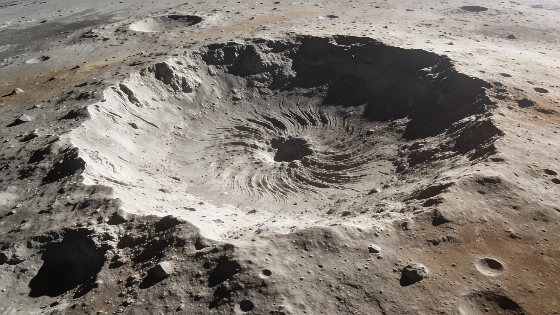
A SpaceX Falcon 9 upper stage collided with the lunar surface near Einstein Crater, prompting new scrutiny of debris risks as lunar exploration and infrastructure expand
The recent collision of a SpaceX Falcon 9 upper stage with the Moon has drawn renewed attention to the operational hazards posed by human-made debris as lunar activity accelerates. The impact, which occurred near Einstein Crater on August 5, was recorded by multiple spacecraft and ground-based observatories, highlighting both the capabilities and the limitations of current monitoring systems.
Tracking the Impact
The Falcon 9 upper stage, weighing approximately 4.5 metric tons, had been adrift in cislunar space for over a year after launching Firefly Aerospace's Blue Ghost-1 lander and ispace's Hakuto-R Mission 2 Resilience lander toward the Moon in January 2025. Its uncontrolled descent ended with a high-velocity collision at roughly 8,690 kilometers per hour. The impact site was imaged by South Korea's Danuri lunar orbiter and NASA's Lunar Reconnaissance Orbiter, while a Chinese commercial satellite tracked the event from orbit. Ground-based telescopes, including the European Southern Observatory's Very Large Telescope in Chile and the Lowell Discovery Telescope in Arizona, detected a brief plume of sodium and lithium gas above the crash site, lasting five to ten minutes.
In the weeks leading up to the impact, mission planners at the Korea Aerospace Research Institute identified a potential close approach between the Falcon 9 stage and the Danuri orbiter. To mitigate the risk, the Danuri team executed a maneuver in July that altered the spacecraft's orbital phase, ensuring it would be far from the impact zone at the critical moment. This episode underscores the growing complexity of lunar traffic management as more missions converge on the Moon.
Hazards of Lunar Debris
Unlike Earth, the Moon lacks a substantial atmosphere to slow or disperse incoming objects. As a result, both natural meteorites and artificial debris strike the surface at high speeds, generating shockwaves and ejecta that can travel significant distances. While the immediate risk to current missions remains low due to the sparse distribution of assets, the expansion of permanent infrastructure-such as habitats, solar arrays, and scientific instruments-will increase the vulnerability of lunar operations to debris impacts.
Engineers and mission planners are now considering strategies to reduce these risks, including the designation of controlled impact zones and the development of targeted deorbit protocols for spent hardware. However, even with improved management of human-made debris, natural impacts from meteorites and comets will remain an ongoing hazard. The challenge lies in controlling the portion of the risk that is within human influence, while recognizing that the Moon's surface will always be shaped by both artificial and natural collisions.
Scientific Observations and Uncertainties
The Falcon 9 impact provided a rare opportunity to observe the immediate aftermath of a large artificial collision on the Moon. Spectroscopic measurements from ground-based telescopes revealed a plume containing sodium and lithium, with the lithium signature attributed to the rocket stage and the sodium likely originating from the lunar regolith. The plume was faint and short-lived, detectable only with large-aperture telescopes and favorable observing conditions. These observations offer valuable data for refining models of lunar ejecta dynamics and surface chemistry, but also highlight the observational challenges posed by transient, low-contrast events on the bright lunar surface.
Researchers continue to analyze the data to better understand the composition and dispersal of material generated by such impacts. The results may inform future mission planning, particularly for installations sensitive to dust and high-velocity debris. The event also demonstrates the importance of rapid-response observation campaigns, as the window for capturing these phenomena is often measured in minutes.
Managing Lunar Traffic and Debris
The increasing frequency of lunar missions is making traffic management and debris mitigation a central concern for space agencies and commercial operators. The near-miss between the Falcon 9 upper stage and the Danuri orbiter illustrates the need for accurate trajectory prediction and timely maneuver planning. As lunar infrastructure grows, coordination among international and commercial actors will become essential to minimize the risk of accidental collisions and to protect critical assets on and around the Moon.
These operational challenges echo those faced in other parts of the solar system, such as the outer solar system boundary explored by NASA's New Horizons spacecraft, which recently resumed science operations after a long hibernation period (see our coverage of New Horizons' latest mission phase). Both cases highlight the importance of robust tracking, communication, and contingency planning as humanity extends its reach beyond Earth orbit.
As lunar exploration enters a new era, the management of debris-both natural and artificial-will play a decisive role in shaping the safety and sustainability of future missions. The Falcon 9 impact serves as a timely reminder that every object sent to the Moon must eventually be accounted for, whether as a scientific asset or as a potential hazard.
Understanding the risks associated with lunar debris requires familiarity with the physics of high-speed impacts and the behavior of ejecta in a vacuum. When an object strikes the Moon at several kilometers per second, the absence of an atmosphere means that fine dust and rock fragments can be launched over great distances, potentially endangering equipment far from the impact site. The study of these processes relies on a combination of direct imaging, spectroscopic analysis, and computer modeling to reconstruct the distribution and composition of ejecta. As lunar activity increases, the ability to predict and mitigate these effects will become a critical component of mission design and operational safety.