
Stanford University
7 reportsCoverage places research publications, together with laboratory research and graduate education within the wider context of Stanford University. The account follows peer-reviewed publications as the direct record and facility documentation as the broader comparison for graduate education; the account does not overlook that institutional reputation does not substitute for evidence from individual studies.
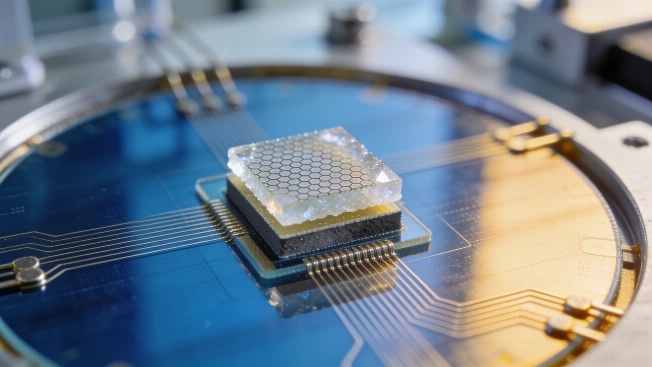
Magic-Angle Graphene Amplifies Strain Response
A piezoelectric silicon platform lets researchers tune strain in twisted bilayer graphene. Near charge neutrality its gauge factor reaches about 100, although that figure describes relative sensitivity rather than a hundredfold jump in raw resistance
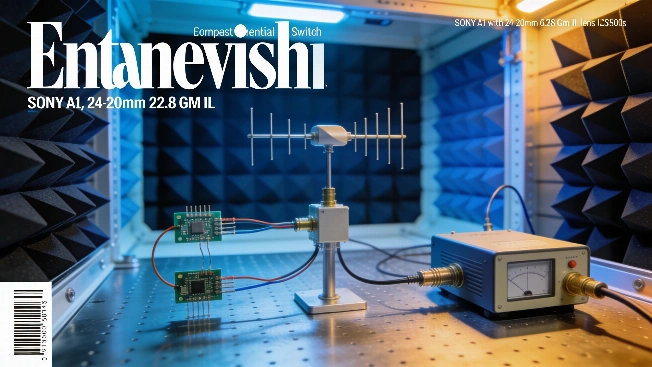
Thermal Noise Carries Data Without an Active Radio Signal
Stanford researchers encoded bits by switching an antenna between open and short circuits, then recovered them from amplified thermal noise in an anechoic chamber. A channel model raised transfer rates 100-fold

NASA Facility in West Virginia Expands Role in Lunar Mission Safety
NASA's Katherine Johnson IV&V Facility in West Virginia is strengthening its technical workforce to support mission assurance and AI safety for upcoming lunar exploration, with new civil servants joining the agency's core engineering teams.

Hewlett Foundation Funds $100M Push on Quantum and Tech Security
The William and Flora Hewlett Foundation has committed $100 million over five years to research and policy on emerging technology security and governance, focusing on quantum computing and biotechnology alongside AI.
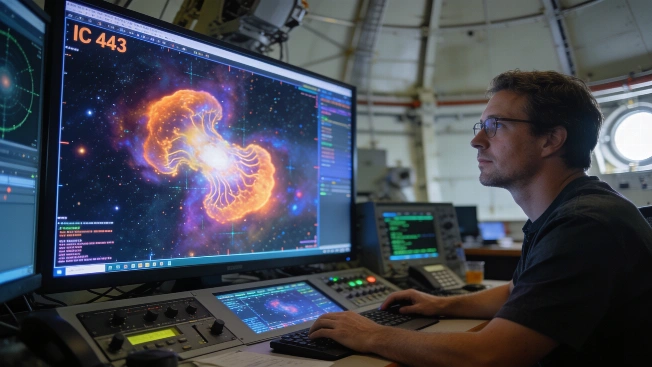
Possible Twin Supernova Remnants Identified in the Jellyfish Nebula
Astronomers analyzing data from NASA's Fermi Gamma-ray Space Telescope and other observatories have found evidence suggesting that both stars in a binary system exploded as supernovae, leaving overlapping remnants in the IC 443 region.

Climate Research Progress and Challenges Since 2022
A multidisciplinary journal launched in 2022 has published over 270 studies on climate variability, risk, and mitigation. Experts now assess how the field has evolved and what scientific and technical barriers remain
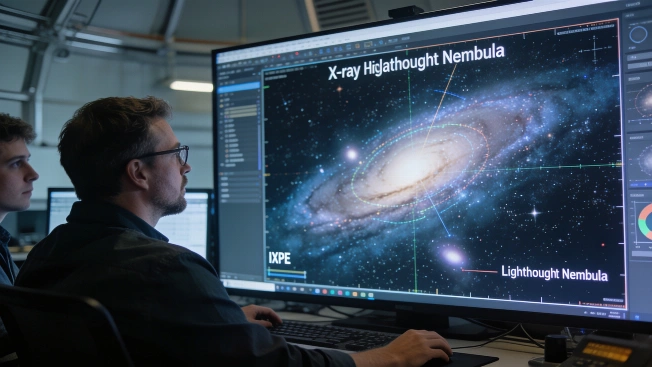
NASA's IXPE Maps Magnetic Field of Unusual Pulsar in Milky Way
Astronomers used NASA's Imaging X-ray Polarimetry Étudier to map the magnetic field around pulsar PSR J1101-6101, revealing how high-energy particles stream through the Milky Way and testing long-standing theoretical predictions.