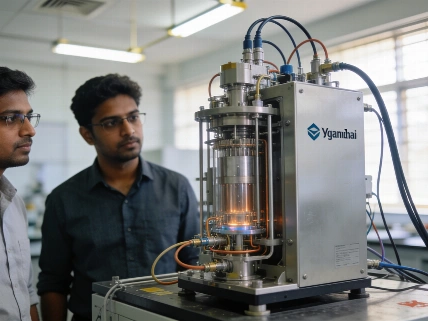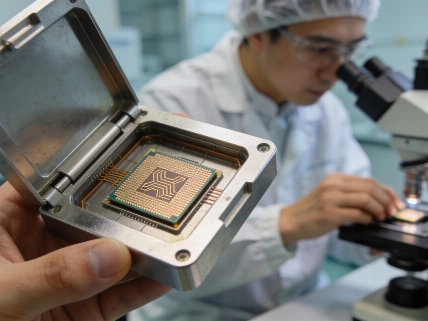

The William and Flora Hewlett Foundation has committed $100 million over five years to support research and policy development on the security and governance of emerging technologies, with a focus on quantum computing, biotechnology, and AI.
The William and Flora Hewlett Foundation has announced a five-year, $100 million initiative to address the policy, security, and governance challenges posed by rapidly advancing technologies, including quantum computing, artificial intelligence, and biotechnology. The program, introduced at the Aspen Security Forum, will distribute $20 million annually through 2031 to universities, civil society organizations, think tanks, and policy research institutions. The stated aim is to close the operational gap between the pace of commercial technology development and the slower evolution of government regulation and security standards.
Quantum computing is a central focus of the initiative, reflecting growing concern about the long-term security implications of quantum-enabled attacks on cryptographic infrastructure. The program builds on $10 million in exploratory grants awarded in early 2026 to policy research centers such as Stanford University's Hoover Institution and Vanderbilt University's Institute for National Security. An additional $10 million in exploratory funding is planned for the remainder of 2026, supporting further development of policy frameworks and technical standards for quantum and biotechnology security.
Quantum Security and Infrastructure Risks
The initiative's grantmaking strategy is organized around three core security priorities. First, it targets the protection of critical infrastructure-such as power grids, water systems, healthcare networks, and information systems-against cyber threats that may be amplified by advances in AI and quantum computing. Second, it seeks to mitigate vulnerabilities arising from quantum and biological technologies, including the risk that quantum computers could eventually compromise widely used public-key cryptography. This includes support for policy research on post-quantum cryptography (PQC) migration, quantum-safe network architectures, and export control standards for sensitive quantum hardware and software.
Third, the program aims to help governments and international partners develop governance norms for dual-use technologies, balancing the need for security with the preservation of democratic values and scientific openness. The initiative is led in its initial phase by Eli Sugarman, former director of Hewlett's Cyber Initiative, and is positioned as a philanthropic bridge between the technology sector and public policy institutions.
Technical and Policy Challenges
Quantum computing presents a unique set of technical and policy challenges. While no quantum computer has yet demonstrated the ability to break widely used cryptographic protocols, the risk of so-called "harvest now, decrypt later" attacks-where encrypted data is collected today for decryption once quantum capabilities mature-has prompted governments and industry to accelerate the adoption of quantum-resistant algorithms. The National Institute of Standards and Technology (NIST) and other standards bodies are in the process of finalizing post-quantum cryptography standards, but widespread migration remains a complex and resource-intensive task.
In addition to cryptography, the initiative recognizes the broader security implications of quantum technologies, including the potential for quantum sensors and communication systems to alter the landscape of intelligence, surveillance, and infrastructure monitoring. The program's support for independent research and cross-sector dialogue is intended to produce empirically grounded policy recommendations that reflect both technical realities and the evolving threat environment.
Funding, Measurement, and Remaining Gaps
The Hewlett Foundation's commitment of $100 million over five years represents one of the largest philanthropic investments in technology policy and security to date. The initiative will allocate $20 million annually through 2031, with funding directed toward research on quantum-safe cryptography, infrastructure protection, and global governance standards. Early exploratory grants in 2026 have already supported policy hubs at major research universities, and further funding is expected to expand the network of institutions engaged in this work.
Despite the scale of the investment, significant technical and policy challenges remain. The migration to post-quantum cryptography requires not only the development of new algorithms but also the replacement or upgrade of hardware, software, and network protocols across critical infrastructure. The effectiveness of quantum-safe standards will depend on their adoption by both public and private sectors, as well as ongoing research into implementation vulnerabilities and side-channel attacks. The initiative's focus on governance norms also highlights the need for international coordination, particularly as quantum and biotechnology capabilities diffuse globally.
According to the Hewlett Foundation, the Emerging Technology and Security Initiative is designed to complement its previous work in cybersecurity and nuclear security policy, extending a 60-year history of funding at the intersection of technology, national security, and public policy. Grantmaking guidelines and further program details are available through the foundation's official channels.
Understanding the distinction between post-quantum cryptography and quantum cryptography is essential for interpreting current security policy. Post-quantum cryptography refers to new cryptographic algorithms designed to resist attacks from quantum computers but implemented on conventional hardware. In contrast, quantum cryptography-such as quantum key distribution-relies on quantum physical principles to secure communication channels. While post-quantum algorithms are being standardized for broad deployment, quantum cryptography remains largely limited to specialized applications due to hardware and distance constraints. The transition to quantum-safe infrastructure will require careful coordination between technical standards, policy frameworks, and practical implementation across diverse sectors.