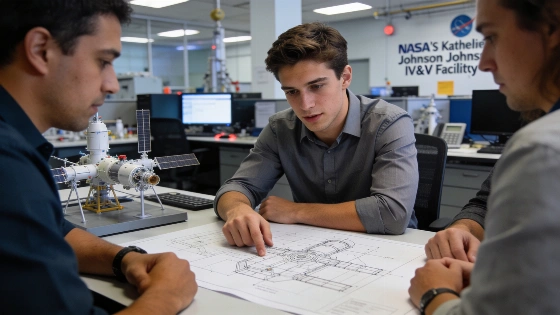
NASA's Katherine Johnson IV&V Facility in West Virginia is strengthening its technical workforce to support mission assurance and AI safety for upcoming lunar exploration, with new civil servants joining the agency's core engineering teams
NASA's Katherine Johnson Independent Verification and Validation (IV&V) Facility in Fairmont, West Virginia, has become a focal point for mission safety and technical assurance as the agency prepares for complex lunar operations. The facility, named for the pioneering mathematician Katherine Johnson, recently welcomed 51 new civil servants, including early-career engineers and technical experts, as part of a broader initiative to reinforce NASA's core competencies in mission-critical roles.
Strengthening Technical Assurance
The IV&V Facility's primary function is to independently assess the safety, reliability, and security of NASA's most critical software and systems. This includes evaluating mission architectures, identifying vulnerabilities, and ensuring that spacecraft can operate autonomously and safely in environments where real-time intervention is impossible. The facility's engineers have played a central role in reviewing guidance, navigation, and control systems for missions such as Orion, Gateway, and the Human Landing System, all of which are central to NASA's Artemis lunar program.
Among the new civil servants is Fletcher Newell, a systems engineer who began his association with IV&V as a high school intern in 2019. Newell's early work focused on developing databases to streamline engineering processes, and he later contributed to research on AI safety and autonomous spacecraft operations. His recent efforts have centered on identifying and resolving system defects in spacecraft software, with a particular emphasis on mission assurance for lunar vehicles.
AI and Autonomy in Spacecraft Operations
As NASA missions increasingly rely on artificial intelligence and machine learning, the IV&V Facility has expanded its focus to include the responsible integration of these technologies. Engineers at the facility have investigated the safety implications of generative AI and onboard autonomy, particularly for systems that must make real-time decisions during critical mission phases such as lunar landing or docking. Newell's team, for example, has assessed the safety of Terrain Relative Navigation-a vision-based guidance technology designed to enable precise landings on planetary surfaces without GPS.
During his academic tenure at Stanford University, Newell contributed to research on autonomous space docking and published findings on AI safety in collaboration with the university's Center for AI Safety. His return to West Virginia for consecutive summer internships at IV&V, rather than pursuing opportunities in Silicon Valley, reflects a commitment to advancing mission safety in his home state. In 2025, Newell was recognized as IV&V Engineer of the Year after identifying more than 70 critical issues in the Gateway and SR-1 Freedom spacecraft systems.
Mission Assurance for Artemis and Beyond
The IV&V Facility's expanded workforce is tasked with supporting NASA's most ambitious exploration goals, including the return of astronauts to the Moon and the eventual establishment of a lunar base. Engineers are currently engaged in identifying safety and security issues that could affect crew safety or result in loss of spacecraft control during Artemis missions. This work is essential for ensuring that every major lunar vehicle and system meets the stringent requirements for human spaceflight.
The facility's approach to independent verification and validation is designed to provide mission managers with objective assessments of risk, enabling informed decisions about spacecraft readiness. This technical rigor is especially important as NASA prepares for increasingly complex operations in deep space, where communication delays and environmental hazards demand robust autonomous systems. The IV&V team's expertise in software assurance and AI safety is expected to play a pivotal role in the success of upcoming lunar missions.
Workforce Development and National Collaboration
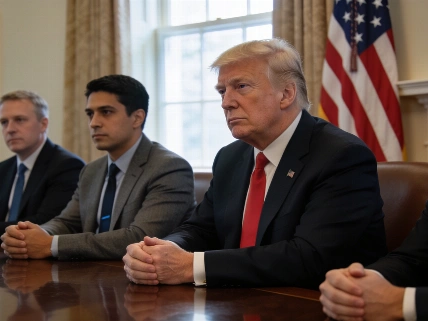
The recent swearing-in ceremony for new civil servants at the IV&V Facility is part of a national strategy to strengthen NASA's long-term technical capabilities. By bringing early-career professionals and seasoned experts into the civil service, the agency aims to maintain independent expertise in mission assurance and software safety. This initiative complements ongoing research and technology development across NASA centers, including work on the International Space Station that informs lunar and Mars mission design, as highlighted in recent coverage of ISS research supporting Artemis.
For engineers like Newell, the opportunity to contribute to high-priority missions from West Virginia underscores the distributed nature of NASA's technical workforce. The IV&V Facility's role in mission assurance is expected to grow as the agency pursues new frontiers in lunar and planetary exploration, with a continued emphasis on safety, reliability, and independent technical review.
Independent verification and validation (IV&V) is a process used by NASA to assess the safety, reliability, and performance of mission-critical software and systems. IV&V teams operate separately from mission development teams to provide objective analysis of potential risks, identify vulnerabilities, and recommend corrective actions. This approach is especially important for human spaceflight, where software errors or system failures can have catastrophic consequences. By rigorously testing and reviewing mission architectures, IV&V helps ensure that spacecraft are ready for the challenges of deep space operations, including autonomous decision-making and real-time hazard response.