
Proceedings of the National Academy of Sciences
4 reportsCoverage places corrections and retractions; post-publication scrutiny; and peer-review standards within the wider context of Proceedings of the National Academy of Sciences. For questions involving post-publication scrutiny, the account uses article methods as the measured record and editorial notices to expose uncertainty; the strongest interpretation still recognizes that publication in a prominent venue does not by itself establish consensus.
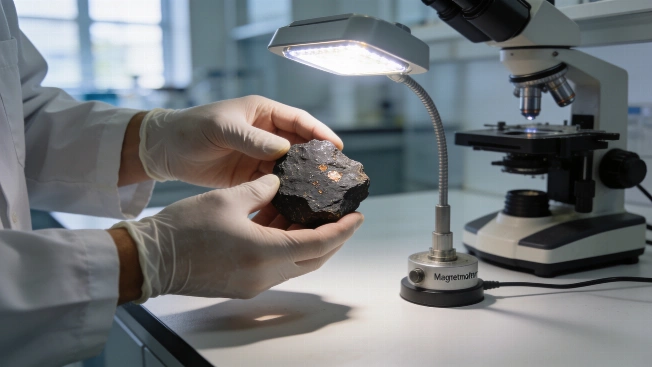
Meteorite dust reveals magnetic forces shaped the infant solar system
Analysis of ancient meteorite grains has uncovered evidence that strong magnetic fields influenced the earliest stages of the solar system's formation, challenging the long-held view that gravity alone sculpted the protoplanetary disk
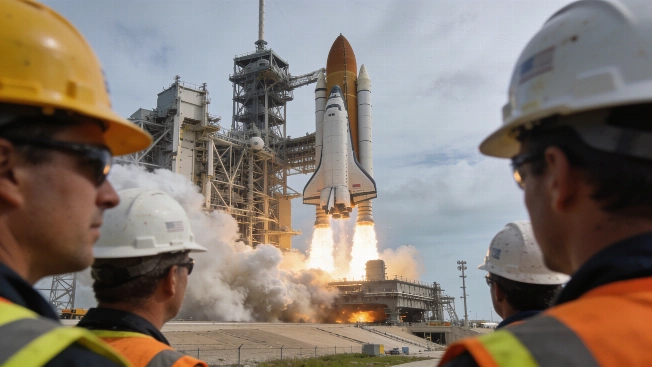
Rocket Launch Costs Plummet but New Barriers Emerge for Space Access
A new analysis of more than 4,400 launches reveals that the average cost to send a kilogram to orbit has dropped by 96% since 1960, but future reductions may be limited by debris, market dominance, and geopolitical shifts
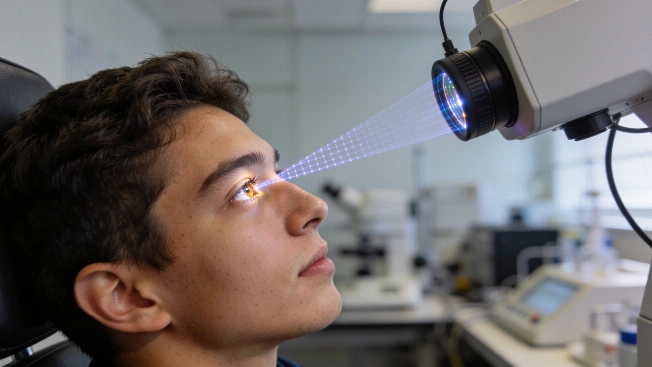
Structured light reveals new patterns for retinal health assessment
Researchers have used spin-orbit coupled light to enhance the visibility of Boehm's brushes-subtle optical patterns in peripheral vision-demonstrating a method that could enable non-invasive tests of retinal integrity using quantum optics techniques
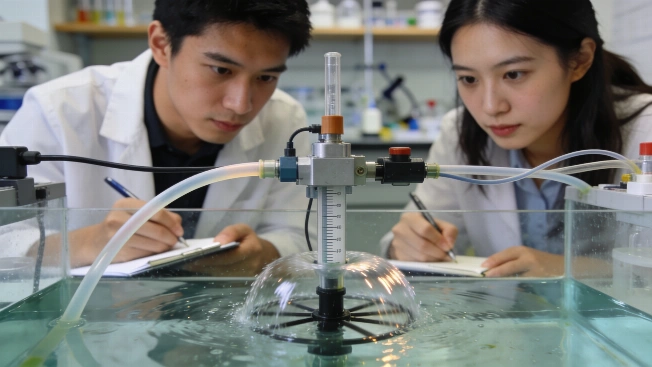
Reverse Sprinkler Experiments Reveal Angular Momentum Mechanism
Researchers at New York University have built custom rotary sprinklers to investigate the reverse sprinkler problem, measuring how angular momentum and device geometry affect rotation when water is drawn in rather than expelled