
Google DeepMind
13 reportsThe research story of Google DeepMind is traced through computing infrastructure; deployment and safety practices; and research publications. The treatment of research publications keeps independent testing separate from technical reports until their assumptions and scales are compared; the evidence cannot remove the concern that company demonstrations and marketing claims may not reflect performance in broader settings.

AlphaGenome 2 doubles causal-variant detection in immune cells
Trained on more than 107 million cell profiles, Google DeepMind's model reached 30% on TenK10K versus 16% for its predecessor, while improving predictions of whether variants raise or lower gene activity
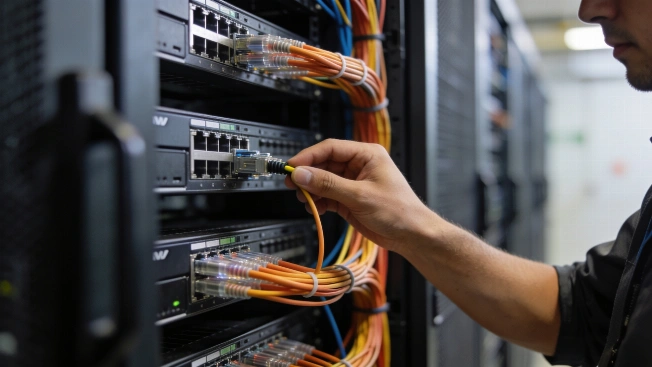
Google's Gemini Decisions API scores 1,000 checks in milliseconds
Google says its endpoint evaluates shared multimodal inputs in one pass, supporting policy checks and query routing without lengthy generated replies; rubric scoring is also available to developers

AI Agents Find Quantum Programs Lean 4 Can Verify
A Lean 4 workflow paired Gemini agent teams with formal quantum Hoare logic to produce lower-cost circuits for scientific simulations. Its comparator checked proofs against fixed specifications while resource claims remain estimates rather than hardware demonstrations
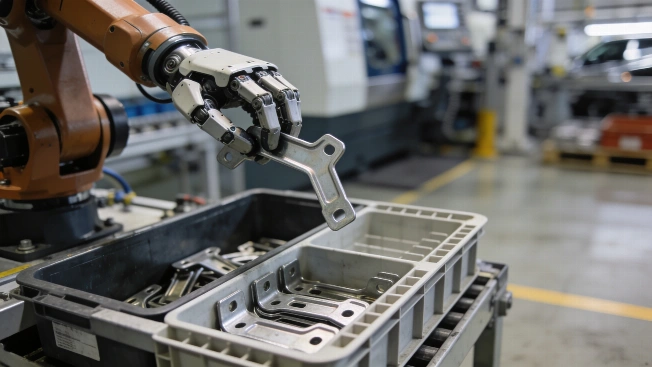
Google's Gemini model posts 96% success in factory robot test
Gemini Robotics 2.5 controlled Apptronik's Apollo 2 humanoids as they sorted automotive parts for Mercedes-Benz, while Google reported faster performance across a wider set of robot tasks
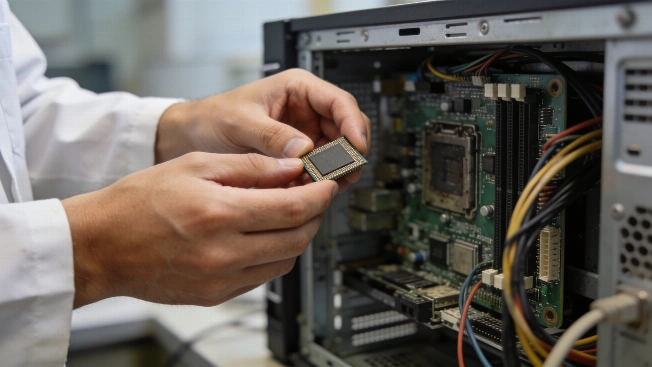
AI Agents Cut Legacy RSA Cryptanalysis Costs by 1,600x
DeepMind agents identified a signature-forgery condition and a faster batch-factoring method for RSA-1024. The findings concern obsolete keys and leave modern encryption standards unaffected
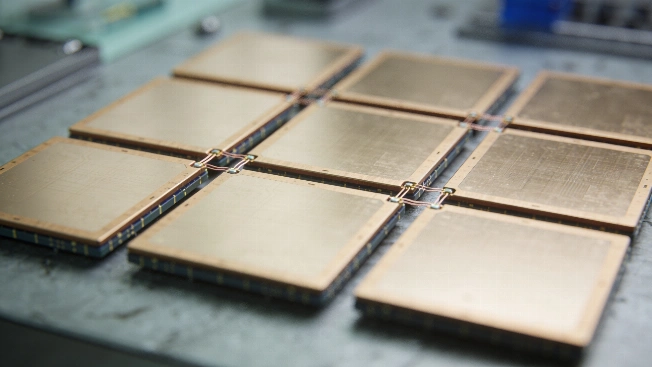
Flat quantum modules cut simulated QEC overhead by over 30-fold
A proposed modular code links 72-qubit and 116-qubit planar modules across sparse seams. Circuit-level simulations tested whether logical errors stay low when those links are noisier than on-chip gates.
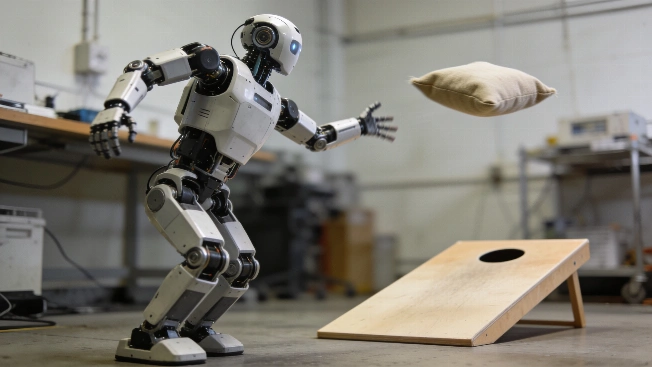
Gemini 4 Argon Reports 100-Fold Quantum Resource Cut
Google says Gemini 4 Argon cut the resource cost of a quantum-computing subroutine by more than 100 times and raised robot task success in real-world tests from 56% to 75%.
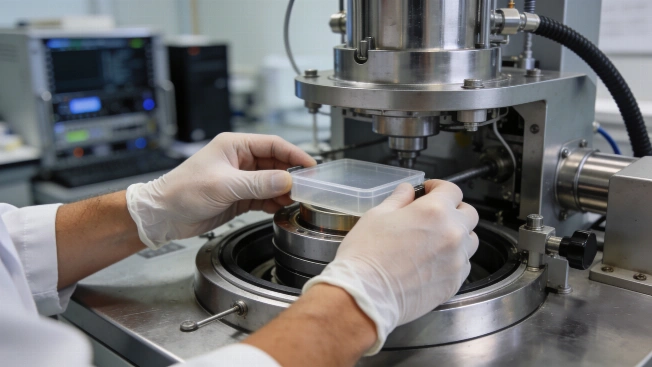
A $1.8 Billion Bet on Predictive Models of Living Cells
Federal agencies and major technology companies are assembling nearly $1.8 billion in funding and resources for open biological datasets designed to train models that predict cellular responses
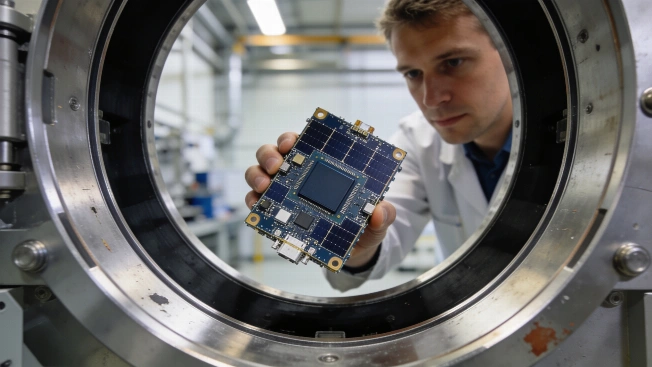
Google Tests Four AI Chips in Orbit
Google's first Project Suncatcher hardware test is scheduled to fly next week on SpaceX's Transporter-18 rideshare mission. A prototype satellite carrying four Tensor Processing Units will measure how the chips withstand launch vibration, radiation, vacuum and extreme temperatures before any larger orbital computing cluster is attempted.
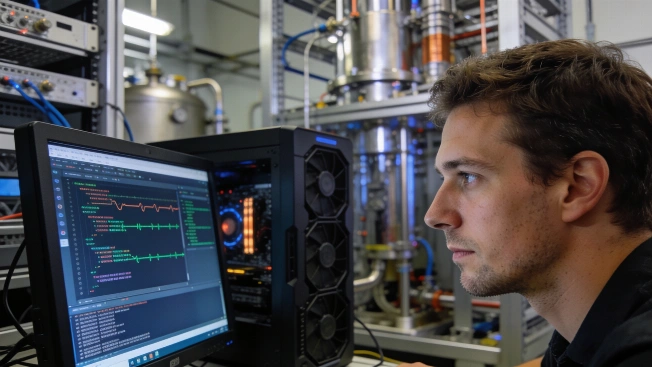
AI Decoder Surpasses PyMatching on Google Quantum Surface-Code Data
Quantum X Labs reports that its AI-based quantum error correction decoder achieved higher decoding accuracy than standard matching algorithms on Google's public surface-code dataset. The decoder was trained exclusively on synthetic data and uses GPU acceleration.
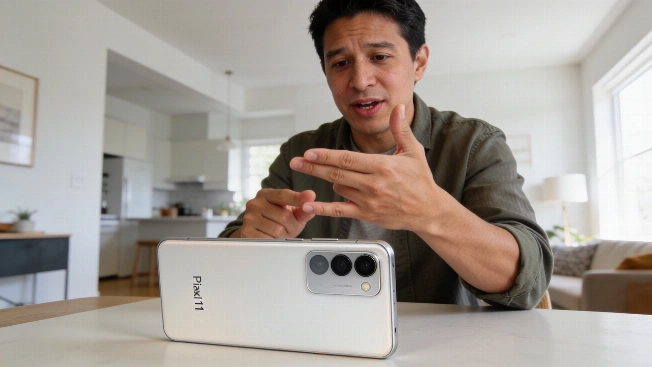
Google Deploys SL2T Model for Real-Time Sign Language Translation
Google has introduced SL2T, a sign-language-to-text model trained on more than 100,000 hours of data. It enables American Sign Language users to translate gestures into English text on Pixel 11 devices using Gboard and Live Transcribe.
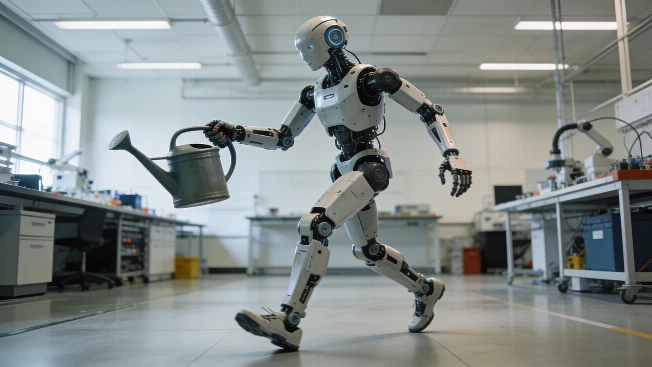
Google DeepMind Expands Gemini Robotics to Full-Body Humanoid Control
Google DeepMind has released Gemini Robotics 2 to control entire humanoid robots, enabling them to walk and handle objects while coordinating multiple robots with limited retraining across different platforms.
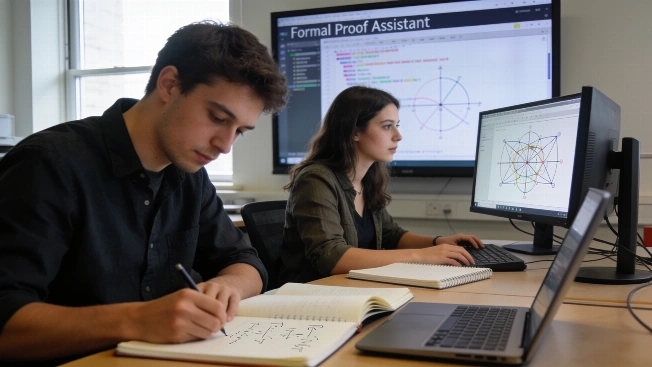
AI Systems Challenge Human Role in Mathematical Discovery
Recent advances in large language models and proof assistants have enabled AI systems to generate, formalize, and verify complex mathematical proofs, raising new questions about the future of human mathematicians and the value of human understanding in mathematics