Gemini Robotics 2.5 controlled Apptronik's Apollo 2 humanoids as they sorted automotive parts for Mercedes-Benz, while Google reported faster performance across a wider set of robot tasks
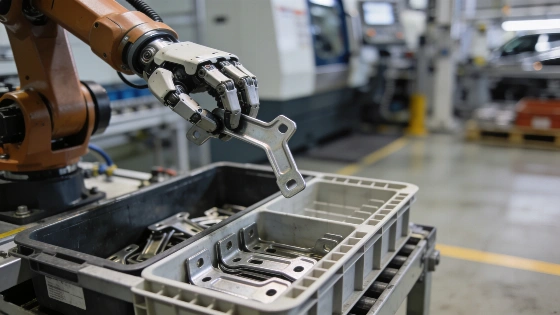
Metal brackets moved from bulk bins into sequencing trays on Mercedes-Benz production lines in Kecskemét, Hungary, and Sindelfingen, Germany. In its November 10, 2026 announcement, Google DeepMind said Apptronik's Apollo 2 humanoids completed the automotive-kitting task with a 96% success rate in a proof-of-concept on the production lines. The parts were placed in the sequence required for vehicles on the line.
That result is a test demonstration, not evidence of routine deployment at scale. Google described the activity as a proof of concept; an earlier factory-robot pilot report also lacked full test details, a distinction discussed in that earlier report.
Testing the model
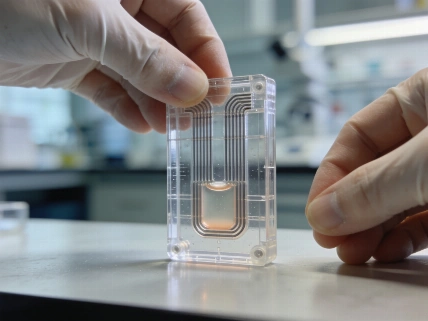
Google DeepMind evaluated Gemini Robotics 2.5 on more than 200 tasks, including delicate-object handling such as transferring liquid with pipettes and manipulating flexible materials. Google reported task-dependent success improvements of 30% to 100% over previous baselines and completion times 20% to 30% faster. These figures describe results across different tasks, rather than one overall success or speed score. The company's Gemini Robotics 2.5 announcement also described the Mercedes-Benz result as a real-world reliability demonstration.
Gemini Robotics 2.5 is an actions model that turns visual input and instructions into robot movements. In the Mercedes-Benz demonstration, Gemini Robotics ER tracked the workflow while Gemini Robotics 2.5 controlled Apollo 2's arms and hands. Apollo 2 reached into supply bins, selected metal brackets and placed them into sequencing containers, adjusting its movements during the operation.
Training and safety
Google says Gemini 4 Argon can create thousands of simulated practice runs from real-world camera footage and build digital twins of physical environments. Researchers can use those simulations alongside real demonstrations to train robots for unfamiliar objects and settings. Argon can also review failed attempts and suggest changes to later training.
Google reported that inference-time reasoning guidance raised safe task completion by 33% around obstacles and 43% near people. Its open-source ASIMOV-Jailbreak benchmark tests whether robots resist disguised unsafe instructions. Google said Gemini 4 Argon resisted 99.5% of those attempts, compared with 82% for Gemini Robotics ER 2.
The reported results come from Google's evaluations. The factory figure remains a proof of concept, and Google said Gemini Robotics 2.5 was being rolled out to its robotics partners.