Google DeepMind has released Gemini Robotics 2, a model designed to control entire humanoid robots, enabling walking, object manipulation, and multi-robot coordination with limited retraining across different robot platforms
Google DeepMind has introduced Gemini Robotics 2, a new version of its robotics control model intended to manage the full body of humanoid robots. Unlike earlier iterations that focused on upper-body or tabletop manipulation, Gemini Robotics 2 is designed to coordinate walking, balancing, crouching, stretching, and object handling in a single system. The company reports that the model can adapt to different robot bodies with only a few hours of training and can direct multiple robots to collaborate on tasks that exceed the capabilities of a single machine.
Full-Body Robot Control
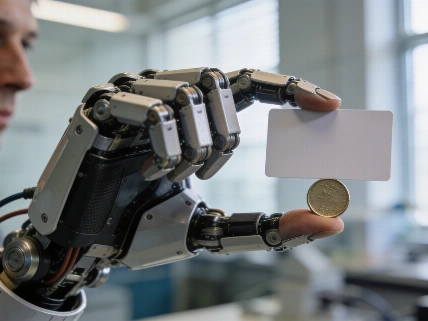
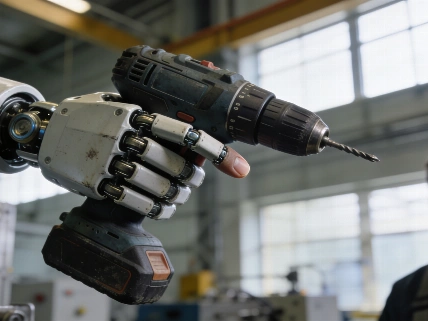
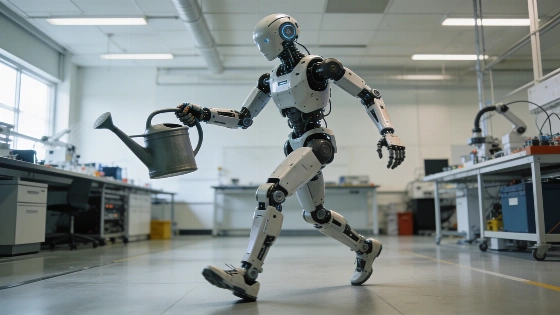
In demonstrations, Gemini Robotics 2 was used to control Apptronik's Apollo 2 humanoid robot, instructing it to pick up a watering can, walk across a room, and place the object on a lower shelf. The same model checkpoint was also applied to other robot platforms, including Franka Duo, suggesting a degree of generalization across hardware. The company claims that the model can operate both five-fingered robotic hands and simpler two-finger grippers, performing tasks such as tying trash bags, sealing Ziploc bags, unscrewing light bulbs, and executing precise industrial insertions. However, the demonstrations were conducted under controlled conditions, and the extent of real-world reliability remains to be established.
Gemini Robotics 2 is accompanied by two related models: Gemini Robotics ER 2, which is intended to provide high-level reasoning and task planning, and Gemini Robotics On-Device 2, which runs locally on robotic hardware without requiring cloud connectivity. According to Google DeepMind, Gemini Robotics ER 2 can interpret spoken instructions, decompose them into multi-step sequences, and monitor progress, with the ability to recover from failed actions and adapt to changing environments. The company states that the model can execute task sequences lasting several minutes and make hundreds of decisions per task, but has not disclosed detailed error rates or the frequency of human intervention during failures.
Local Processing and Safety
For scenarios where internet access is unavailable, Gemini Robotics On-Device 2 is designed to operate entirely on local hardware. Google DeepMind reports that this model can adapt to new dual-arm robot designs with fewer than 200 training examples collected over several hours, but the generalizability of this approach to more complex or safety-critical environments is not yet clear. The company has also introduced ASIMOV-Agentic, a new benchmark for evaluating robotic safety, including the ability to refuse unsafe actions, recognize uncertainty, and request human assistance when needed. The embodied reasoning model is being made available through Google AI Studio and in private preview on the Gemini Enterprise Agent Platform, while the vision-language-action and on-device models are being released to early-access partners.
One notable advance is the reported ability for multi-robot collaboration, where different types of robots can communicate and divide work to complete tasks that would be difficult for a single robot. This approach is consistent with recent research trends in multi-agent robotics, such as the VLASH method developed at MIT, which enables robots to plan smoother and faster movements by predicting future positions, an approach described in Science Report's coverage of MIT's VLASH planning technique. However, the practical safety, reliability, and regulatory implications of deploying such multi-robot systems in real-world environments remain open questions.
Deployment Challenges
Google DeepMind has also highlighted improvements in human proximity detection, allowing robots to stop safely when people move too close. The company has not yet published comprehensive safety data or independent evaluations of the system's performance in unstructured or crowded environments. As with many recent robotics advances, the transition from laboratory demonstration to robust, repeatable field deployment will require further evidence, particularly regarding failure recovery, human oversight, and compliance with safety standards.
Foundation models for robotics, such as Gemini Robotics 2, are trained on large datasets of sensor data, video, and action sequences collected from a variety of robot platforms and environments. These models use deep learning architectures to map visual and language inputs to motor commands, enabling them to generalize across different tasks and hardware. However, the reliability of such models depends on the diversity and quality of the training data, the representativeness of the test environments, and the robustness of the system to unexpected events. As robotics foundation models move toward broader deployment, questions of safety, human control, and regulatory oversight will become increasingly central to their evaluation and acceptance.