
Chang'e Program
8 reportsCoverage places landing or orbital operations; surface science; and navigation and communications within the wider context of Chang'e Program. Conclusions concerning landing or orbital operations remain tied to released scientific results, approved mission documents, and transparent methods; proposed schedules and capabilities may change during development.

US military expands defense planning from ocean floor to lunar orbit
The US military's top officer says future conflicts could extend from the seafloor to the Moon's orbit, as the Space Force openly acknowledges operating defensive weapons in space for the first time.
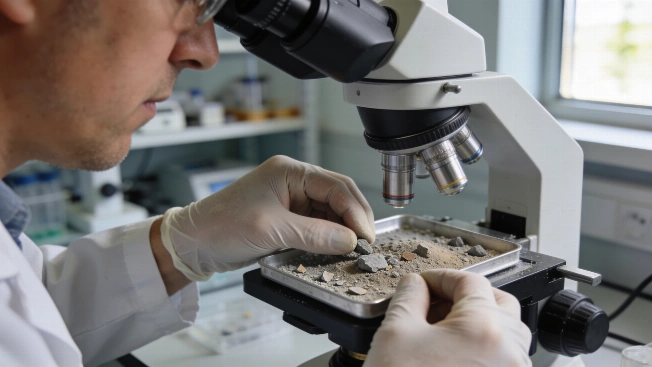
Researchers suggest searching the Moon for alien technology fragments
A new study proposes that tiny fragments of ancient alien technology might be preserved in the Moon's surface. The authors outline how future lunar samples and advanced analysis could help search for these microscopic technosignatures.
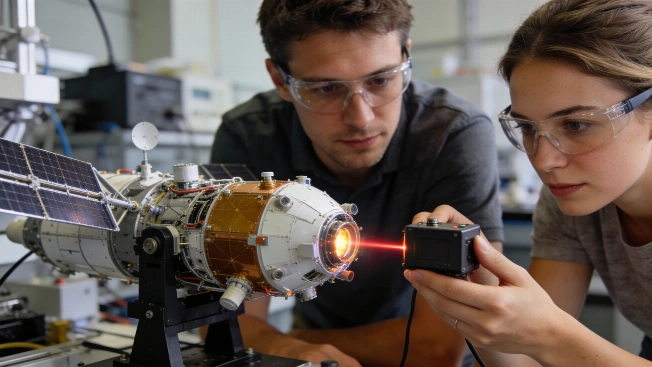
NASA tests Slingshot spacecraft concept for mineral mapping beyond Earth
A NASA-funded study is evaluating whether a small spacecraft using Raman spectroscopy could remotely identify minerals on the Moon, asteroids, and Martian moons, potentially transforming how resources are surveyed before future missions
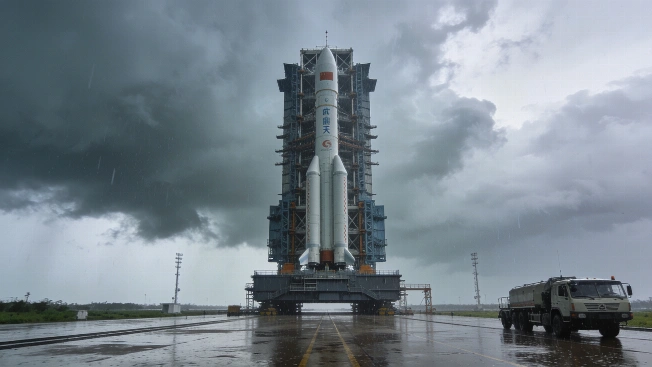
China Delays Chang'e 7 Moon South Pole Launch Amid Severe Weather
China's Chang'e 7 lunar mission, designed to search for water ice near the Moon's south pole, has been postponed due to a tropical depression threatening the Hainan launch site. The new launch window remains uncertain
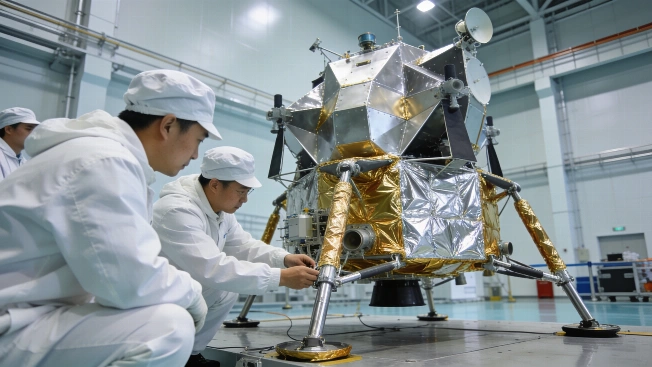
China Prepares Chang'e 7 for Complex Lunar South Pole Mission
China's Chang'e 7 spacecraft, launching in August 2026, will deploy an orbiter, lander, rover, and hopper to investigate the Moon's south pole, targeting water ice and testing new navigation and international science payloads
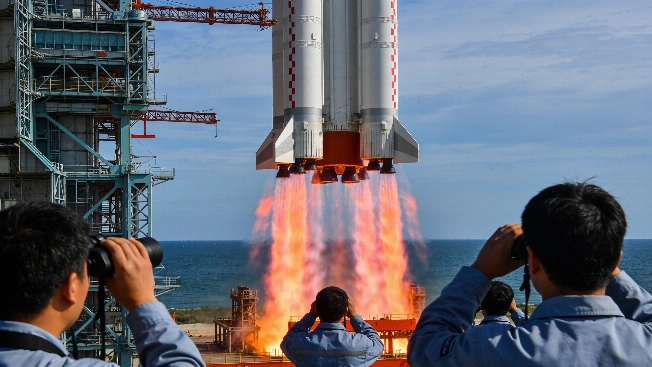
China Resumes Rocket Launches After Long March 7A Failure
China's space program has returned to flight just days after a Long March 7A rocket failure, successfully launching two separate missions with the Long March 12 and Long March 2C vehicles to low Earth orbit
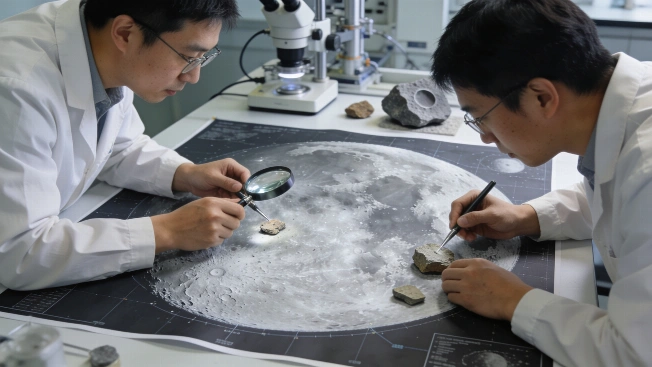
China Unveils Detailed Lunar Map and New Geologic Timeline
Chinese researchers have released a new 1:5 million scale map of the Moon, updating lunar geologic eras and far side data using recent sample-return missions and reprocessed spectral analysis
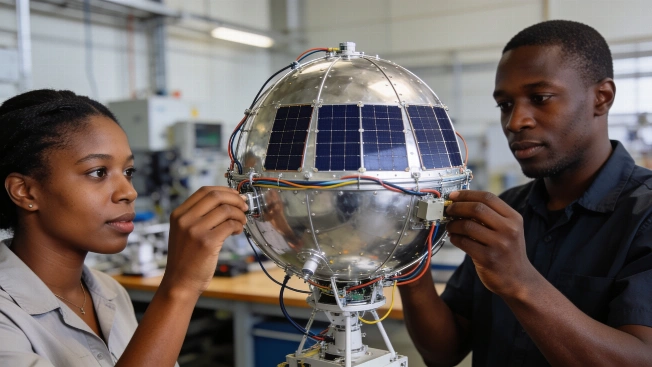
Africa's BALLS Radio Array to Ride Chang'e 8 to Lunar South Pole
A trio of spherical radio astronomy probes from Africa is set to launch aboard China's Chang'e 8 lander in 2029, aiming to deploy at the moon's south pole and test low-frequency radio observations beyond Earth's atmospheric limits