China's space program has returned to flight just days after a Long March 7A rocket failure, successfully launching two separate missions with the Long March 12 and Long March 2C vehicles to low Earth orbit
China's launch program has rapidly resumed operations following the loss of a Long March 7A rocket on August 10, with two successful launches taking place less than a week after the incident. The China Aerospace Science and Technology Corporation (CASC) deployed both the new Long March 12 and the established Long March 2C rockets in separate missions, signaling a return to routine launch cadence despite the recent setback.
Back-to-Back Launches Mark Recovery
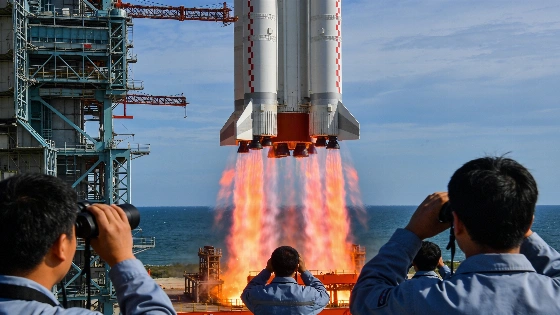
The first of the two launches occurred on August 16, when a Long March 12 rocket lifted off from the Hainan Commercial Space Launch Site in Wenchang at 12:10 p.m. local time (04:10 GMT). This mission delivered a payload of 24 satellites designed to provide internet connectivity, placing them into low Earth orbit (LEO). The Long March 12, introduced in 2024, is a two-stage vehicle optimized for heavier payloads to LEO and sun-synchronous orbits, and has now completed seven launches-all reported as successful.
Less than a day later, on August 17 at 11:02 a.m. local time (03:02 GMT), a Long March 2C rocket launched from the Taiyuan Satellite Launch Center in Shanxi province, approximately 2,100 kilometers north of Wenchang. This mission placed the SEO satellite, developed for the United Arab Emirates, into its planned orbit. The Long March 2C, a two-stage rocket standing 43 meters tall, has a lifting capacity of about 3.9 metric tons to LEO and has been in service since 1982.
Technical Details and Mission Status
The Long March 12 and Long March 7A share similar dimensions-62 meters and 60 meters in height, respectively-but serve different mission profiles. The Long March 12 is designed for lower orbits, while the three-stage Long March 7A is intended for higher-altitude missions, including geostationary transfer orbits. The Long March 7A failure on August 10 resulted in the loss of the Zhongxing-4B communications satellite, with video showing structural failure of the rocket's upper section approximately 85 seconds after launch. CASC has stated that the cause remains under investigation, and no further technical details have been released.
Despite the ongoing inquiry, China's launch schedule remains active. The upcoming week is expected to see the second flight of the Zhuque-3 reusable methane rocket from Landspace, as well as a Long March 5 launch carrying the Chang'e 7 mission to the Moon's south pole. The rapid return to flight after a major failure highlights the resilience and redundancy built into China's launch infrastructure.
Launch Reliability and Historical Context
The Long March 7A has now experienced two failures in 18 launches since its debut in 2020, while the Long March 12 has maintained a perfect record in its first seven missions. The Long March 2C, with a launch history spanning over four decades, continues to serve as a reliable workhorse for smaller payloads. The ability to resume launches quickly after a high-profile failure is not unique to China; other spacefaring nations have also demonstrated similar recovery strategies, as seen in the rapid return to operations following launch anomalies in the United States and Europe.
For observers interested in the technical and observational aspects of planetary and atmospheric phenomena, recent coverage of Venus's brightness and its ability to cast a visible shadow offers a complementary perspective on how celestial events are detected and interpreted. For example, astronomers have outlined the conditions required to observe a shadow cast by Venus, as discussed in this recent Science Report article.
Ongoing Investigation and Future Launches
CASC has not yet provided a detailed update on the investigation into the Long March 7A failure, beyond confirming that the cause is under review. The agency's ability to proceed with other launches while the inquiry continues suggests a compartmentalized approach to risk management, with different rocket families operating independently. As China prepares for additional launches, including high-profile lunar and reusable rocket missions, the outcome of the Long March 7A investigation will be closely watched for its implications on future mission planning and vehicle design.
The rapid sequence of launches following a major failure underscores the operational complexity and risk tolerance inherent in modern spaceflight. While technical redundancy and parallel vehicle development can mitigate the impact of individual failures, each incident provides critical data for improving reliability and safety across the launch fleet.
Understanding the process of orbital insertion is essential for interpreting launch outcomes. Orbital insertion refers to the precise maneuver in which a spacecraft or satellite transitions from its initial launch trajectory into a stable orbit around Earth or another celestial body. This phase requires accurate timing, velocity, and orientation adjustments, typically achieved through onboard propulsion or upper-stage rocket burns. Successful orbital insertion is a prerequisite for most scientific and commercial space missions, as it determines whether a payload can achieve its intended operational objectives. Failures during this phase can result in loss of mission or require contingency procedures, making it a critical focus for mission planners and engineers.