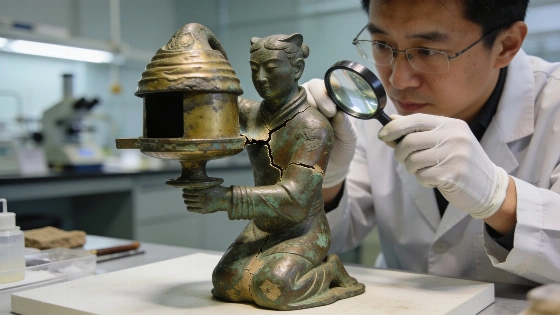
A new analysis of a bronze kneeling figure from Sanxingdui, China, reveals it was constructed from components made in different regions and periods, providing evidence for complex trade and metalworking in the ancient Shu kingdom
Recent research on a distinctive bronze kneeling figure from the Sanxingdui archaeological site in Sichuan Province, China, has revealed that the artifact was not originally created as a single object. Instead, the figure was assembled from multiple components produced in different regions and at different times, according to a report from the Sichuan Provincial Institute of Cultural Relics and Archaeology. This finding offers new insight into the technological practices and exchange networks of the ancient Shu kingdom during the Bronze Age.
Separate Components
The artifact consists of two main elements: a bronze ritual vessel known as a zong, positioned above a kneeling human figure. Scientific analysis identified substantial differences between the two components despite their burial together. The human figure displayed much greater corrosion than the zong, while laboratory testing revealed differences in metal composition and in the geological sources of the ores used to produce them. These results suggest that the two parts were manufactured separately, probably in different workshops or regions, before being joined at a later stage.
Further examination showed that the human figure itself was cast from several separate sections. The base was made from nearly pure copper, a choice interpreted as a structural adaptation that improved stability. One of the strongest indications of later assembly came from the base of the zong, where approximately one-third had been deliberately shaved away so it would fit onto the kneeling figure. If both elements had been designed as a single object, such modification would probably not have been necessary.
Bronze Age Exchange
Sanxingdui is recognized as one of the most significant Bronze Age sites in China, with thousands of artifacts recovered since its discovery. The kneeling bronze figure, notable for its size and craftsmanship, has long been regarded as an important example of ancient Shu artistry. The new findings suggest that finished bronze objects and raw materials circulated between regions and that artisans at Sanxingdui were able to modify and join components produced elsewhere using advanced metalworking techniques.
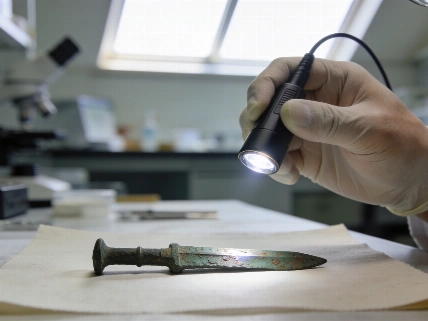
According to the published analysis, the site has yielded more than 13,000 artifacts, including bronzes, jades, gold objects, and ceramics, dating primarily to the late Shang period, approximately 1600–1046 BCE. The kneeling figure and zong were recovered from a sacrificial pit associated with ritual deposition. Differences in corrosion and composition were identified through metallurgical analysis and geochemical sourcing, while the physical alterations were documented through close examination of the surfaces and joins.
The study did not identify the precise locations where the components were made. However, the variation in ore sources, alloy composition, and manufacturing techniques supports the interpretation that Sanxingdui participated in broader networks of technological exchange connecting the ancient Shu kingdom with other centers, including the Central Plains of China.
Function Remains Unclear
Although the evidence strongly supports assembly from separately manufactured parts, the reason for combining them remains uncertain. The modification may have served a ritual, symbolic, structural, or practical purpose, but the available material does not establish which explanation is most likely. It is also unclear whether this type of composite construction was common at Sanxingdui or represented an unusual treatment of a particularly important object.
Understanding the construction and modification of ancient artifacts often requires a combination of metallurgical analysis, geochemical sourcing, and close visual inspection. Metallurgical testing can reveal differences in alloy composition, casting methods, and corrosion patterns, while geochemical sourcing can help identify the geological origin of the ores. When objects come from ritual or secondary deposits, distinguishing original manufacture from later alteration depends on tool marks, joins, surface changes, and comparison with other artifacts. These methods allow archaeologists to reconstruct the changing histories of objects without assuming that everything buried together was originally produced or used as a single unit.