
Experiment
6 reportsCurrent work on Experiment is assessed through interpretation of uncertainty; study design; and sampling and measurement. Claims involving study design are weighed against replication or validation and checked with protocol transparency; uncertainty persists because violated assumptions or selective reporting can change the conclusion.
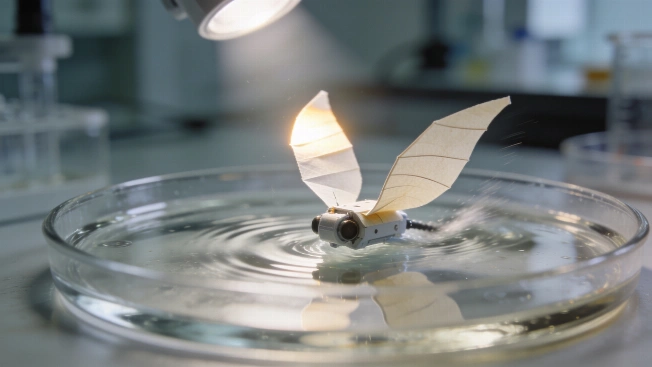
MIT Builds a Muscle-Powered Robot Thin Enough to Swim Mazes
MIT engineers have built a paper-thin biohybrid robot that swims through water using light-responsive muscle cells. Its maze test demonstrates controlled locomotion with minimal biological material, but not autonomous operation.
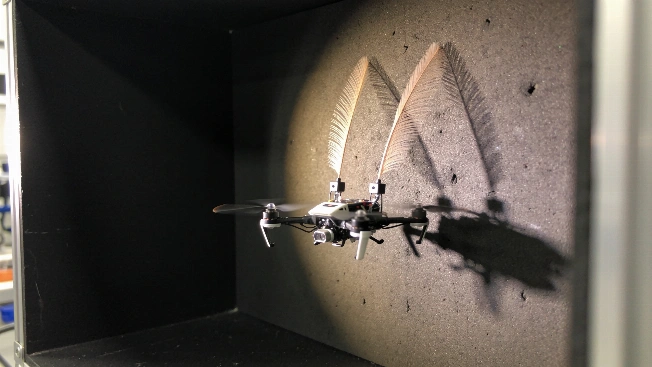
Tiny Drones Navigate Dark Spaces With Artificial Whiskers
Researchers at Delft University of Technology demonstrated a tiny drone that uses pressure-sensitive artificial whiskers to navigate clear-wall test environments without relying on visual information.
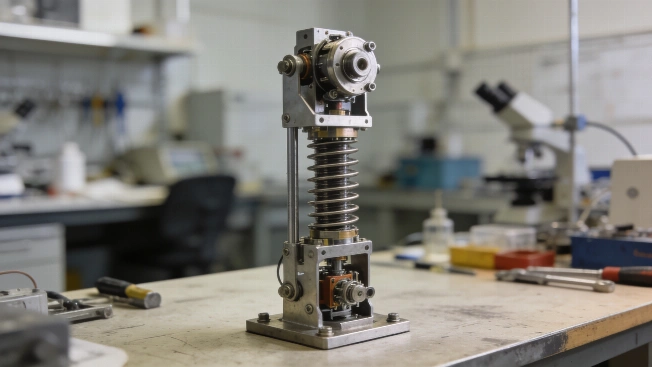
Mechanical Oscillator Defies Instability Using Only Precise Timing
Researchers have demonstrated a mechanical oscillator that remains upright by switching between two unstable states without using sensors or feedback, challenging assumptions about how machines maintain balance
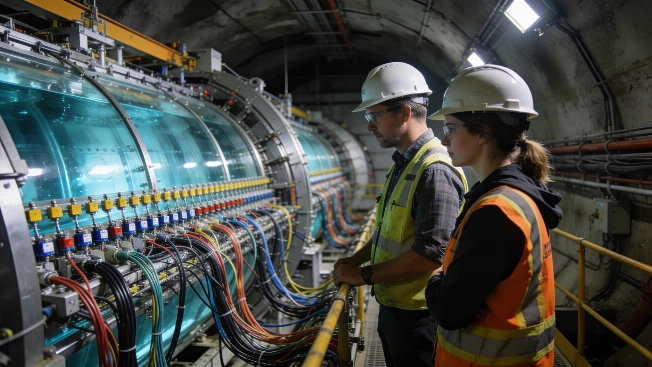
AI Systems Tested for Real-Time Neutrino Detection at DUNE
Researchers at the Deep Underground Neutrino Experiment are developing machine learning tools to process vast detector data, identify rare neutrino events, and monitor system health, aiming to improve the speed and reliability of particle physics research
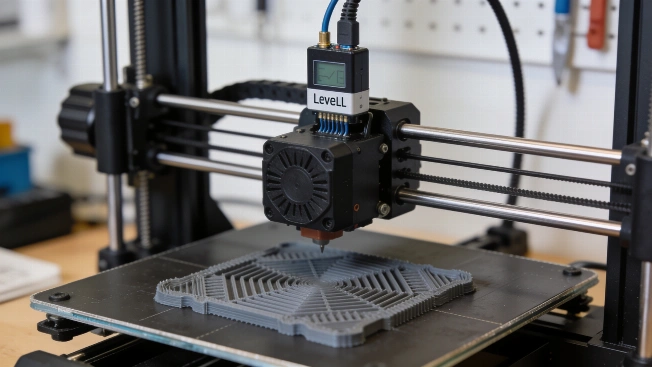
Bed-Leveling Sensors Tested for Automated Pressure Advance in 3D Printing
Researchers have explored whether standard bed-leveling sensors in FDM 3D printers can be repurposed to automate pressure advance calibration, a process critical for consistent extrusion during variable-speed printing tasks
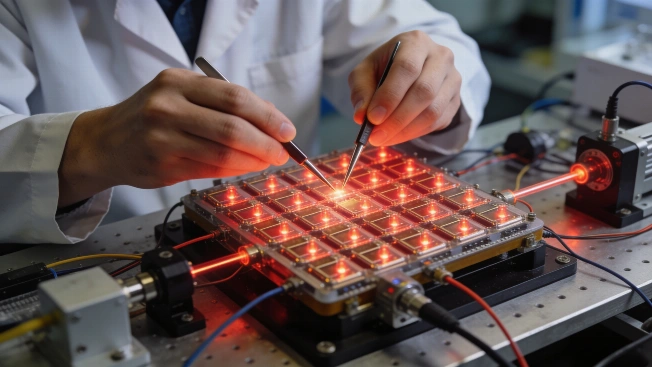
Coupled Laser Array Reveals Nonlinear Effects in Percolation Transition
A team has experimentally realized percolation using a 100-laser array, uncovering how nonlinear interactions shift the critical threshold and alter cluster formation compared to idealized models