
Dark Matter
13 reportsThe research story of Dark Matter is traced through gravitational lensing and cosmic structure, with separate attention to direct-detection searches. To distinguish observation from inference, reporting sets instrument calibration beside population statistics in the discussion of cosmic structure; the conclusion remains provisional because selection effects and uncertain source distances can alter inferred rates or energies.

Neil deGrasse Tyson releases Lost in Space, a new encyclopedia of the cosmos
Neil deGrasse Tyson and Lindsey Nyx Walker introduce Lost in Space, a 400-page National Geographic encyclopedia packed with thousands of facts, images, and profiles of planets, telescopes, and cosmic phenomena.
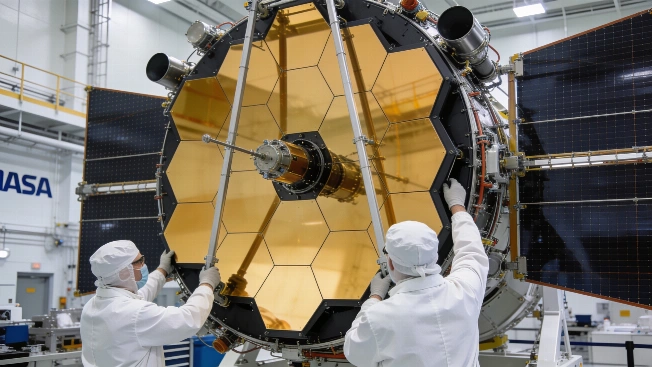
Nancy Grace Roman Space Telescope Prepares for Launch and Legacy
NASA's Nancy Grace Roman Space Telescope, named for the agency's first chief astronomer, is nearing launch. The mission aims to investigate dark matter, dark energy, and exoplanets with advanced infrared instruments
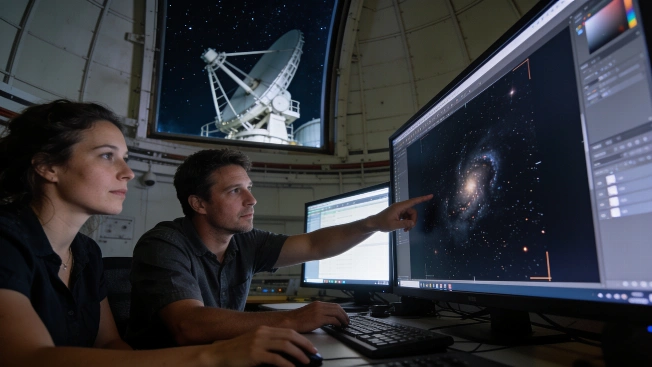
Cloud 9 Galaxy May Be the Closest Starless Galaxy Candidate Yet
Astronomers using the Gran Telescopio Canarias and Hubble Space Telescope have identified Cloud 9, a galaxy near Messier 94, as a leading candidate for a starless galaxy dominated by dark matter and gas
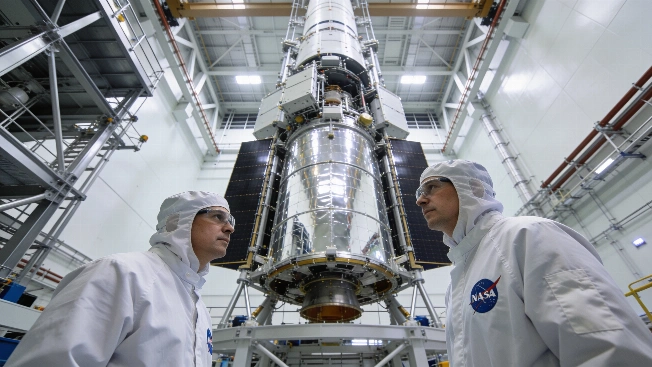
NASA's Roman Space Telescope Set for Launch to Map Distant Cosmos
NASA's Nancy Grace Roman Space Telescope is scheduled to launch from Florida, aiming to investigate exoplanets, dark matter, and distant galaxies with a wide-field infrared observatory. Its first science images are not expected until 2027
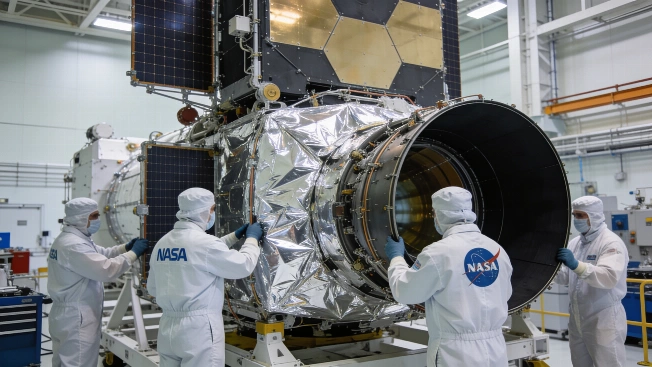
NASA's Roman Space Telescope Nears Launch After Budget Uncertainty
NASA's Nancy Grace Roman Space Telescope is set for launch after nearly two decades of development, overcoming a threatened cancellation and major funding cuts to become the agency's next flagship observatory for dark energy, exoplanets, and cosmic structure
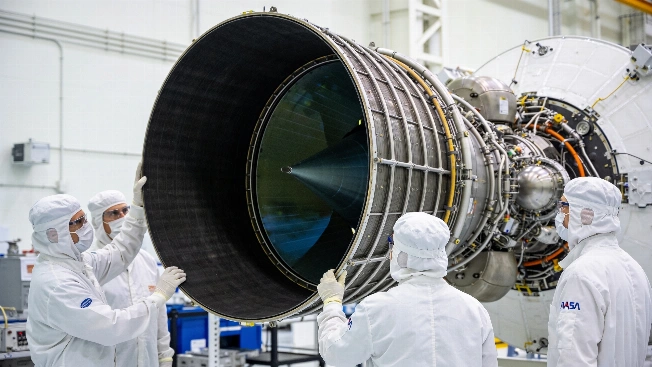
NASA's Roman Space Telescope Targets Dark Energy and Exoplanets
NASA's Nancy Grace Roman Space Telescope, set for launch in 2026, will use infrared instruments to investigate dark energy, dark matter, and exoplanets from a stable orbit 1.5 million kilometers from Earth
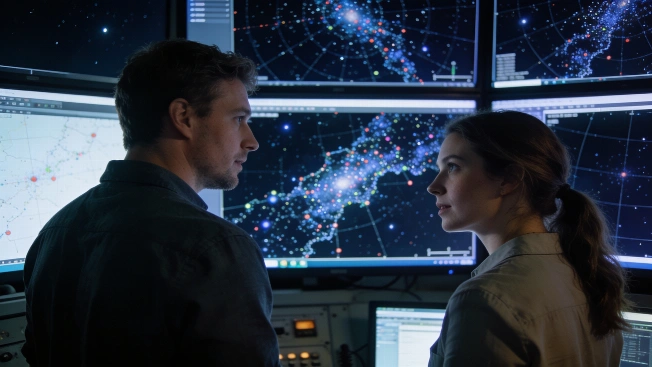
Astronomers Map 4 Billion Cosmic Objects in Largest 2D Sky Survey
A new 2D map of the universe, built from 13 years of ground and space-based observations, catalogs 4 billion stars, galaxies, and other objects, offering an unprecedented resource for future astronomical research
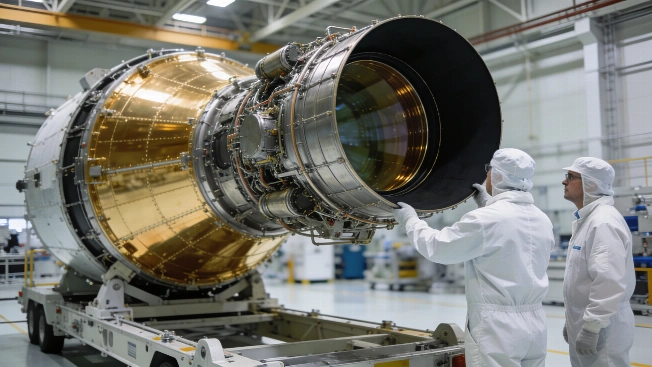
NASA Prepares Roman Space Telescope for Early Launch to L2 Orbit
NASA's Nancy Grace Roman Space Telescope is set for launch on August 30, aiming to deliver wide-field infrared surveys and exoplanet imaging from a stable orbit beyond the Moon
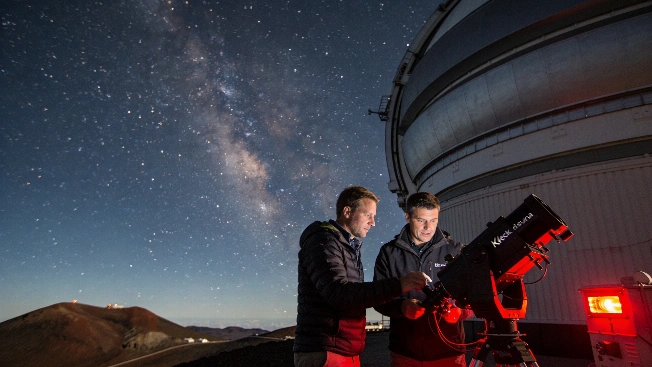
Dwarf Galaxy DF9 Found Without Dark Matter After Cosmic Collision
Astronomers using the Keck Cosmic Web Imager have identified a faint dwarf galaxy, DF9, that appears to lack dark matter, supporting the idea that galactic collisions can separate dark and visible matter
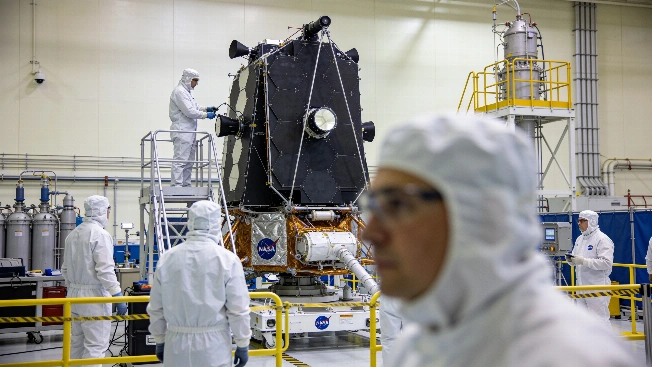
NASA Prepares Roman Space Telescope for 2026 Launch to L2 Orbit
NASA has fueled the Roman Space Telescope, a next-generation infrared observatory scheduled for launch in August 2026, aiming to collect hundreds of terabytes of cosmic data annually and expand studies of dark matter, dark energy, and exoplanets
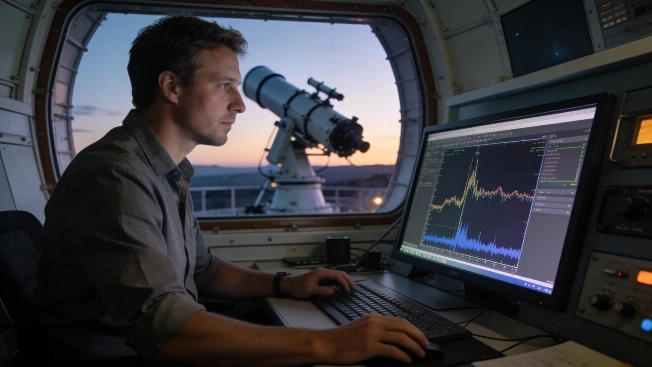
Ejected Matter May Account for Universe's Missing Baryons
Researchers analyzing intergalactic space have identified a significant fraction of the universe's missing ordinary matter, suggesting that violent galactic outflows may have expelled it beyond galaxies' boundaries
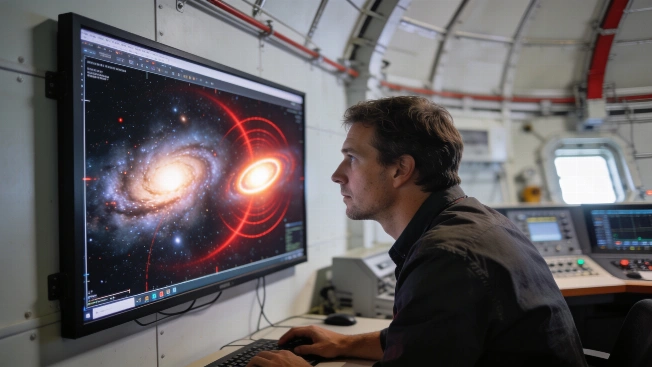
Webb Telescope Reveals Merging Young Galaxy Cluster 4.4 Billion Light-Years Away
NASA's James Webb Space Telescope has imaged the galaxy cluster MACS J0553.4-3342 as it appeared 4.4 billion years ago, capturing two massive sub-clusters in the process of merging and highlighting the gravitational effects shaping distant galaxies
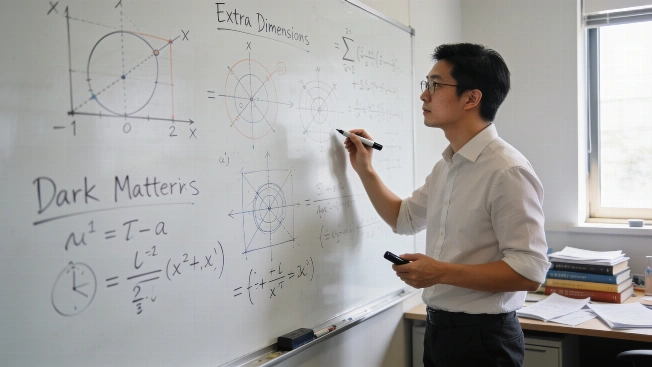
Dark Matter Theory Links Hidden Dimensions to Cosmic Structure
A new theoretical study explores whether dark matter's elusive nature could be explained by its interaction with a hidden fifth dimension, offering a possible connection between two of physics' most persistent mysteries