
Genetics and Genomics
7 reportsGenome sequencing and population genomics are compared with direct observations. This record clarifies how genetic variants are identified and which variants affect traits, distinguishing a consistent pattern from a uniquely established explanation.

ITS Barcoding Distinguishes Nine Vietnamese Mango Groups
Researchers examined nine Southern Vietnamese mango cultivars and found that ITS sequences separated their groups, while 22 SCoT primers produced 305 polymorphic bands useful for distinguishing individual samples

AlphaGenome 2 doubles causal-variant detection in immune cells
Trained on more than 107 million cell profiles, Google DeepMind's model reached 30% on TenK10K versus 16% for its predecessor, while improving predictions of whether variants raise or lower gene activity

A Fire Amoeba Sets a New Heat Limit for Complex Life
A NASA-supported study identifies an amoeba from California hot springs that reproduces at 63°C, remains active at 64°C and can recover after brief exposure to temperatures approaching 70°C.
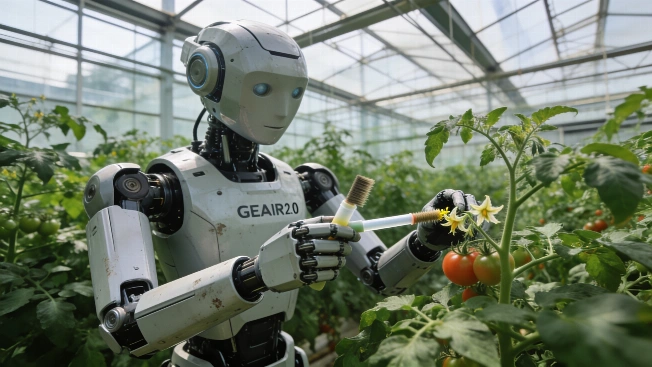
Humanoid Robot GEAIR 2.0 Automates Tomato Flower Pollination in Beijing
A humanoid robot called GEAIR 2.0 has been demonstrated in Beijing autonomously pollinating tomato flowers for hybrid breeding. The system combines robotics and AI with gene editing in real greenhouse conditions, aiming to reduce manual labor in crop breeding.
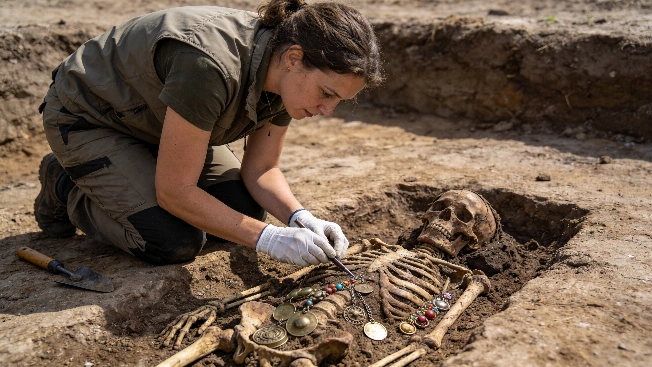
Ancient DNA Reveals Women Held Power in Prehistoric Europe
Recent genetic studies of prehistoric burials across Europe are challenging long-held assumptions about gender roles, showing that women sometimes held high status and power. Archaeologists are re-examining evidence from sites like Çatalhöyük and Iron Age Britain.

Neanderthal Gene Variant Linked to Muscle Mass in Modern Humans
A newly published study identifies a Neanderthal-derived variant in the growth hormone receptor gene that increases muscle mass in some modern humans. Researchers analyzed ancient DNA and more than a million modern genomes to trace the variant’s distribution and effects.
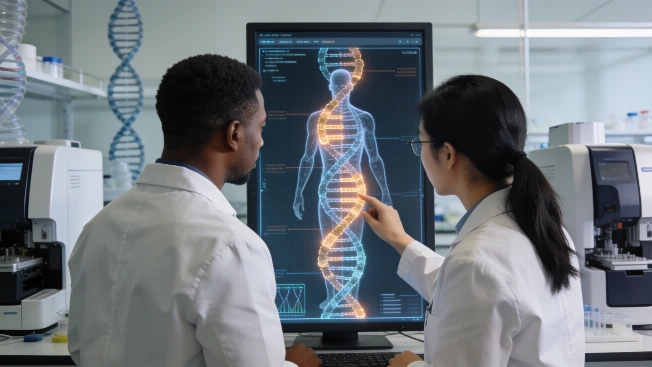
Ancient DNA Reveals Two Unknown Human Lineages in Modern Genomes
A new genome analysis method has identified traces of two previously unknown extinct human lineages in the DNA of living people, offering fresh understanding into ancient population interactions and the complexity of human evolution.