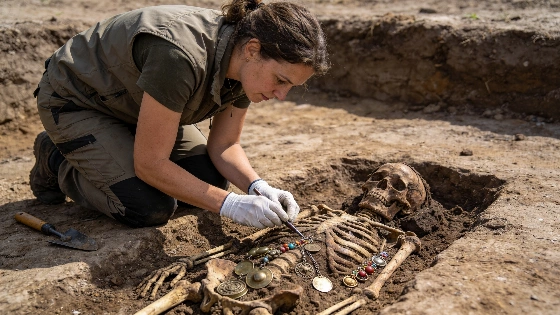
Recent genetic studies of prehistoric burials across Europe are challenging long-held assumptions about gender roles, showing that women sometimes held high status and power. Archaeologists are re-examining evidence from sites like Çatalhöyük and Iron Age Britain
For more than a century, archaeological interpretations often assumed that prehistoric societies were dominated by men, with women occupying subordinate roles. However, advances in ancient DNA analysis are prompting a fundamental reassessment of these views, revealing a more complex and variable picture of gender and power in the past.
Re-examining Old Assumptions
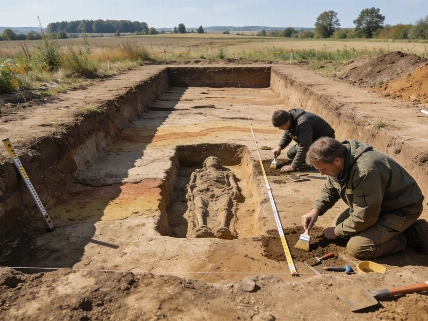
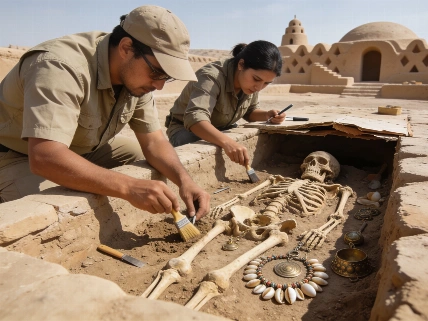
Early excavations, such as the 1801 discovery of a richly furnished 4,000-year-old grave near Stonehenge, routinely identified high-status burials as male based on grave goods and prevailing gender stereotypes. Only recently has ancient DNA analysis demonstrated that some of these individuals, including a skilled goldsmith once thought to be male, were in fact female. Similar re-evaluations have occurred at other sites, such as the Birka Viking burial in Sweden, where genetic evidence confirmed that a grave filled with weapons belonged to a biologically female individual. These findings have sparked debate among archaeologists, some of whom have questioned the interpretations or the science itself, reflecting the persistence of 19th- and 20th-century biases about gender roles.
Historical interpretations of gender in prehistory shifted over time. While some 19th-century scholars acknowledged accounts of powerful women in ancient texts, the idea that matriarchal or female-led societies existed was largely dismissed by the late 1800s. For much of the 20th century, leading archaeologists argued that grave goods associated with women reflected the status of their male relatives, not the women themselves. This perspective shaped interpretations of burial evidence for decades.
Genetic Evidence and Social Structure
Recent genetic studies are providing new insights into prehistoric social organization. At Çatalhöyük, a Neolithic settlement in present-day Turkey dating from 7000 to 6000 BCE, a team of nearly 50 researchers analyzed ancient DNA from burials and found evidence for matrilineal descent-where lineage and inheritance were traced through the female line. This suggests that, at least in some early farming communities, women played a central role in social and economic life. The finding challenges earlier interpretations that emphasized the domestication and subordination of women alongside animals during the rise of agriculture.
Elsewhere, genetic and archaeological evidence points to considerable diversity in social organization. At Hazleton North long barrow in England, DNA analysis of Neolithic burials revealed a pattern of polygyny, with multiple women buried alongside a shared male partner. In Bronze Age Orkney, descent appears to have been patrilineal, with women moving between communities. These examples highlight that prehistoric gender roles and kinship systems varied widely across regions and periods.
Matrilineal Dynasties in Iron Age Europe
In Iron Age Europe, new genetic research is uncovering further evidence for female-centered social structures. A 2024 study from the Max Planck Institute for Evolutionary Anthropology identified matrilineal dynastic succession in Early Iron Age communities, where both land and lineage passed through the female line. Additional research in Late Iron Age Dorset and Yorkshire has documented up to 13 generations of matrilineal descent, while other sites show different patterns. These findings indicate that matrilineal and matrilocal systems-where men married into powerful female lineages-were present in some regions, though not universal.
Archaeological evidence from Iron Age cemeteries in the Paris Basin and East Yorkshire also suggests relative gender parity in burial treatment, with men and women receiving similar grave goods and funerary attention. Skeletal analysis has identified women who may have participated in conflict, consistent with historical accounts such as those describing Boudica's resistance to Rome. However, the presence of high-status women in some burials does not mean all societies were matriarchal, nor does it establish the precise nature of their authority.
Limits and Implications of the Evidence
While ancient DNA and bioarchaeological analysis are transforming our understanding of gender in prehistory, the evidence remains incomplete and subject to interpretation. Preservation biases, small sample sizes, and regional variation mean that no single model fits all prehistoric societies. Some cemeteries show clear matrilineal descent, while others do not. The archaeological record reflects a patchwork of social forms, with both male- and female-focused systems appearing at different times and places.
Recent studies have analyzed dozens to hundreds of individuals at key sites, using a combination of ancient DNA sequencing, osteological analysis, and contextual dating. For example, the Çatalhöyük study involved nearly 50 scientists and multiple lines of evidence, while Iron Age matrilineal descent in Yorkshire was documented across 13 generations. These large-scale projects are providing more robust data, but interpretation still depends on careful contextual analysis and recognition of the limits of the evidence.
Sex estimation in archaeology relies on a combination of skeletal morphology and, increasingly, genetic analysis. While DNA can provide a high degree of confidence in biological sex, it does not reveal social gender or identity. Archaeologists must distinguish between biological sex, gender roles, and social status, and avoid projecting modern assumptions onto ancient societies. The growing body of genetic and archaeological evidence underscores the diversity of past social systems and the need for nuanced interpretation.
Understanding matrilineal descent requires careful analysis of both genetic and archaeological data. Matrilineal systems trace ancestry and inheritance through the female line, but this does not necessarily mean women held political power or exclusive authority. Archaeologists use a combination of ancient DNA, burial context, and associated artifacts to infer kinship patterns, but the social meaning of these patterns remains open to debate. As research continues, new discoveries will likely further complicate our understanding of gender and power in the ancient world.