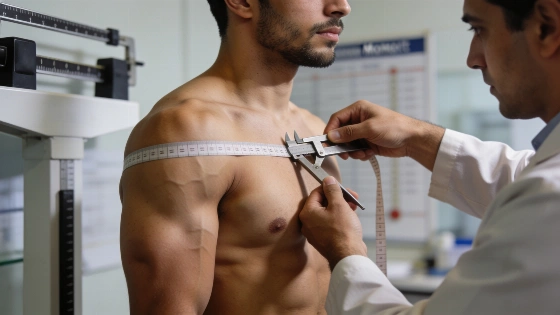
A newly published study identifies a Neanderthal-derived gene variant in the growth hormone receptor that increases muscle mass in some modern humans. Researchers analyzed ancient DNA and over a million modern genomes to trace its distribution and effects.
Recent research has identified a gene variant inherited from Neanderthals that influences muscle development in some modern human populations. This variant, found in the growth hormone receptor gene, alters the way cells respond to growth hormone, resulting in measurable differences in muscle mass among individuals who carry it. The study, published in 2026, draws on ancient DNA from Neanderthal and Denisovan remains as well as large-scale genomic data from living people.
Tracing the Variant
The research team analyzed DNA from 10 Neanderthal individuals and two Denisovans, recovered from archaeological sites across Europe, Siberia, and Asia. These ancient samples were compared with more than 1.1 million modern human genomes stored in biobanks. The Neanderthal version of the growth hormone receptor gene differs from the typical modern human form by two amino acid substitutions and one deletion. Genetic evidence suggests this variant entered the modern human gene pool through interbreeding events that occurred approximately 47,000 years ago, likely in Eurasia.
Almost all Neanderthals sampled carried this gene variant, but its frequency in modern populations varies widely. The study found that about 1% of people with European ancestry possess the variant, while it is present in up to 25% of individuals with Southern or Southeast Asian ancestry. The variant is rare or absent in people of African ancestry, consistent with the geographic pattern of Neanderthal-modern human admixture.
Effects on Growth and Development
Laboratory experiments demonstrated that cells expressing the Neanderthal variant of the growth hormone receptor proliferate about 40% more in response to growth hormone compared to cells with the typical modern human receptor. In population-level data, each copy of the variant was associated with an average increase of approximately 270 grams of muscle mass. Individuals inheriting two copies could have over half a kilogram of additional muscle, though the effect is not always visually apparent and may be more subtle in physical appearance.
The study also identified minor skeletal differences linked to the variant, such as slightly shorter tooth roots and small changes in jaw shape-traits observed in Neanderthal fossils. However, the researchers caution that this single gene cannot account for the overall robust body form of Neanderthals, which likely resulted from a combination of genetic, developmental, and environmental factors.
Timing and Biological Mechanism
Further analysis revealed that the gene variant's effects are most pronounced after puberty, aligning with the period when growth hormone produced by the pituitary gland becomes especially active. The variant does not appear to respond to the form of growth hormone produced by the placenta, which may explain why Neanderthal and modern human infants were similar in size at birth but diverged in growth rates during childhood and adolescence. In the modern sample, children under 11 years old with the variant did not show increased muscle mass, supporting the idea that its influence emerges later in development.
These findings add to a growing body of evidence that interbreeding between Neanderthals and modern humans contributed functionally significant genetic diversity to present-day populations. The uneven distribution of the variant among different groups also raises questions about the complexity of early human migrations and admixture events.
Population Patterns and Research Limitations
The high prevalence of the Neanderthal-derived variant in South and Southeast Asian populations, compared to its rarity in Europeans, suggests that the demographic history of Eurasia involved multiple waves of migration and admixture. This pattern challenges earlier models that assumed a simple, uniform spread of Neanderthal ancestry. The study's reliance on large-scale genomic databases allows for robust population-level inferences, but the authors note that further research is needed to clarify the evolutionary pressures that maintained or reduced the frequency of this variant in different regions.
Preservation of ancient DNA is a critical factor in such studies. The successful recovery of Neanderthal and Denisovan genetic material from a range of archaeological contexts has enabled researchers to reconstruct aspects of ancient population structure and gene flow. For example, understanding the chemical processes that allow soft tissue or DNA to survive for millennia, as discussed in recent work on ancient brain preservation, is essential for interpreting the genetic legacy of extinct hominins.
While the identification of this gene variant provides new insight into the biological consequences of Neanderthal admixture, it also highlights the complexity of linking genetic differences to physical traits in both ancient and modern populations. The evidence supports a nuanced view of human evolutionary history, shaped by repeated contact, gene flow, and adaptation across diverse environments.
Ancient DNA analysis relies on the recovery and sequencing of genetic material from archaeological remains, often bones or teeth. Preservation conditions, such as temperature, soil chemistry, and burial environment, strongly influence the likelihood of DNA survival. Advances in laboratory techniques have improved the ability to extract and sequence degraded DNA, but contamination and limited sample size remain challenges. Ancient DNA studies must therefore interpret results within the context of preservation bias and the incomplete nature of the archaeological record.