
Vera C. Rubin Observatory
5 reportsScientific coverage devoted to Vera C. Rubin Observatory addresses research methods, together with institutional collaborations and later verification. The strength of statements about research methods depends on how well independent observing teams is supported by raw and calibrated measurements; uncertainty persists because weather, detector limits, and target selection can shape the available record.
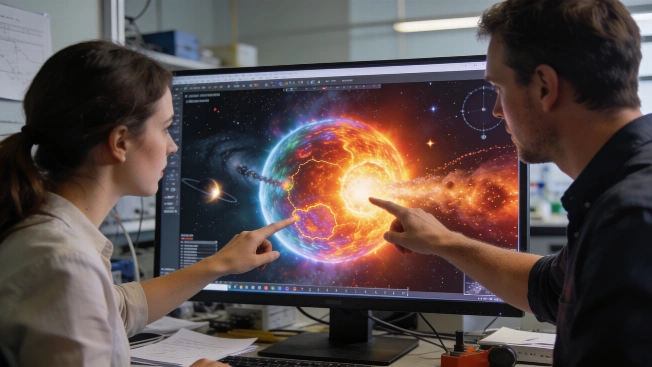
Vampire white dwarfs can collapse into neutron stars under precise conditions
Researchers have modeled how certain white dwarfs feeding on companion stars can collapse into neutron stars if their mass and accretion rate fall within a narrow range, revealing a rare but physically distinct pathway for stellar evolution.
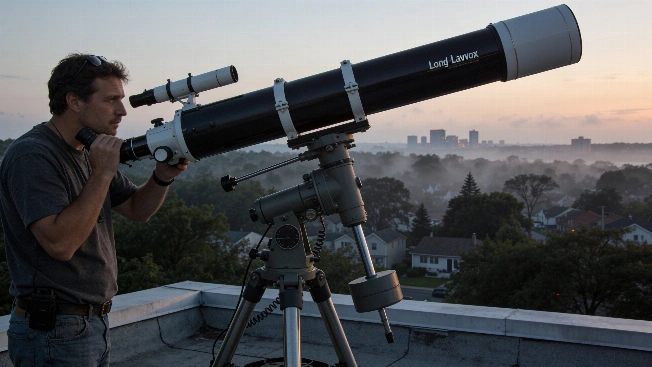
Brookhaven and Stony Brook Send Entangled Photons 21 km Through Open Air
A team at Brookhaven National Laboratory and Stony Brook University has established a 21-kilometer free-space quantum link, transmitting single and entangled photons across the atmosphere to connect metropolitan quantum network nodes under real-world conditions

Astronomers Map 4 Billion Cosmic Objects in Largest 2D Sky Survey
A new 2D map of the universe, built from 13 years of ground and space-based observations, catalogs 4 billion stars, galaxies, and other objects, offering an unprecedented resource for future astronomical research
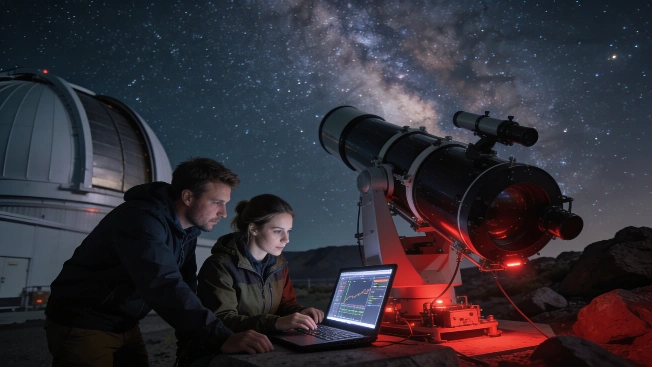
Faint X-ray Flash Reveals Unusual Supernova in Nearby Galaxy
A brief X-ray signal detected by China's Einstein Probe in March 2026 has allowed astronomers to observe the earliest moments of a rare Type Ic supernova, offering new insight into how massive stars end their lives
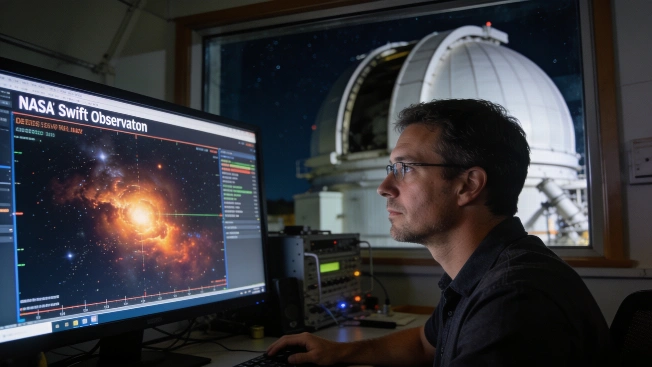
Swift Observatory Detects Black Hole Consuming Star Far From Galaxy Core
NASA's Swift Observatory has observed a rare tidal disruption event caused by a supermassive black hole devouring a star on the outskirts of a distant galaxy, challenging assumptions about where such events occur