
Dendrochronology
3 reportsDendrochronology is an archaeological method used to locate, date, document, sample, or interpret material evidence. The method is judged through chronological method, laboratory preparation, and interpretive uncertainty, especially where design choices change uncertainty or causal interpretation.
The strongest reporting on Dendrochronology separates spatial or chronological resolution, while also considering validation with excavation evidence and sources of error. One line of support comes from integration with excavation records, and a separate test comes from calibration standards; together they clarify validation with excavation evidence, but the evidence cannot remove the concern that disturbance, contamination, and incomplete context can narrow what the method establishes.
The strongest reporting on Dendrochronology separates spatial or chronological resolution, while also considering validation with excavation evidence and sources of error. One line of support comes from integration with excavation records, and a separate test comes from calibration standards; together they clarify validation with excavation evidence, but the evidence cannot remove the concern that disturbance, contamination, and incomplete context can narrow what the method establishes.
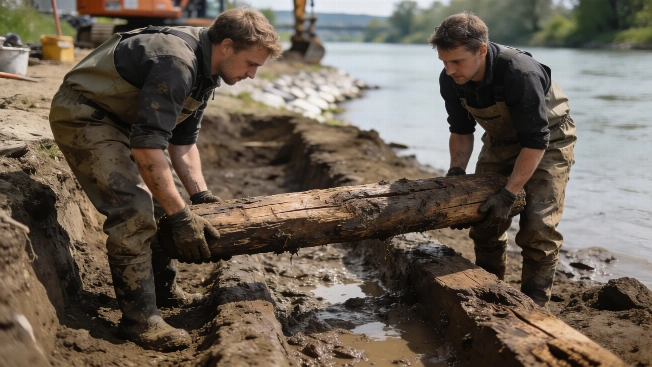
Iron Age Timber Structure Reveals Scale of Celtic Engineering in Bavaria
Archaeologists have recovered large oak beams from a well-preserved Iron Age structure near the River Main in Aschaffenburg, Germany, offering new evidence for complex Celtic construction, trade, and settlement over 2,400 years ago
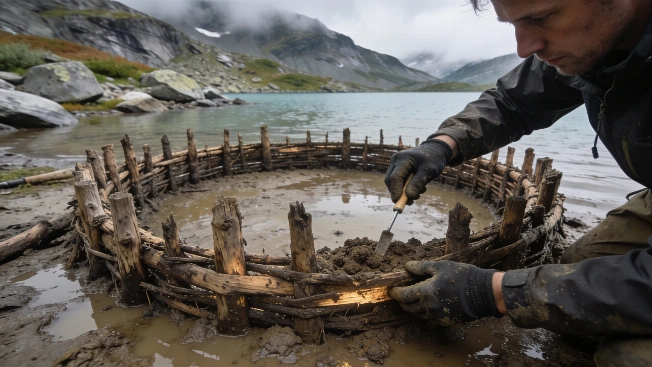
Mesolithic Fish Traps Reveal Early Ecosystem Management in Norway
Archaeologists have identified 7,000-year-old wooden fish traps in Norway's Jotunheimen mountains, providing evidence that Mesolithic hunter-gatherers deliberately introduced brown trout to high-altitude lakes using advanced ecological knowledge
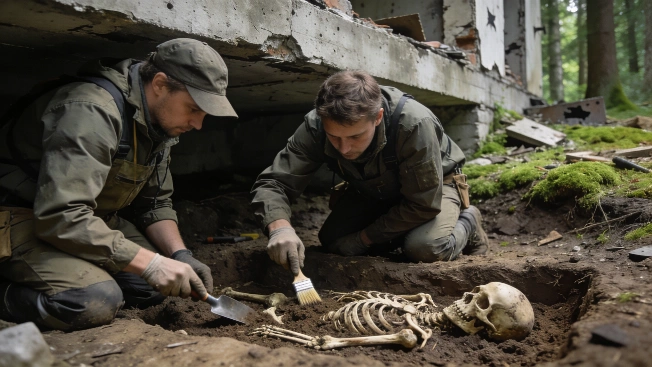
Excavation Reveals Göring's Wolf's Lair Residence Built Over Cemetery
Archaeologists investigating human remains beneath Hermann Göring's former house at the Wolf's Lair have determined the Nazi-era structure was constructed atop a pre-existing cemetery, using stratigraphic and osteological analysis to clarify the context