
Metamaterial
5 reportsThe page treats atomic or nanoscale structure; synthesis and processing; and electrical or optical properties as distinct parts of Metamaterial. The evidence surrounding electrical or optical properties is read through microscopy or spectroscopy and mechanical or electrical testing; confidence remains limited because the main constraint is that laboratory performance can change with defects, manufacturing scale, and operating conditions.
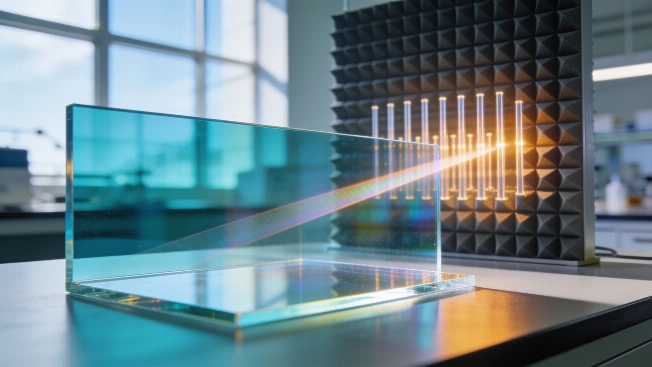
Metamaterials Move From Lab Designs Toward Practical Uses
A UK roadmap published in October 2026 sets out five steps to move metamaterials from academic research toward industry, as work on light control and sound management reveals useful applications alongside persistent manufacturing barriers.
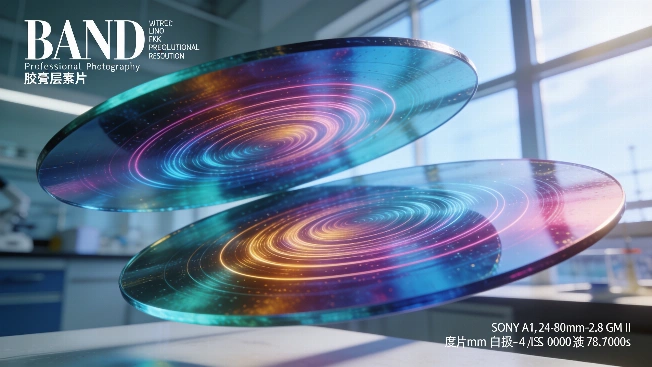
Moiré Twists Control Elastic-Wave Skyrmion States
Earlier experiments generally produced one skyrmion type at a time. A two-layer elastic-wave platform instead uses relative rotation to create patterns that can host several topological states
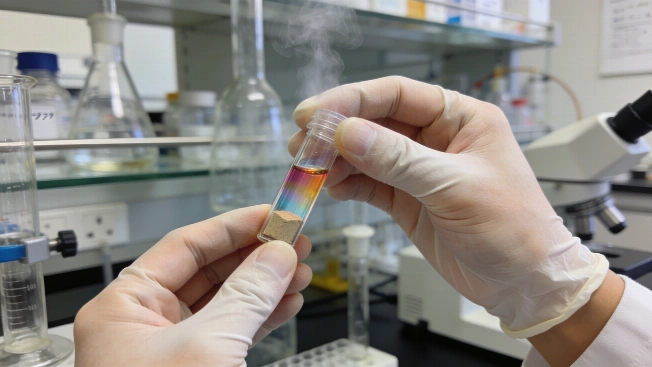
Researchers Demonstrate Vapor-Triggered Switching in Advanced Fluid Materials
A team in Japan has built a reversible system that uses vapor to change the color and physical state of advanced functional fluids, while also switching their phosphorescence. The work offers a new approach to designing smart materials with tunable properties.
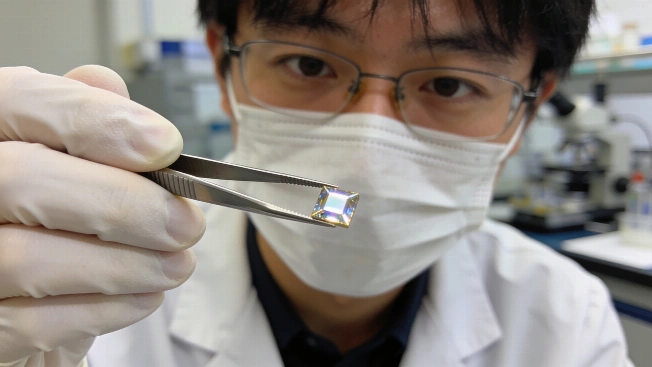
Solid Crystal Thermoelectric Material Demonstrated for Heat Recovery
A research team at the Institute of Science, Tokyo, has engineered a solid crystal thermoelectric material that mimics the properties of atomically thin films, potentially enabling more practical waste heat recovery in industrial settings.
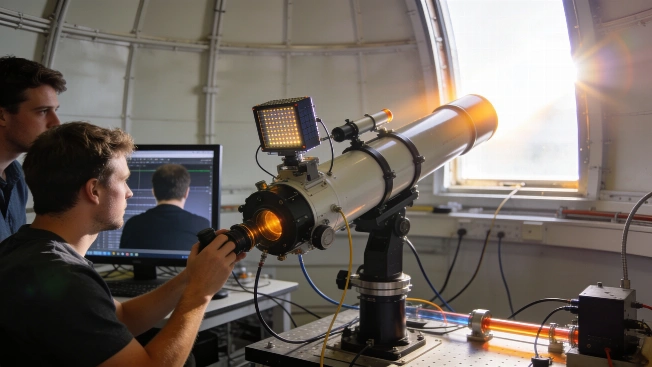
Metasurface Grating Demonstrates Compact Solar Magnetic Field Mapping
A polarization-sensitive metasurface grating has matched conventional instruments in mapping solar magnetic fields, offering a route to smaller, simpler, and potentially more robust hardware for future space-based solar telescopes