
Ecology
3 reportsEcology is investigated through experiments and observations spanning molecules, cells, organisms, populations, or ecosystems. Evidence comes from ecosystem models, food webs, and primary observations, and competing models remain viable when observations are sparse or indirect.
Comparative measurements, model results, and field surveys provide separate checks. Together they examine what spatial scale changes conclusions and how population change is measured, showing how sparse measurements or incomplete records limit certainty.
Comparative measurements, model results, and field surveys provide separate checks. Together they examine what spatial scale changes conclusions and how population change is measured, showing how sparse measurements or incomplete records limit certainty.
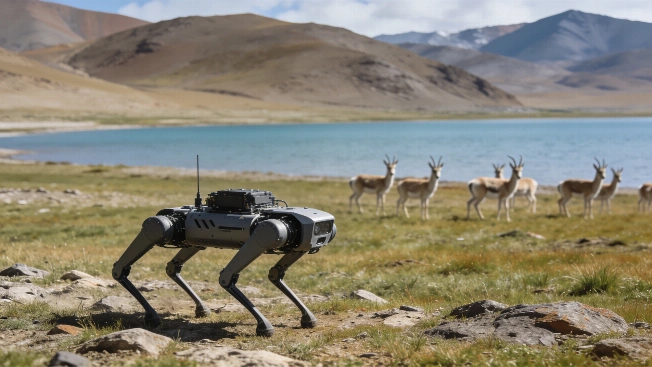
Robots Document Tibetan Antelope Migration in China's High-Altitude Reserve
DEEP Robotics has deployed its Lynx M20 wheeled-legged robot in the Serling Tso Nature Reserve to collect visual data on Tibetan antelope migration, testing the system's ability to operate in extreme plateau conditions with minimal wildlife disturbance
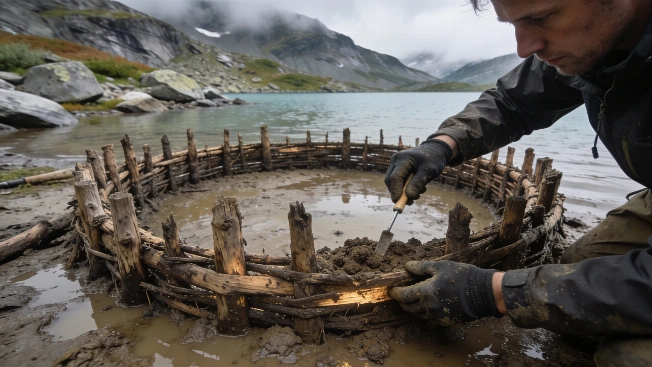
Mesolithic Fish Traps Reveal Early Ecosystem Management in Norway
Archaeologists have identified 7,000-year-old wooden fish traps in Norway's Jotunheimen mountains, providing evidence that Mesolithic hunter-gatherers deliberately introduced brown trout to high-altitude lakes using advanced ecological knowledge
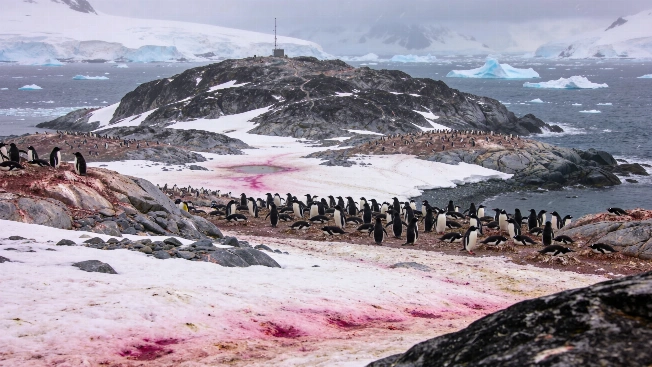
Satellite Images Reveal Penguin Diet Shifts on Antarctica's Danger Islands
NASA's Landsat 8 satellite and drone surveys have enabled researchers to monitor Adélie penguin colonies on the Danger Islands by analyzing the color of their guano, offering new insight into how changing sea ice may affect Antarctic food webs