
Earthquakes
1 reportEarthquakes is studied through field observations, geophysics, geochemistry, remote sensing, and models of planetary processes. Current understanding relies on aftershock sequences, fault rupture, and primary observations, with uncertainty tracked across measurement, classification, and reconstruction.
Fault rupture and aftershock sequences support the strongest interpretation available. The account remains focused on why faults rupture and which areas face strongest shaking, showing how sparse measurements or incomplete records limit certainty.
Fault rupture and aftershock sequences support the strongest interpretation available. The account remains focused on why faults rupture and which areas face strongest shaking, showing how sparse measurements or incomplete records limit certainty.
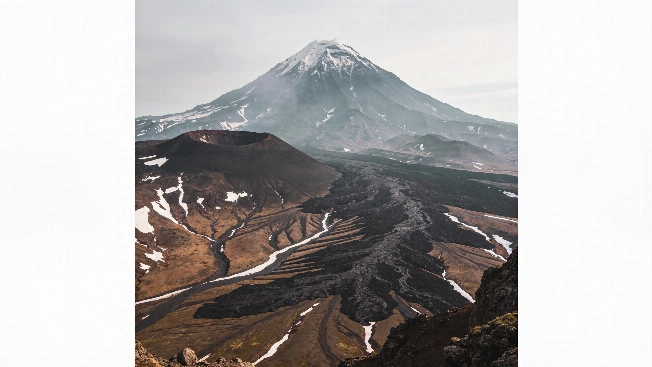
NISAR Maps Lava Spreading Across Russia's Krasheninnikov Volcano
NASA and ISRO's NISAR satellite has assembled a time-lapse of lava spreading across Kamchatka's Krasheninnikov volcano, revealing how radar can track a remote hazard through repeated observations while ground reports confirm that the eruption remains active.