
Animal Behavior
6 reportsQuestions about how behavior is observed and coded are tested against behavioral ecology and communication signals. A second focus is what experiments reveal about cognition, showing how sparse measurements or incomplete records limit certainty.
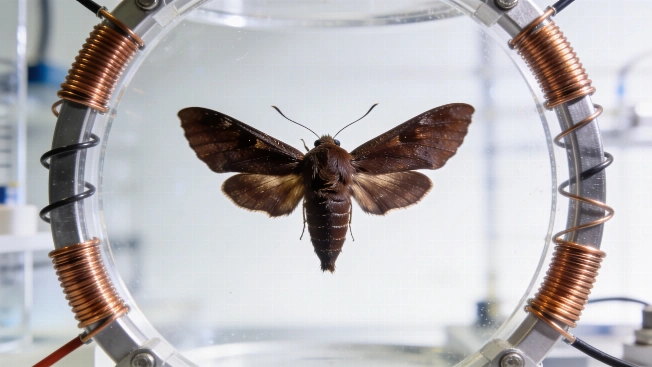
Bogong Moths Use Earth's Magnetic Field to Hold Their Course
By reversing the geomagnetic field around tethered moths in a flight arena researchers found that the insects changed direction accordingly, evidence that their nocturnal navigation combines magnetic and stellar cues

A Pigeon Needs 60 Metres to Glide to a Zero-Speed Landing
A control-theory model finds that a pigeon could stop at a raised perch without flapping, but only after building speed and covering about 60 metres horizontally
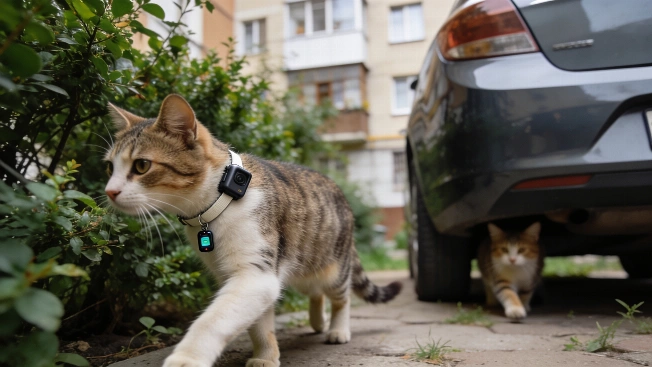
Kazakhstan's Camera-Equipped Cats Join Missing-Pet Searches
A Kazakhstan project is fitting free-roaming cats with tiny cameras and GPS trackers while computer vision searches their footage for missing pets hidden beyond easy human reach.

Drone Uses Tactile Sensing to Perch on Branches and Save Power
Researchers at TU Delft have built a drone that uses tactile sensors to locate and grip branches, allowing it to perch in cluttered environments and conserve battery power by shutting down its motors once attached.
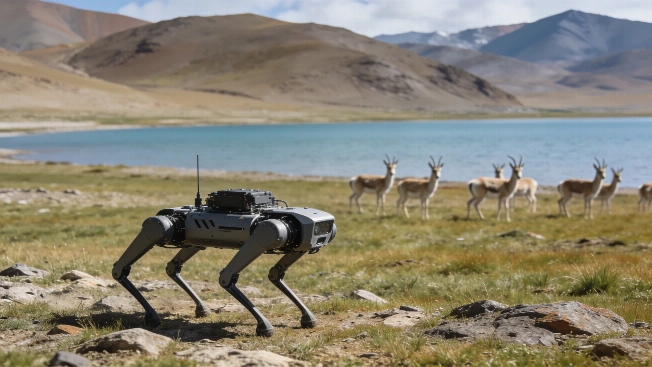
Robots Document Tibetan Antelope Migration in China's High-Altitude Reserve
DEEP Robotics has deployed its Lynx M20 wheeled-legged robot in the Serling Tso Nature Reserve to collect visual data on Tibetan antelope migration, testing the system's ability to operate in extreme plateau conditions with minimal disturbance to wildlife.
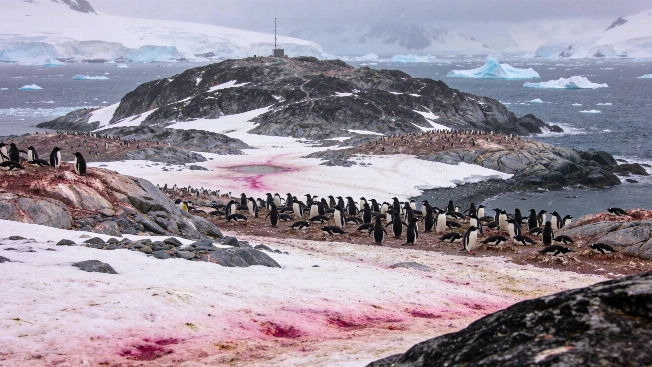
Satellite Images Reveal Penguin Diet Shifts on Antarctica's Danger Islands
NASA's Landsat 8 satellite and drone surveys have enabled researchers to monitor Adélie penguin colonies on the Danger Islands by analyzing the color of their guano, offering new understanding into how changing sea ice may affect Antarctic food webs.