
Open Science
10 reportsOpen access and official texts are read together rather than as isolated findings. This makes it possible to address how preregistration limits bias and how requirements are implemented, noting where jurisdiction, resources, or data gaps limit evaluation.
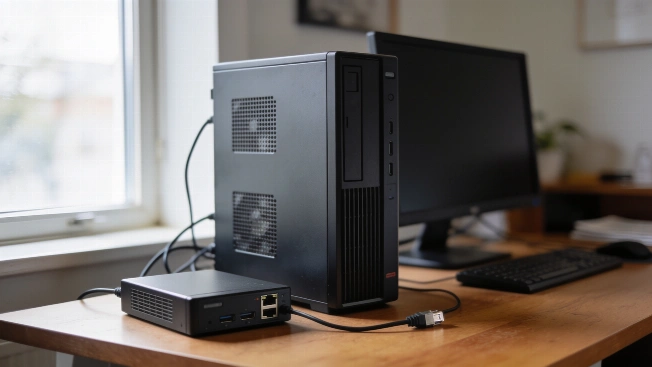
PewDiePie's Ajax Tests the Case for Local AI
PewDiePie has announced Ajax, a locally run assistant based on Alibaba's Qwen3.5-9B, after describing two OpenAI account suspensions during development activity he characterized as distillation.

Quantum Software Survey Maps the People Behind the Field
The Unitary Foundation has opened its 2026 Quantum Open Source Software survey to map demographics, research, tools and platforms while building a public record of how the community changes.
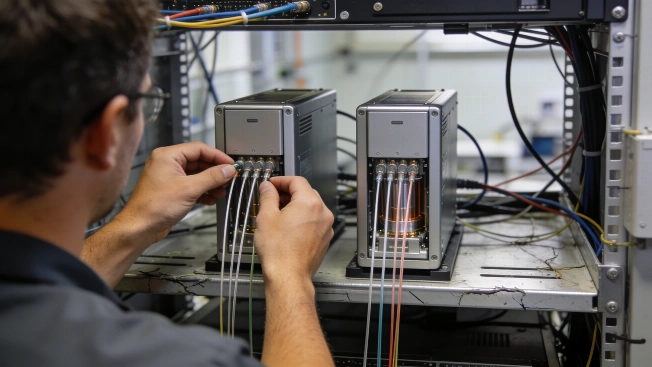
memQ Releases Compiler for Heterogeneous Quantum Networks
memQ has released an open-source compiler that converts monolithic quantum circuits into network-aware execution graphs and models entanglement costs across heterogeneous QPUs
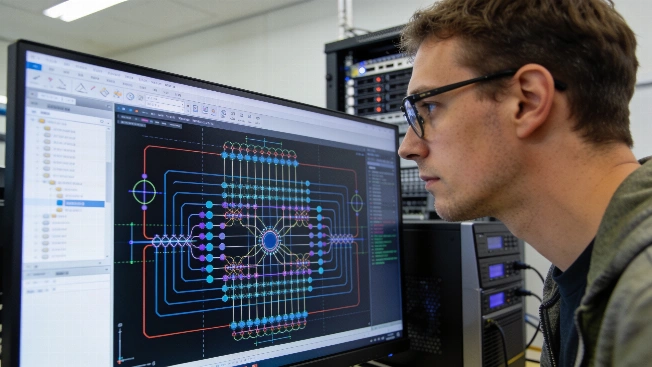
Fujitsu Releases OpenQARP to Tackle Quantum Software Complexity
Fujitsu has released OpenQARP, an open-source quantum application framework with over 100 modular components. The package is designed to reduce code complexity for chemistry, materials, and optimization workflows on NISQ and future fault-tolerant quantum systems.
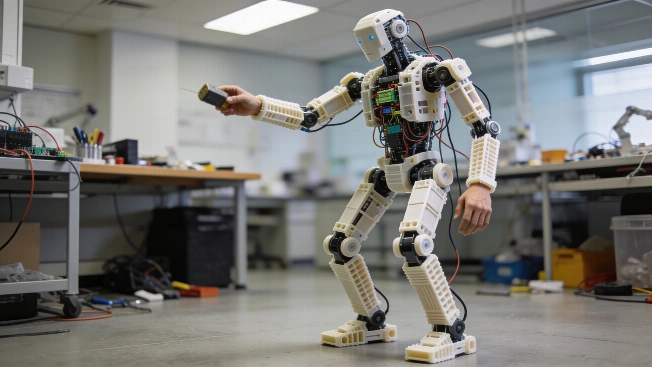
Berkeley Humanoid Lite Uses 3D-Printed Actuators to Slash Robot Costs
A research team at UC Berkeley has released the open-source Berkeley Humanoid Lite, a customizable robot platform built with 3D-printed actuators and off-the-shelf parts, aiming to lower the barrier to humanoid robotics research and experimentation

Tech Giants Form Open Secure AI Alliance to Counter Cyber Threats
NVIDIA, Microsoft, SpaceX, and other major firms have launched the Open Secure AI Alliance to develop open-source tools for defending software, AI agents, and infrastructure from cyberattacks, highlighting new security challenges as AI systems proliferate
New Microgrant Fund Targets Open-Source Quantum Error Correction Tools
Riverlane and Unitary Foundation have launched a quarterly microgrant program to support global developers building open-source quantum error correction software, aiming to address foundational challenges in quantum computing infrastructure

How Physics Tools Are Shaping Food System Modeling and Policy
Sarah Bridle, a physicist with a background in cosmology, is applying quantitative modeling and open-data practices from astrophysics to analyze food systems, land use, and climate impacts, revealing new challenges for sustainable agriculture

Open CSP Tower Data Set Aims to Advance Solar Thermal Research
A new open-access database from German researchers provides detailed operational data from a solar power tower facility, aiming to accelerate research on concentrated solar power and improve the technology's efficiency and deployment

AI-Generated Content Challenges Scientific Integrity in Physics Publishing
The rise of large language models is introducing fabricated references and unverifiable data into scientific literature, forcing physicists to scrutinize sources and reinforce core research skills to maintain trust in published results