
Tiangong Space Station
2 reportsTiangong Space Station is a spacecraft whose power, propulsion, communications, navigation, and payload determine its operational and scientific capabilities. Performance and scientific value are assessed through propulsion system and attitude control, with calibration and engineering limits shaping the usable evidence.
The account of Tiangong Space Station moves between spacecraft health; returned observations; and power and propulsion. The account anchors power and propulsion in instrument calibration and uses mission operations reports to test whether the pattern extends beyond one dataset; the main constraint is that hardware constraints and changing conditions can limit scientific return.
The account of Tiangong Space Station moves between spacecraft health; returned observations; and power and propulsion. The account anchors power and propulsion in instrument calibration and uses mission operations reports to test whether the pattern extends beyond one dataset; the main constraint is that hardware constraints and changing conditions can limit scientific return.
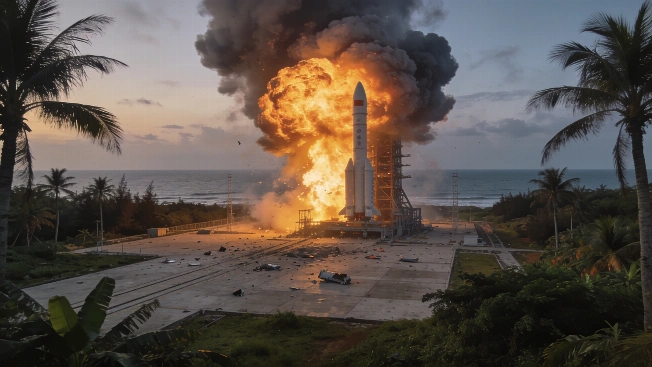
Long March 7A Rocket Explodes 85 Seconds After Launch in China
A Long March 7A rocket carrying the Zhongxing-4B satellite exploded less than two minutes after liftoff from Wenchang, raising questions about the reliability of China's medium-lift launch vehicles and the impact on future missions
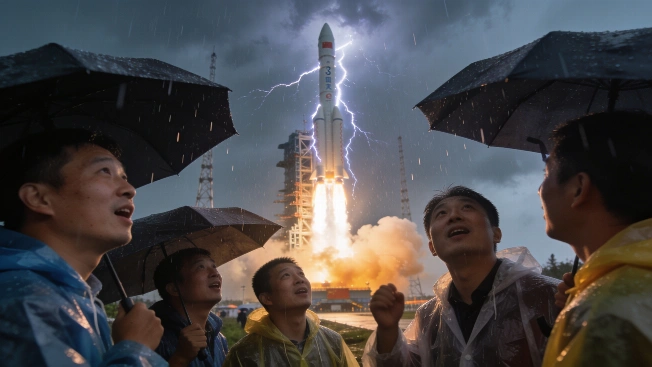
Chinese Long March 3B Rocket Struck by Lightning Survives Launch
A Long March 3B rocket was hit by lightning seconds after liftoff from Xichang Satellite Launch Center, yet continued its ascent and successfully deployed a geostationary relay satellite to support China's Tiangong space station