
Rare-Earth Element
3 reportsRare-Earth Element is a material defined by composition, structure, processing, measurable properties, degradation, and demonstrated applications. Claims about capability are tested through electronic property and surface behavior, with attention to scale, failure modes, comparability, and operating conditions.
For readers assessing Rare-Earth Element, the relevant threads are potential applications; composition and structure; and synthesis or processing. For questions involving composition and structure, the account uses independent replication as the measured record and microscopy or spectroscopy to expose uncertainty; the account does not overlook that laboratory performance can change with defects, manufacturing scale, and operating conditions.
For readers assessing Rare-Earth Element, the relevant threads are potential applications; composition and structure; and synthesis or processing. For questions involving composition and structure, the account uses independent replication as the measured record and microscopy or spectroscopy to expose uncertainty; the account does not overlook that laboratory performance can change with defects, manufacturing scale, and operating conditions.
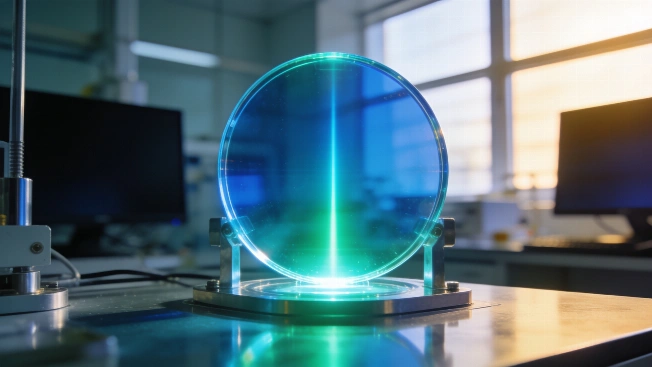
Gadolinium Glass Scintillator Detects Four Radiation Types
A cerium-doped gadolinium oxyfluoride glass produced signals under X-rays, gamma rays, neutrons and particle beams, with tests also reporting 29.8 lp/mm imaging resolution and 85.5% energy transfer to cerium ions
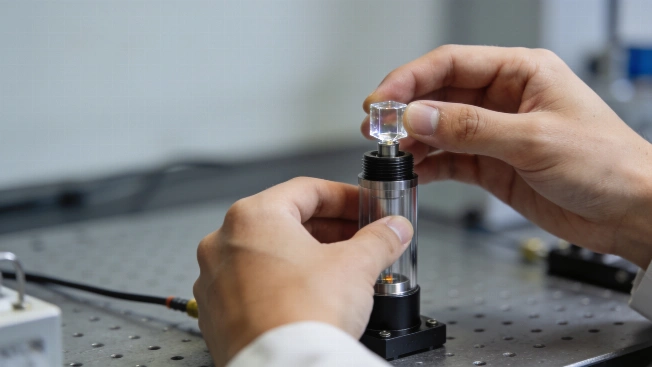
Lanthanum bromide sharpens gamma-ray detection
Cerium-doped lanthanum bromide can distinguish gamma-ray energies more precisely than common sodium iodide detectors while operating at room temperature. Its performance depends on crystal quality and detector configuration.
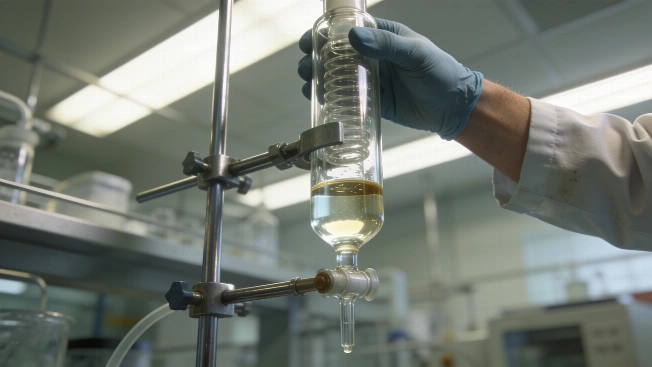
Quantum Models Target Rare Earth Separation Chemistry
USA Rare Earth, Pasqal and Riven Systems are developing a quantum-machine-learning process to identify selective extractants for separating mixed rare earth carbonate into individual oxides, using thousands of automated experiments and feedstocks from mining and recycling.