
Quantum Field Theory
5 reportsThe documented context of Quantum Field Theory includes open theoretical questions, mathematical predictions, and experimental tests. Complementary views of experimental tests come from quantitative predictions and precision measurements, but the conclusion remains bounded because the comparison must account for the fact that agreement within one regime does not guarantee validity beyond tested conditions.
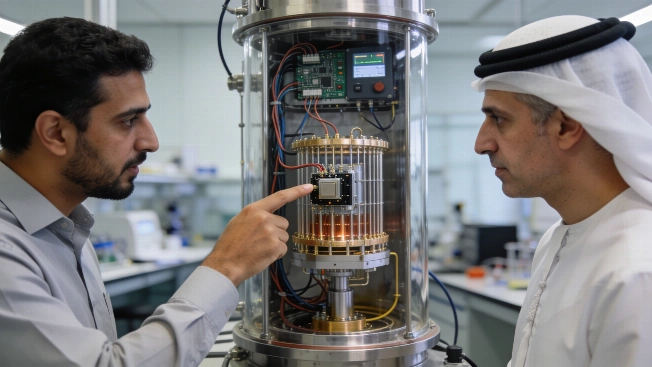
Quantinuum and Aramco Test Trapped Ion Quantum Hardware for Energy Tasks
Quantinuum and Aramco have signed a non-binding agreement to evaluate trapped-ion quantum processors for simulating energy sector chemistry and optimization tasks using Quantinuum's QCCD hardware and software stack
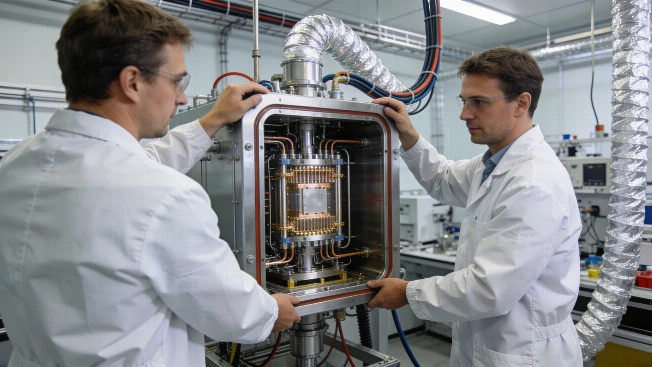
Anyon Systems and Matrix Group Target On-Premises Quantum Hardware
Anyon Systems has partnered with Matrix Group's KMT Technologies to distribute and integrate superconducting quantum processors with high-performance computing and AI infrastructure in select international markets
Assessing Quantum Startups as Industry Shifts Toward Engineering Scale
Serendipity Capital's Rob Jesudason discusses how investors and governments can evaluate quantum computing, sensing, and communications companies as the field moves from laboratory science to large-scale engineering and operational execution

ORIENTOM and Fondazione LINKS Test Quantum Algorithms for Finance
A new partnership between ORIENTOM and Fondazione LINKS will evaluate quantum and quantum-inspired algorithms for financial modeling, risk analysis, and machine learning, using hybrid quantum-classical workflows and high-performance computing infrastructure
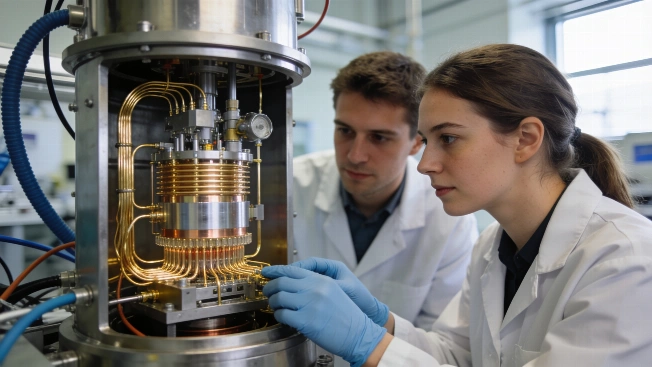
Quantum Computers Face Key Hurdles in Simulating Particle Physics
Quantum computers are being developed to simulate quantum systems that challenge classical supercomputers, but significant technical and theoretical barriers remain before these machines can reliably model particle physics or unify quantum information with general relativity