
Mars Reconnaissance Orbiter
3 reportsMars Reconnaissance Orbiter is a spacecraft whose power, propulsion, communications, navigation, and payload determine its operational and scientific capabilities. Performance and scientific value are assessed through propulsion system, attitude control, and science payload, with calibration and engineering limits shaping the usable evidence.
Analysis of Mars Reconnaissance Orbiter focuses on habitability evidence and surface mission constraints, with separate attention to Martian geology. The discussion asks what can be established from mission operations reports about surface mission constraints and whether a compatible result appears in telemetry; the evidence is read with the caveat that hardware constraints and changing conditions can limit scientific return.
Analysis of Mars Reconnaissance Orbiter focuses on habitability evidence and surface mission constraints, with separate attention to Martian geology. The discussion asks what can be established from mission operations reports about surface mission constraints and whether a compatible result appears in telemetry; the evidence is read with the caveat that hardware constraints and changing conditions can limit scientific return.
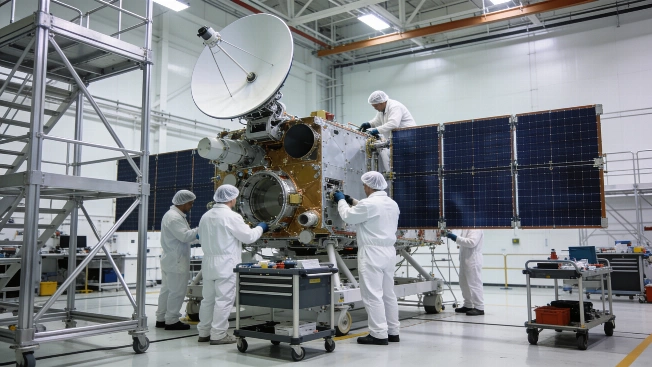
NASA Selects Blue Origin to Build Dedicated Mars Communications Orbiter
NASA has awarded Blue Origin a $700 million contract to develop the Mars Telecommunications Network, a dedicated relay orbiter intended to support future Mars missions as current infrastructure ages

Mars Interior Reveals Unexpected Southern Hemisphere Thermal Anomaly
Analysis of NASA spacecraft data suggests Mars's southern mantle is hundreds of degrees warmer than the north, challenging assumptions about the planet's internal symmetry and geological history

Viking 1's First Mars Surface Image Revisited on 50th Anniversary
NASA has released the original images captured by Viking 1 after its 1976 Mars landing, offering a detailed look at the Red Planet's surface and the mission's scientific legacy