
Machu Picchu
3 reportsMachu Picchu is an archaeological site where structures, deposits, artifacts, and environmental evidence preserve past activity. The historical case is built from occupation phase, artifact assemblage, and site preservation, while gaps in preservation limit claims about identity, date, or purpose.
Current work on Machu Picchu is assessed through architecture or material culture; conservation and interpretation; and excavation and survey history. For questions involving conservation and interpretation, the account uses provenance and spatial context as the measured record and field records to expose uncertainty; the evidence is read with the caveat that disturbance, incomplete excavation, and later restoration can limit reconstruction.
Current work on Machu Picchu is assessed through architecture or material culture; conservation and interpretation; and excavation and survey history. For questions involving conservation and interpretation, the account uses provenance and spatial context as the measured record and field records to expose uncertainty; the evidence is read with the caveat that disturbance, incomplete excavation, and later restoration can limit reconstruction.
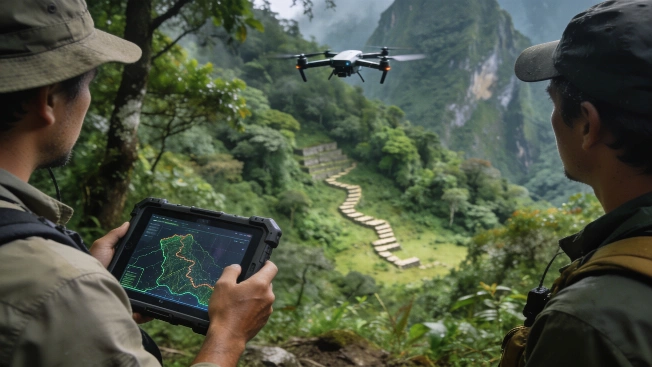
LiDAR survey uncovers hidden Inca roads near Machu Picchu
Archaeologists using drone-based LiDAR have mapped over 2.5 kilometers of previously undocumented pre-Columbian roads and terraces beneath rainforest near Machu Picchu, challenging assumptions about the extent of Inca landscape development
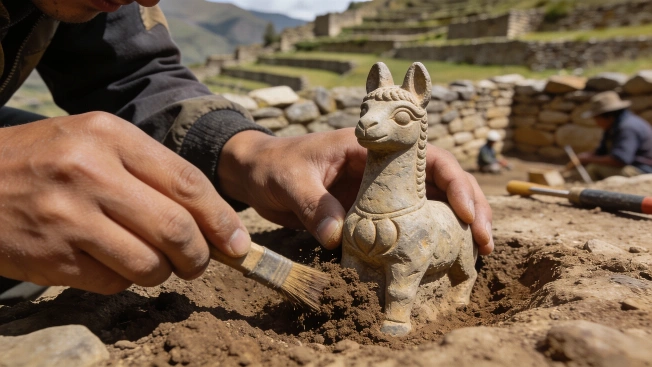
Stone Figures at Kuélap Suggest Fertility Rituals in Ancient Peru
Archaeologists at Kuélap in northern Peru have uncovered carved stone figures depicting animals with female traits, offering new evidence for fertility-related rituals and the influence of Inca religious practices at the site
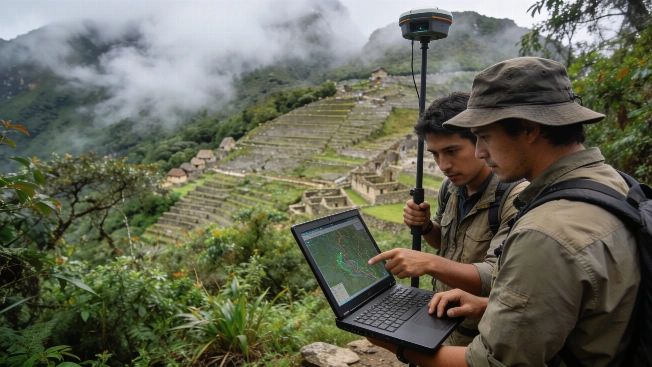
LiDAR Reveals Undocumented Ancient Roads Near Machu Picchu
Archaeologists have mapped over 2.5 kilometers of previously unknown pre-Hispanic roads and possible agricultural features near Machu Picchu using airborne LiDAR, offering new insight into the Inca landscape hidden beneath dense cloud forest vegetation.