
Generative AI
12 reportsA detailed treatment of Generative AI follows training data, generalization error, and data requirements. For questions involving generalization error, the account uses replication on different datasets as the measured record and controlled benchmarks to expose uncertainty; the comparison must account for the fact that headline accuracy can hide distribution shifts, bias, or unstable behavior.

PewDiePie's Ajax Tests the Case for Local AI
PewDiePie has announced Ajax, a locally run assistant based on Alibaba's Qwen3.5-9B, after describing two OpenAI account suspensions during development activity he characterized as distillation.
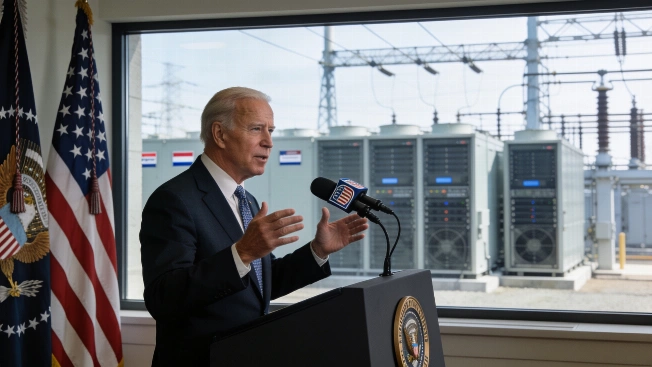
Trump's AI Force puts acceleration ahead of restraint
Donald Trump plans an AI Force and a new AI czar while rejecting calls to slow the industry, as data centers push electricity systems toward a major expansion by 2030

Why More Data Alone No Longer Advances Generative AI Systems
Recent advances in generative AI have relied on scaling up models, datasets, and computing resources. However, evidence now suggests that simply increasing data volume is no longer enough to improve performance, especially for complex tasks like software development
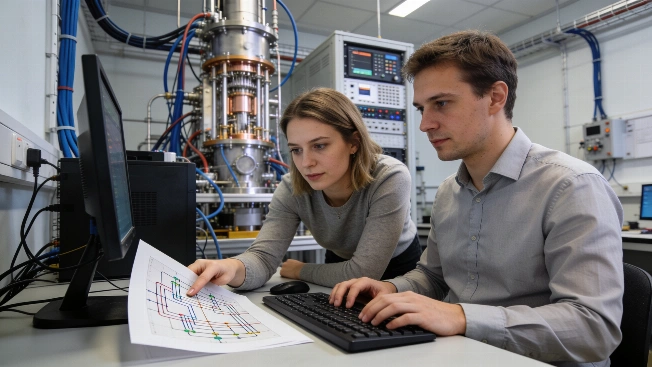
AI Models Now Optimize Quantum Algorithms for Real Hardware
Recent advances show AI systems are now directly optimizing quantum algorithms for cryptography and hardware compatibility, with measurable improvements in circuit efficiency and potential impact on quantum workforce development
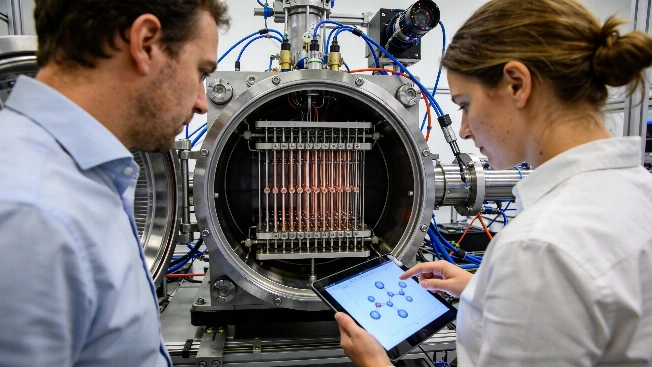
AI-Generated Quantum Circuits Tested on 98-Qubit Trapped-Ion Hardware
A collaboration between Quantinuum, NVIDIA, and Pfizer has demonstrated an AI-driven framework for generating quantum circuits, executing them on a 98-qubit trapped-ion processor to model pharmaceutical molecules
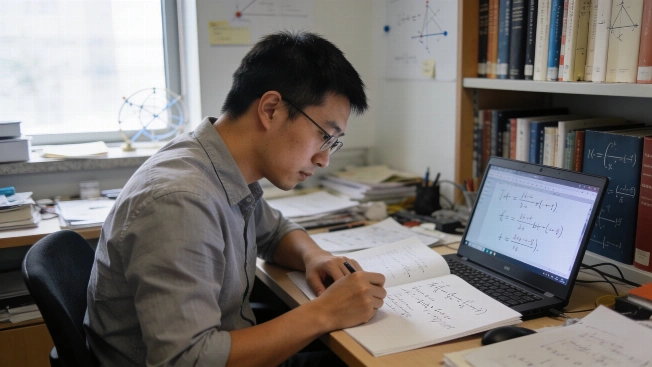
ChatGPT-Assisted Proof Solves Crouzeix's Conjecture After Decades
A postdoctoral researcher in Beijing has used ChatGPT to help resolve Crouzeix's conjecture, a matrix problem that challenged mathematicians for over 20 years, raising new questions about AI's role in mathematical discovery

Anthropic to Mark Claude AI Text with Invisible Watermarks Globally
Anthropic will introduce machine-readable watermarks to all text generated by new Claude models from August 2, 2026, aiming to meet EU AI Act transparency rules and provide a technical signal for identifying AI-generated content worldwide

Public Claude AI Chats Indexed by Google, Exposing Sensitive Data
A technical lapse allowed Google to index publicly shared Claude AI conversations, making sensitive user data-including medical and business information-searchable until the links were removed from results
Moonshot AI Releases Kimi K3, a 2.8 Trillion Parameter Open Model
Moonshot AI has introduced Kimi K3, an open-source model with 2.8 trillion parameters and a one-million-token context window, targeting complex scientific and coding workflows. The company claims performance gains, but key limitations remain
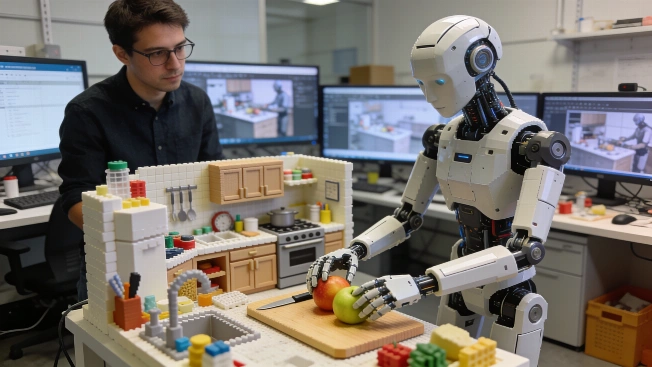
AI agents build complex 3D training worlds for robot learning
Researchers at MIT and Toyota Research Institute have developed SceneSmith, a system that uses collaborative AI agents and vision-language models to generate detailed 3D environments for robotics simulation and training
AI in Particle Physics: Discovery Without Full Understanding
Artificial intelligence is now central to particle physics, accelerating data analysis and experiment design. But as AI systems identify patterns beyond human intuition, researchers face new challenges in transparency, reproducibility, and scientific interpretation
World Models Aim to Simulate Reality but Face Technical Barriers
Researchers are developing world models-AI systems designed to simulate aspects of the physical world. These models promise new capabilities beyond language, but their accuracy and reliability remain unsettled