Researchers are developing world models-AI systems designed to simulate aspects of the physical world. These models promise new capabilities beyond language, but their accuracy and reliability remain unsettled
Recent advances in artificial intelligence have been dominated by large language models, which generate text by predicting the next word in a sequence. However, a new class of AI systems known as world models is attracting growing attention from researchers and investors. Unlike language models, world models are designed to simulate the dynamics of the physical world, enabling AI systems to predict, plan, or interact with environments beyond text.
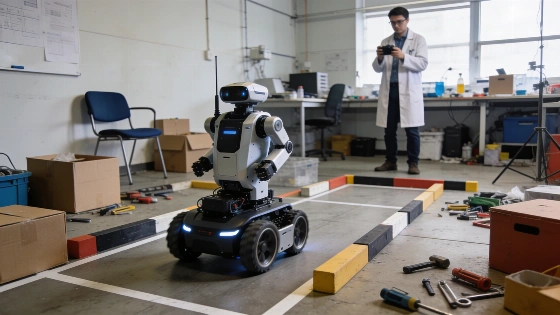
World models attempt to encode representations of objects, agents, and their interactions, often using data from sensors, images, or simulated environments. The goal is to allow AI systems to reason about cause and effect, anticipate outcomes, and support decision-making in robotics, autonomous vehicles, and other real-world applications. While some world models operate purely in simulation, others are being tested in physical systems, such as robots navigating controlled spaces or manipulating objects.
Technical Ambitions and Current Capabilities
Developers of world models claim these systems can learn compact representations of complex environments, enabling faster training and more efficient planning. In practice, most world models are trained on large datasets of simulated or recorded interactions, using deep learning architectures that combine elements of computer vision, reinforcement learning, and generative modeling. Some models can predict future frames in a video or simulate the consequences of an agent's actions over short time horizons.
Despite these advances, the reliability of world models remains limited. Simulations often fail to capture the full complexity and unpredictability of the real world, leading to errors when models are deployed outside their training environments. For example, a robot trained with a world model in simulation may struggle with unexpected obstacles, sensor noise, or changes in lighting when operating in a real environment. These gaps between simulation and reality-known as the sim-to-real problem-are a major focus of ongoing research.
Evidence and Evaluation
Most published results for world models come from controlled laboratory settings or simulated benchmarks. For instance, a typical evaluation might involve training a model to predict the next state of a virtual environment given a sequence of actions, then measuring the accuracy of its predictions over thousands of trials. Reported error rates vary widely depending on the complexity of the environment, the length of the prediction horizon, and the quality of the training data. In many cases, models achieve high accuracy on familiar scenarios but degrade rapidly when faced with novel situations or out-of-distribution inputs.
Independent verification of world model performance is still rare. Many results are reported by the developers themselves, often using curated datasets or hand-picked examples. There is limited evidence that current world models can generalize reliably to new environments or support robust decision-making in safety-critical applications. Human oversight remains essential, especially when models are used to control physical systems or make predictions that affect real-world outcomes.
Open Questions and Risks
Key challenges for world models include the need for more representative training data, improved methods for handling uncertainty, and better mechanisms for detecting and recovering from failure. Safety and accountability are also unresolved: when a world model makes an incorrect prediction that leads to harm, it is often unclear how responsibility should be assigned or how errors can be traced and corrected. Regulatory frameworks for the deployment of world models in high-stakes settings, such as healthcare or autonomous vehicles, are still in development.
According to a report from Ars Technica, experts caution that while world models offer promising new tools for AI research and robotics, their current capabilities are far from matching the complexity of the real world. Progress will depend on advances in model architecture, training methodology, and rigorous evaluation in diverse, real-world conditions.
World models are typically trained using large datasets of simulated or recorded interactions, where the system learns to predict future states based on past observations and actions. This process, known as model-based reinforcement learning, allows the AI to plan by simulating possible outcomes before acting. However, the accuracy of these predictions depends heavily on the quality and diversity of the training data, as well as the model's ability to handle uncertainty and rare events. The sim-to-real gap remains a central obstacle, as models that perform well in simulation often encounter unexpected failures in the physical world. Understanding and addressing these limitations is critical for the safe and effective deployment of world models in real-world applications.