
General Relativity
6 reportsThe most informative angles on General Relativity involve mathematical predictions; experimental tests; and symmetries and limiting cases. The account anchors symmetries and limiting cases in precision measurements and uses independent experiments to test whether the pattern extends beyond one dataset; interpretation remains cautious because agreement within one regime does not guarantee validity beyond tested conditions.
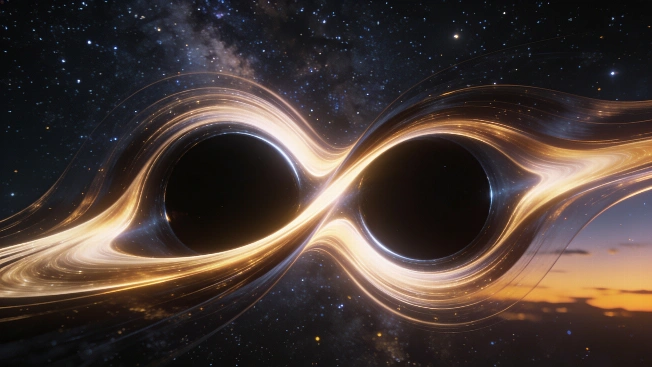
Einstein's Equations Allow a Form of Gravitational Reconnection
A solar flare releases enormous energy as magnetic fields reconnect. Physicists have now described a mathematical counterpart in gravity, while simulations and gravitational-wave observations are still needed to test its role
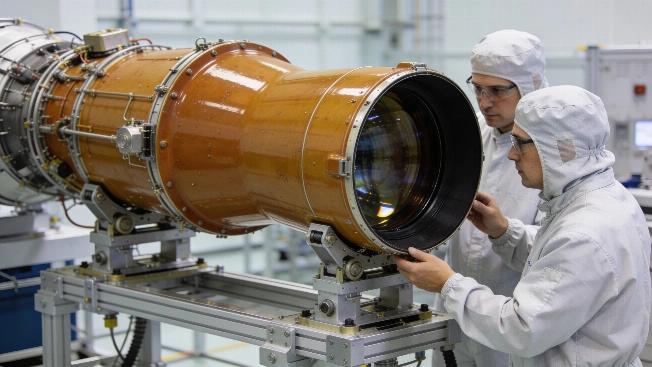
LISA Telescope Reaches Final Test Before Flight Hardware
NASA has commissioned L3Harris Technologies to build an engineering test telescope for LISA. The all-glass unit will test the design before production of hardware for the mission planned for the mid-2030s, while ESA advances the broader observatory toward its planned 2035 launch.
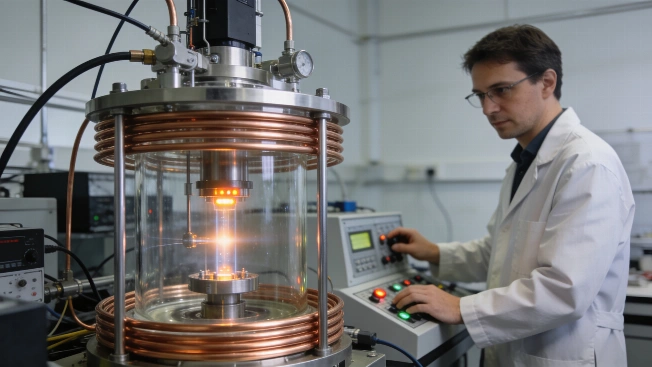
Quantum test reveals Einstein's gravity holds for falling atoms
A new experiment using ultra-cold rubidium atoms has measured how gravity affects quantum waves, providing the first direct test of Einstein's equivalence principle in the quantum regime.
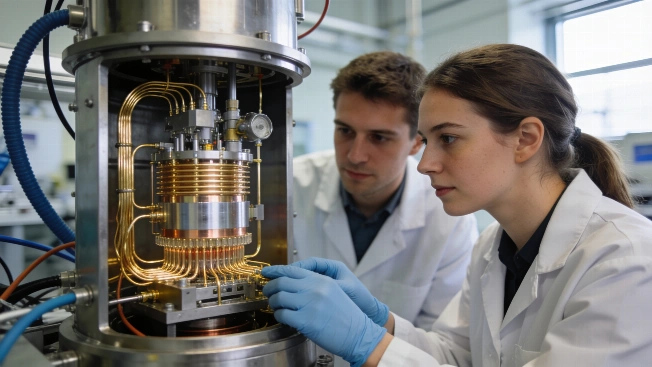
Quantum Computers Face Key Hurdles in Simulating Particle Physics
Quantum computers are being developed to simulate quantum systems that challenge classical supercomputers, but impressive technical and theoretical barriers remain before they can reliably model particle physics or connect quantum information with general relativity.
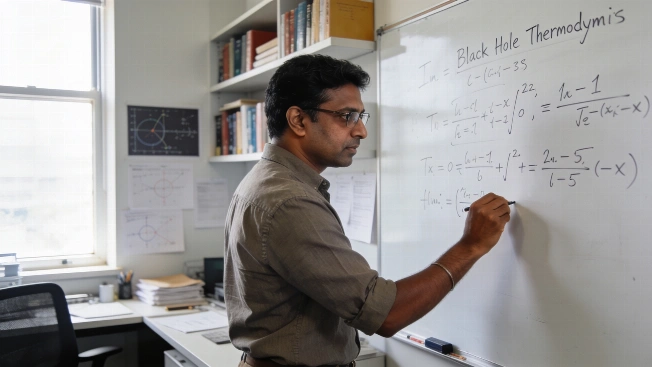
Black Hole Thermodynamics Updated Beyond Hawking's Original Theory
Physicists have proposed a new structure for describing black hole energy loss, extending thermodynamic laws to dynamic black holes and addressing a basic limitation in Stephen Hawking's classic model.
Gravitational Wave Data Reveals Black Hole Event Horizon Properties
Researchers have extracted direct physical parameters from a black hole’s event horizon using an unusually strong gravitational wave signal, providing experimental access to a region previously studied only through theory.