
LIGO
3 reportsLIGO is a physics detector designed to separate rare particles or physical signals from background noise and instrumental effects. Performance and scientific value are assessed through detector medium, background rejection, and calibration source, with calibration and engineering limits shaping the usable evidence.
Coverage places detector noise, candidate event validation, and source parameter estimation within the wider context of LIGO. Judgments about candidate event validation are tied to detector response data and control samples rather than prominence or repetition; the main constraint is that rare-event searches remain sensitive to backgrounds and threshold choices.
Coverage places detector noise, candidate event validation, and source parameter estimation within the wider context of LIGO. Judgments about candidate event validation are tied to detector response data and control samples rather than prominence or repetition; the main constraint is that rare-event searches remain sensitive to backgrounds and threshold choices.
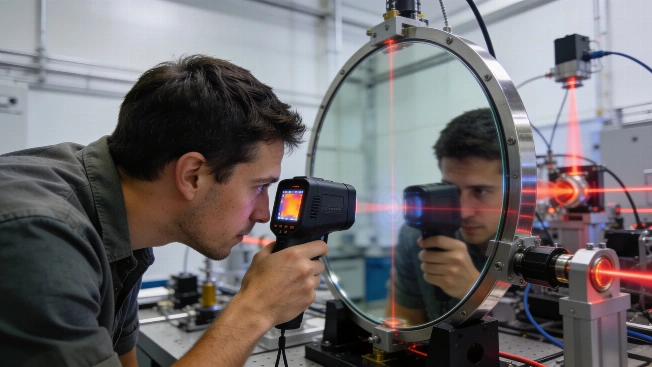
Thermal Cameras Could Sharpen LIGO's View of Distant Black Holes
Researchers have demonstrated that commercial thermal imaging cameras, combined with computer modeling, can correct heat-induced distortions in LIGO's mirrors, potentially expanding the observatory's reach by tens of millions of light-years
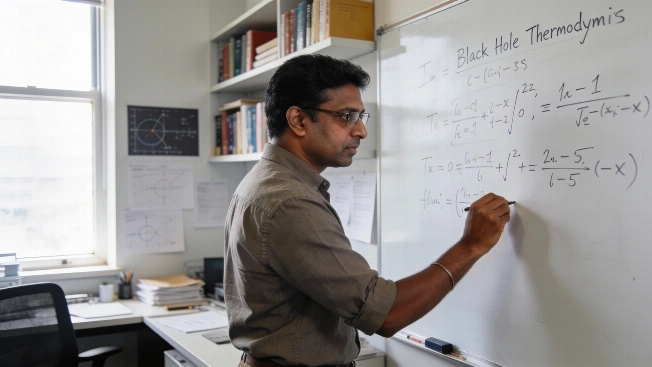
Black Hole Thermodynamics Updated Beyond Hawking's Original Theory
Physicists have proposed a new framework for describing black hole energy loss, extending thermodynamic laws to dynamic black holes and addressing a key limitation in Stephen Hawking's classic model
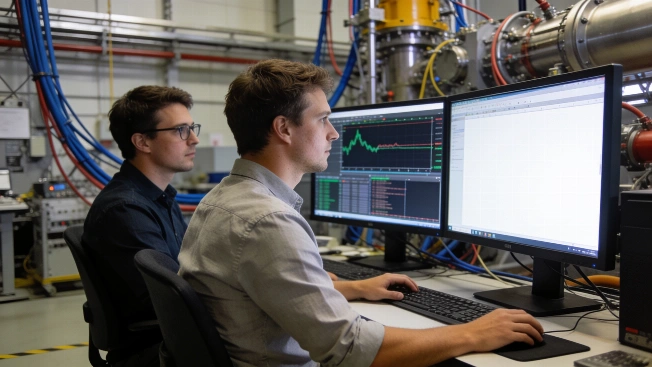
Gravitational Wave Data Reveals Black Hole Event Horizon Properties
Researchers have extracted direct physical parameters from a black hole event horizon using an unusually strong gravitational wave signal, providing new experimental access to a region previously studied only through theory