
Gamma-Ray Burst
4 reportsCoverage places event timescales, energy output, and source populations within the wider context of Gamma-Ray Burst. The treatment of source populations keeps independent detections separate from instrument calibration until their assumptions and scales are compared; the comparison must account for the fact that selection effects and uncertain source distances can alter inferred rates or energies.
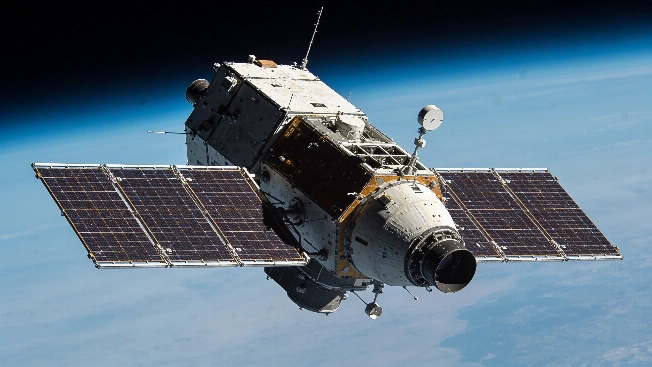
Swift's Low Orbit Ends Nearly 22 Years of Cosmic Alerts
At 275 kilometers above Earth, atmospheric drag stopped the observatory from holding astronomical targets steady. Swift made its final observation Oct. 20, and NASA expects re-entry in the coming weeks
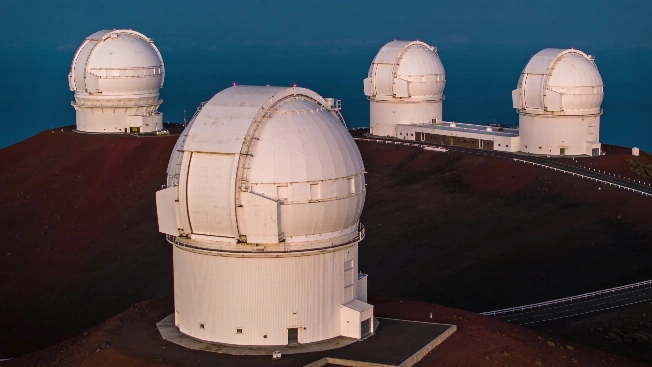
Four telescope array could trace gamma-ray bursts to the early universe
Four 23 m telescopes at La Palma will work together to detect faint atmospheric flashes from high-energy gamma rays, with sensitivity that could extend observations to bursts at redshifts near z∼4

High Energy Photon From Distant Gamma Ray Burst Challenges Physics Limits
A photon with record-breaking energy from the gamma ray burst GRB 221009A reached Earth despite theoretical barriers. New analysis suggests a possible explanation involving axion-like particles and Lorentz invariance violation.
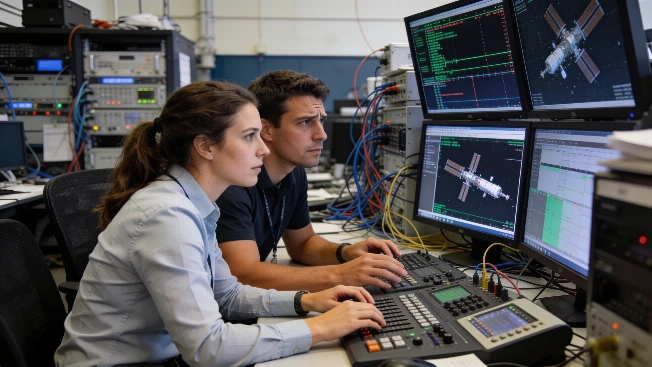
NASA's Swift Boost Mission Faces Setback After Spacecraft Malfunction
NASA's Swift Boost mission, launched to extend the life of the Neil Gehrels Swift Observatory, has encountered a critical control issue with its LINK spacecraft, raising uncertainty about the planned orbital rescue operation