
Circular Economy
2 reportsCircular Economy is a sustainability solution evaluated through environmental performance, cost, durability, and system-wide tradeoffs. Performance is judged through implementation cost, intervention mechanism, and emissions impact, distinguishing laboratory demonstrations from reliable use outside controlled settings.
Research connected with Circular Economy is followed through technical design, while also considering resource use and life-cycle impacts. The account anchors life-cycle impacts in life-cycle assessments and uses comparison with existing systems to test whether the pattern extends beyond one dataset; uncertainty persists because benefits can shift when supply chains, rebound effects, and local conditions are included.
Research connected with Circular Economy is followed through technical design, while also considering resource use and life-cycle impacts. The account anchors life-cycle impacts in life-cycle assessments and uses comparison with existing systems to test whether the pattern extends beyond one dataset; uncertainty persists because benefits can shift when supply chains, rebound effects, and local conditions are included.
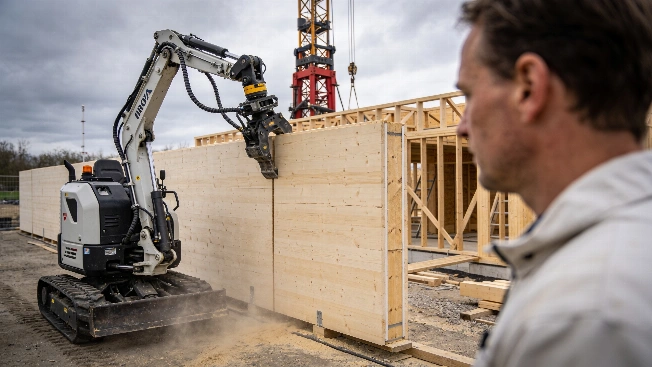
University of Stuttgart plans autonomous robot teams for construction
University of Stuttgart researchers are designing SCALAR and COBRAS to assemble timber modules and lightweight space frames with coordinated robot teams while testing whether automation can reduce waste and site labor
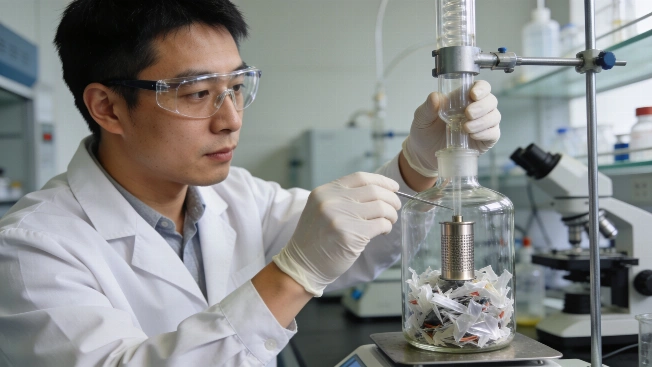
China Tests Low-Cost Catalyst to Turn Plastic Waste Into Jet Fuel
Researchers in China have demonstrated a chemical process that converts polyolefin plastic waste into aviation-grade fuel using a cobalt-nickel catalyst, but the method remains at the laboratory stage and faces significant engineering hurdles