
Carbon Dioxide
2 reportsCarbon Dioxide is a climate phenomenon expressed through circulation, temperature, precipitation, feedbacks, and regional connections. Current understanding relies on regional teleconnection, climate driver, and precipitation response, with uncertainty tracked across measurement, classification, and reconstruction.
A detailed treatment of Carbon Dioxide follows measurement networks, together with budget uncertainty and atmospheric concentrations. The account compares the signal in reanalysis products with the context supplied by independent climate models when discussing budget uncertainty; interpretation remains cautious because short records, natural variability, and scenario assumptions can widen uncertainty.
A detailed treatment of Carbon Dioxide follows measurement networks, together with budget uncertainty and atmospheric concentrations. The account compares the signal in reanalysis products with the context supplied by independent climate models when discussing budget uncertainty; interpretation remains cautious because short records, natural variability, and scenario assumptions can widen uncertainty.
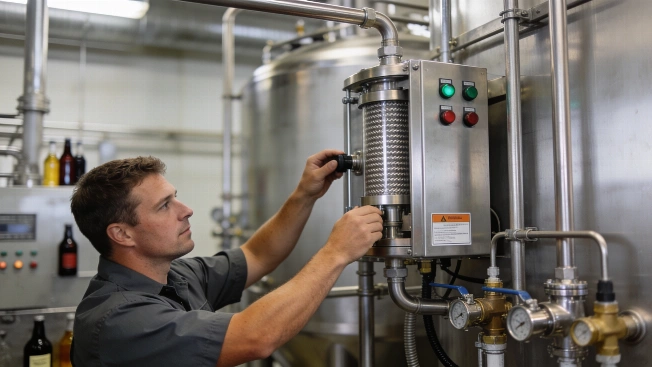
Mars Resource Technology Gives Breweries a Carbon Lifeline
A carbon-capture system designed for future Mars resource harvesting is now helping breweries and other industries recover and purify carbon dioxide amid shortages and volatile supply.
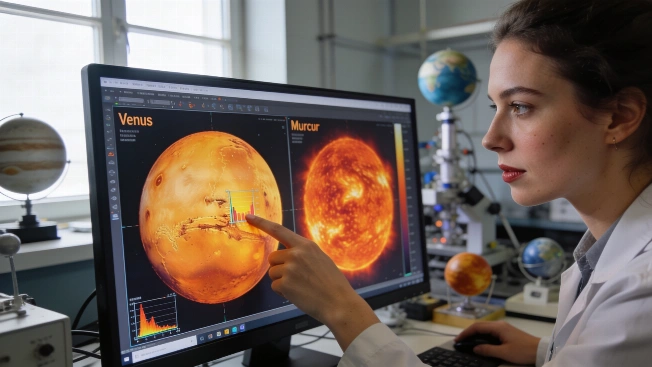
Why Venus Is Hotter Than Mercury, Even Though It's Farther from the Sun
Venus's surface is hotter than Mercury's, despite being farther from the Sun. The reason lies in Venus's thick, heat-trapping atmosphere-not its distance from our star.